
In her widely anticipated autobiography, 'Belonging: A Journey of Love', senior Congress leader Sonia Gandhi presents a deeply nuanced and emotionally sensitive account of her relationship with former Prime Minister Indira Gandhi. Next to her husband Rajiv Gandhi, Indira is the figure who occupies the most prominent presence throughout the pages of the memoir. Sonia reflects with candour on both the warmth and affection she received from her mother-in-law, as well as the initial friction caused by Indira's quick-tempered nature and formal household routines.
Early Hesitations and Silence at the Dining Table
Sonia writes that adapting to her new family dynamic after moving to India was a gradual process. In the beginning, she struggled not only to understand Indira's personality but also hesitated to address her as 'Mummy'. Having grown up with a deep attachment to her own mother in Italy, Sonia felt unable to bestow that form of address on another person, even the mother of her beloved Rajiv. This internal dilemma created an inadvertent distance between the two women during the early period of the marriage.
This sense of awkwardness deepened shortly after the wedding when Rajiv Gandhi had to leave the city to complete his pilot training. Recalling those weeks, Sonia notes that whenever Indira was free from official duties, the two would have dinner together in the dining room. However, these meals were marked by long spells of silence. Indira would typically remain absorbed in a newspaper or magazine while eating, leaving Sonia to eat quietly like a complete stranger. Troubled by the quiet atmosphere, Sonia constantly questioned whether she had unwittingly offended her mother-in-law.
Eventually, Sonia decided to address the matter directly. Gathering her courage during a meal, she asked Indira, "Are you angry with me about something?"
Surprised by the query, Indira replied, "No, why?"
When Sonia hesitantly explained her apprehension, Indira responded with mild annoyance, "You stay quiet all the time. Speak up yourself, then maybe a conversation will start!"
Taking this advice to heart, Sonia actively made an effort to initiate conversations during meals. The shift bore immediate fruit: Indira stopped bringing reading materials to the dinner table, establishing a regular channel of open dialogue between them.
The Navroz Morning Tradition and Family Acceptance
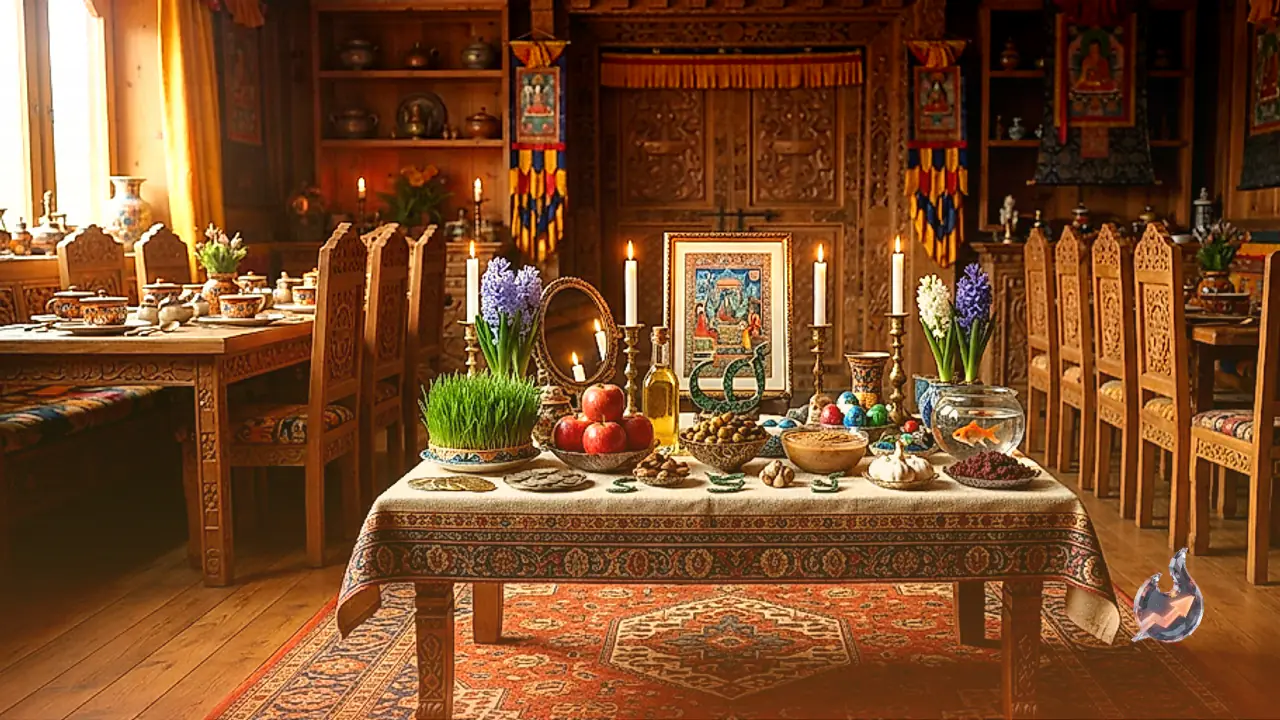
Highlighting a poignant moment from her early married life, Sonia describes an occasion during the festival of Navroz. Early that morning, Indira entered Sonia's bedroom carrying a traditional ceremonial platter. Arranged meticulously on the platter were rice, a small handheld mirror, fresh curd, sweets, sugar candy, rock salt, bread, almonds, a pen, a gold coin, red thread, kumkum, a miniature almanac, and fresh red roses.
Indira asked Sonia to look at her reflection in the mirror first before introducing her to each symbolic item on the platter. She then gently touched Sonia's closed eyes with a fresh rose, fed her pieces of sugar candy, almonds, and sweets, placed a tilak on her forehead, and kissed her cheek. Following the ritual, Indira presented her with a fine saree and traditional jewellery.
For Sonia, this was a completely novel cultural experience. Beyond introducing her to a traditional custom, Indira used the ritual to convey a deep sense of familial warmth, helping Sonia feel fully accepted as a member of the household.
Redesigning the 'Bird Room' and Managing Household Duties
As Sonia settled into the household, she began paying attention to the living spaces. On one occasion, she suggested to Indira that the meeting room—where the Prime Minister frequently hosted senior political colleagues and advisors—could benefit from new decor, as the existing sofas were worn out and the walls lacked warmth.
Indira's initial reaction was somewhat abrupt: "I'll think about it. When I get a little time, I'll see." Feeling that her suggestion might have been viewed as overstepping her boundaries, Sonia decided not to raise the subject again, assuming the Prime Minister had far more pressing national matters to manage.
However, a few days later, Indira approached Sonia directly and said, "Come on Sonia, I am free now. Let's see what can be done." Together, they planned the redesign, selecting new upholstery fabrics for the furniture and adding porcelain bird figurines along the walls. The space subsequently earned the informal name 'Bird Room'.
This incident marked the beginning of Sonia's growing involvement in household decisions. Over the years, Indira came to rely heavily on Sonia for managing personal and domestic affairs. Close associates of Indira, including Usha Bhagat, Pupul Jayakar, and Mohsina Kidwai, have noted that Sonia assisted in selecting Indira's sarees, choosing appropriate gifts for foreign dignitaries during state visits, and overseeing hospitality for private guests at the Prime Minister's residence.
The Bhutan State Dinner and Maternal Protection
Sonia also shares a memorable anecdote from an official state visit to Bhutan, illustrating Indira's protective maternal instinct. Indira had included Sonia in her delegation for the trip. During an official banquet hosted by the King of Bhutan, guests were seated at traditional low, carved benches.
Sonia, feeling hungry, was relieved that the local cuisine was mild rather than heavily spiced. Looking at the spread, she noticed what appeared to be a large piece of steamed fish served on Indira's plate. However, upon taking her first bite of the item served to her, Sonia experienced severe nausea as she realized the dish was actually steamed pork fat rather than fish.
Noticing Sonia's distress immediately, Indira acted swiftly without drawing the attention of the hosts. Engaging the King of Bhutan in animated conversation, Indira smoothly reached over and transferred the piece of pork fat from Sonia's plate onto her own. Sonia recalls feeling immense gratitude for her mother-in-law's tactful intervention, noting that Indira frequently stepped in similarly in later years whenever her grandchildren struggled with unfamiliar food items.