





















Supreme Court Split on Law Replacing CJI in Election Commissioner Selection Panel, Matter Referred to 5-Judge BenchBihar
23 Sept 2026, 4:22 pm (2 hours ago)· 0

Supreme Court Split on Law Replacing CJI in Election Commissioner Selection Panel, Matter Referred to 5-Judge Bench

A two-judge Supreme Court bench delivered a split verdict on the 2023 law excluding the CJI from the Election Commission appointment panel, sending the issue to a 5-judge Constitution bench.

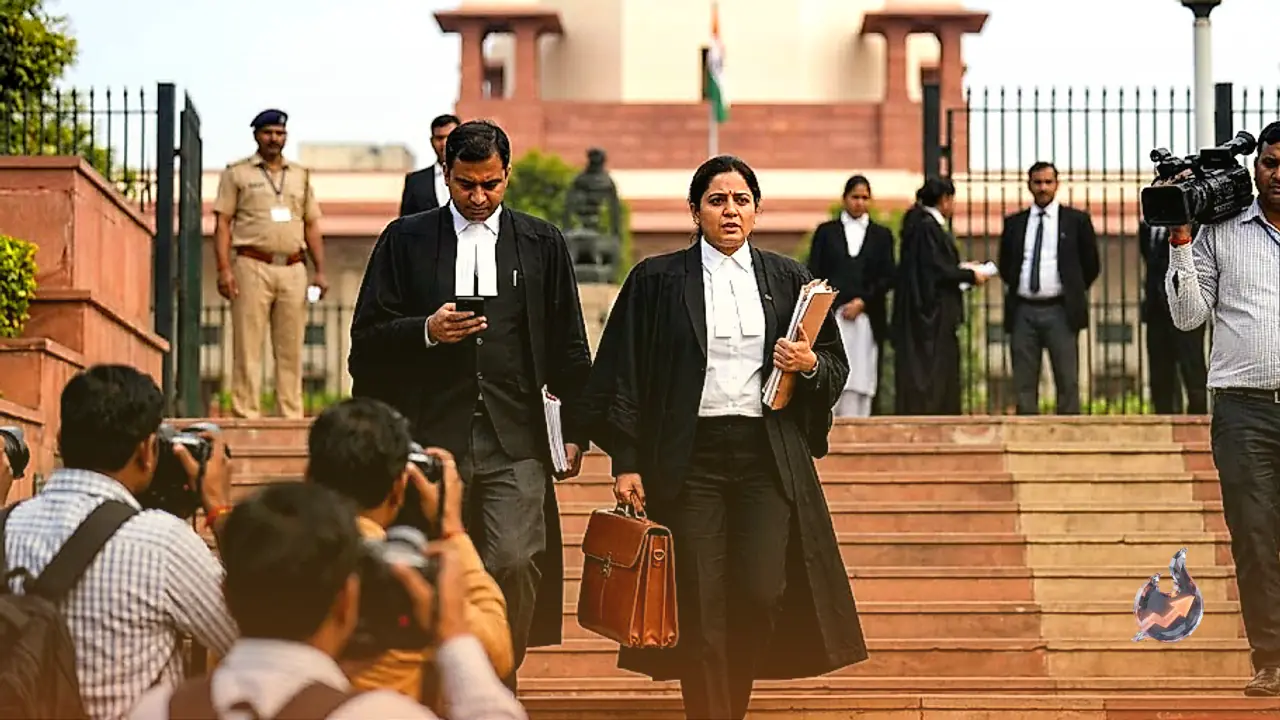
A two-judge bench of the Supreme Court delivered a split verdict on Wednesday on petitions challenging the constitutional validity of the 2023 law governing the appointment of the Chief Election Commissioner and Election Commissioners. With the two judges differing on whether the matter warranted an examination by a larger bench, the petitions have now been referred to a 5-judge Constitution bench. At the heart of the challenge is the exclusion of the Chief Justice of India from the selection committee, replacing the judicial member with a Union Cabinet Minister.

Judicial Divide in the Two-Judge Bench

The petitions were heard by a bench comprising Justice Dipankar Datta and Justice Satish Chandra Sharma. The core procedural question before the bench was whether the legal challenges raised against the constitutional validity of the 2023 statutory enactment required adjudication by an authoritative 5-judge Constitution bench.

Also read

The two judges arrived at divergent conclusions. Justice Dipankar Datta declined the plea to refer the matter to a larger bench. Conversely, Justice Satish Chandra Sharma favoured sending the legal challenge to a 5-judge Constitution bench for authoritative consideration. Owing to this divergence of opinion, the bench issued a split verdict, resulting in the matter being placed before a 5-judge Constitution bench to determine the constitutional standing of the statute.

The Core Controversy Around the 2023 Act

The legal dispute centers on the Chief Election Commissioner and other Election Commissioners (Appointment, Conditions of Service and Term of Office) Act, 2023. Under the provisions of this legislation, the selection committee responsible for recommending candidates consists of the Prime Minister, the Leader of the Opposition in the Lok Sabha, and a Union Cabinet Minister nominated directly by the Prime Minister.

This statutory composition superseded the interim arrangement laid down by the Supreme Court in the 2023 Anoop Baranwal judgment. In that ruling, the apex court had mandated a tripartite committee comprising the Prime Minister, the Leader of the Opposition, and the Chief Justice of India until Parliament enacted a law. The subsequent 2023 legislation altered that balance by replacing the CJI with a Cabinet Minister, giving the executive a numerical majority on the panel and prompting multiple legal challenges.

Remarks on a Permanent Constitution Bench

During the course of the hearings, Justice Dipankar Datta had also observed that the Chief Justice of India ought to consider constituting a permanent 5-judge Constitution bench to tackle persistent delays in adjudicating constitutional matters. The context of that observation surfaced during the delivery of Wednesday's verdict. The newly designated 5-judge Constitution bench will now take up the petitions to examine the constitutional questions surrounding the 2023 enactment and the autonomy of the election watchdog.


Questions & Answers

What verdict did the Supreme Court deliver on the Election Commissioners appointment case?
A two-judge bench delivered a split verdict, resulting in the matter being referred to a 5-judge Constitution bench.
Which judges constituted the two-judge bench hearing the matter?
The bench comprised Justice Dipankar Datta and Justice Satish Chandra Sharma.
What was the difference in opinion between the two judges?
Justice Dipankar Datta rejected the plea to refer the petitions to a larger bench, whereas Justice Satish Chandra Sharma permitted referring it to a 5-judge Constitution bench.
Who is included in the selection committee under the 2023 Act?
The committee consists of the Prime Minister, the Leader of the Opposition in the Lok Sabha, and a Union Cabinet Minister nominated by the Prime Minister.
What was the interim arrangement in the 2023 Anoop Baranwal ruling?
The Supreme Court had directed that appointments be made by a panel comprising the Prime Minister, the Leader of the Opposition, and the Chief Justice of India.
What remark did Justice Dipankar Datta make regarding Constitution benches?
He observed that the CJI should consider constituting a permanent 5-judge Constitution bench to mitigate delays in deciding constitutional cases.

Comments 5

Omar AL Mansoori@omar-mansoori·39m ago

Whenever electoral systems are discussed across the Gulf, judicial independence remains the core concern. Watching how the larger bench handles this in India will be quite telling.

Ravikash Gupta@ravikash·1h ago

With a five-judge bench now set to decide whether the judiciary's presence is essential for maintaining fairness in the poll panel, I wonder if the government's inclusion of a cabinet minister will ultimately give the executive total control over these appointments.

Arjun Mehta@arjun-mehta·59m ago

Ravikash, you have a point. When I visited the election office last year, people there quietly whispered about how crucial the CJI's presence was for fairness. Now a 5-judge bench will finally decide.

Rohan Verma@rohan-verma·1h ago

Reaching a five-judge bench is fine, but will this really speed up the final verdict?

Karan Malhotra@karan-malhotra·1h ago

Rohan, you have a point. But will this five-judge bench actually be able to decide on this appointment law quickly?

Citizen journalism

Become a TrendKia journalist

Voice of the people

Share news, photos and videos from your area with TrendKia and let your voice reach the nation. Every citizen a journalist.

Join now
CH 01 LIVE
TrendKia TV ON AIR
Chamar no WhatsApp