





















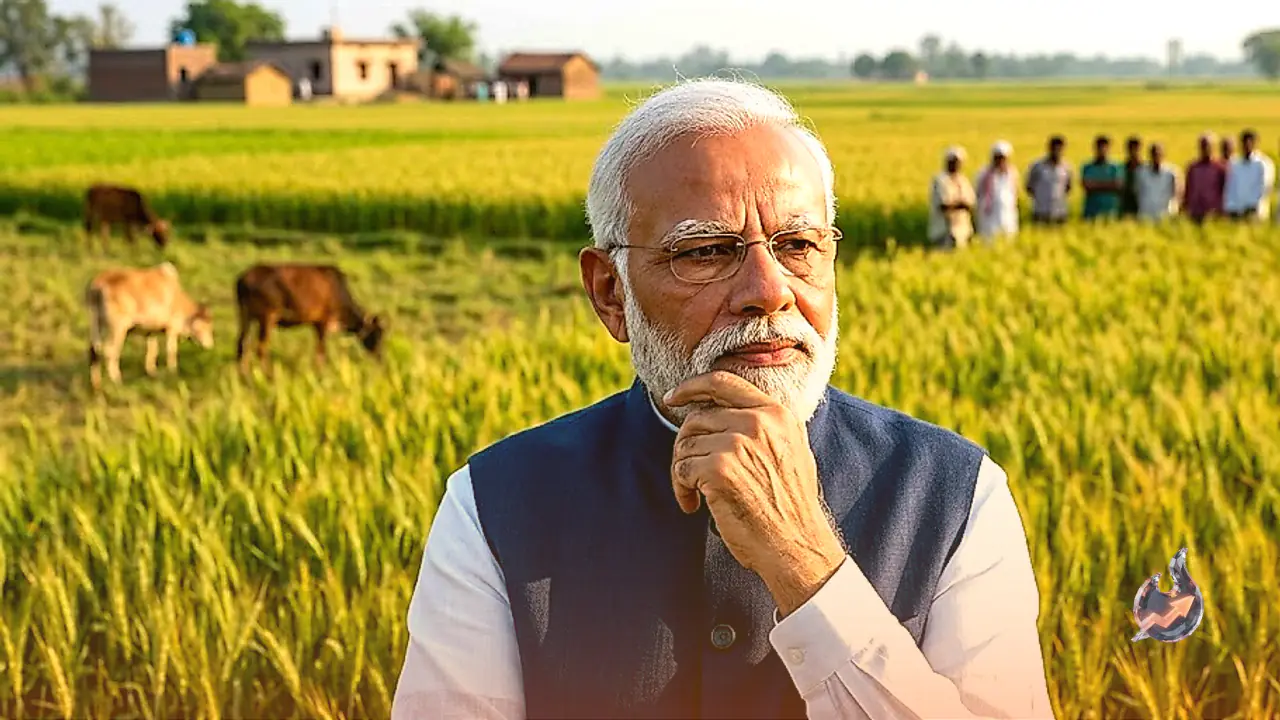

The number of hungry people around the world has fallen for a third straight year, and the United Nations says India has played the biggest part in that improvement. A fresh UN report credits India as a key reason behind Asia's better hunger numbers, noting that India's hunger rate has now dropped below 10 percent, a milestone being viewed as a major achievement for Prime Minister Narendra Modi's government.
How India's welfare push moved the needle
The report also spells out what is driving the change. It points to Modi's welfare schemes, the system built to get grain to poor households, and rising farm output as the key factors behind the turnaround. That combination, the report says, is why India's hunger numbers have kept improving steadily. The findings arrive at a time when India has spent the last several years working to strengthen food security, raise farmers' incomes and get ration supplies to people who need them most, and the UN acknowledges that these efforts are now showing up in the global data.
Relief beyond India too, Dominican Republic drops off the list
India is not the only bright spot, the report notes. Several African nations, including Ethiopia, Tanzania, Zimbabwe, Senegal and Zambia, have also seen their hunger situation improve. Meanwhile, the Dominican Republic has been taken off the list of countries counted among those facing severe hunger. In other words, the good news is not confined to Asia, several other parts of the world are seeing gains too.
FAO's chief economist on Gaza
Releasing the report, Maximo Torero, chief economist at the UN's FAO, addressed the situation in Gaza. He said the war there has not had a major effect on global hunger figures. According to Torero, an increase in food supplies reaching Gaza in recent times has brought some improvement on the ground. However, the war has destroyed much of the region's agricultural infrastructure, and rebuilding farms, irrigation systems and other facilities could take several years. He said the most urgent task is restarting agricultural production in Gaza so people can eventually stand on their own feet instead of depending on aid over the long run.
Malnutrition, anemia and obesity remain a worry
The UN also flagged that child malnutrition remains a major global challenge. It raised concern that anemia among women and obesity among adults have both been rising quickly in recent times. That means simply filling stomachs is not enough, getting nutritious food to people matters just as much. The report notes that hundreds of millions of people worldwide still cannot easily access a balanced, nutritious diet, and it calls on governments to frame policies that deliver not just food but proper nutrition.
UN warns about what lies ahead
The UN has also sounded a note of caution for the future. The report warns that if climate change keeps worsening or major disruptions hit global trade, the current pace of hunger reduction could slow down. The report, titled 'The State of Food Security and Nutrition in the World,' was prepared jointly by five UN agencies. It found that around 64.5 crore people, or about 7.8 percent of the world's population, were affected by hunger in 2025. That figure stood at 8.1 percent in 2024 and 8.6 percent in 2022, showing the share of the world's hungry population has been shrinking year after year.