






















The Kapoor family has dominated the Hindi film industry for generations, bestowing Indian cinema with numerous legendary stars. From the golden era of Prithviraj Kapoor and Shashi Kapoor to the contemporary stardom of Rishi Kapoor and Ranbir Kapoor, most members of this iconic dynasty gained immense popularity as romantic leads and main heroes, celebrated for their charming screen presence. However, within this celebrated lineage emerged a distinctive performer who forged his own path by stepping away from traditional hero roles to become one of cinema's most formidable screen antagonists. That accomplished actor and producer was Kamal Kapoor, who transformed negative roles into a career of extraordinary longevity and acclaim.
Early Background, Education, and Film Debut
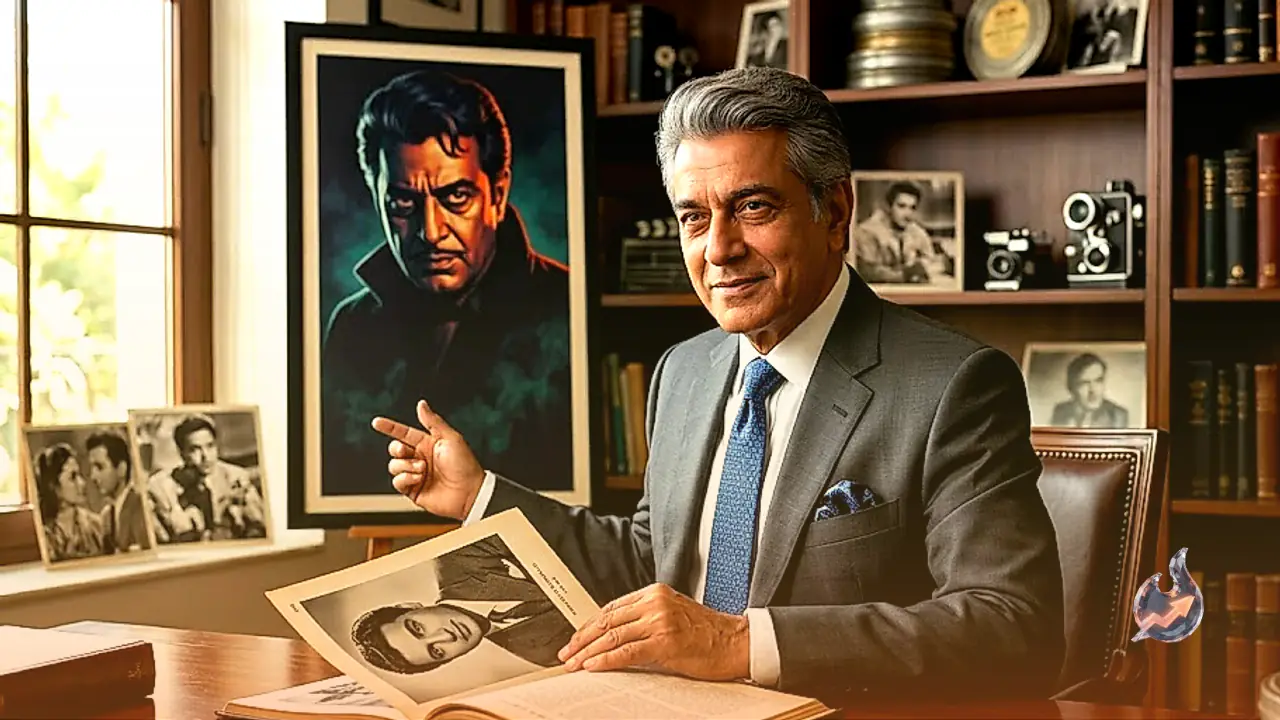
Kamal Kapoor was born on February 22, 1920, in Peshawar, Pakistan. He was the cousin of legendary actor Prithviraj Kapoor. After completing his formal education at DAV College in Lahore, he relocated to pursue a passion for dramatic performance. He made his official debut in the film industry in 1946 as the lead hero in the movie 'Door Chale'. Despite his earnest efforts, his initial stint as a leading man did not yield major box office success or widespread audience recognition. Recognizing that his true strength lay elsewhere, he made a strategic career pivot toward antagonist and character roles.
Transition to Iconic Antagonist and a 600-Film Legacy
The shift to negative portrayals marked a major turning point in Kamal Kapoor's career. Audiences responded enthusiastically to his commanding screen presence, sharp expressions, and intense voice modulation. Over a distinguished career spanning five decades, he appeared in approximately 600 films, establishing himself as a highly versatile and prolific artist. His work was not confined to mainstream Hindi cinema; he also delivered noteworthy performances in Gujarati and Punjabi regional feature films.
His portrayals of cinematic villains became widely acclaimed across multiple generations of moviegoers. Among his most prominent film appearances were memorable roles in landmark titles such as 'Don', 'Narang', 'Mard', 'Aag', 'Deewana', 'Kalicharan', 'Khel Khel Mein', and 'Namak Halaal'. Furthermore, he contributed significantly to critically acclaimed classics like 'Pakeezah', 'Deewaar', 'Seeti Aur Geeta', and 'Jab Tak Phool Khile', cementing his reputation as an indispensable character artist in Indian cinema history.
Personal Life, Family Ties, and Final Years
In his personal life, Kamal Kapoor married Suman Devi Kapoor in 1945. The couple raised five children together, comprising three sons and two daughters. His family maintained strong ties within the entertainment industry, continuing his creative legacy. His younger daughter married acclaimed film producer Ramesh Behl. Through this marital alliance, she became the mother of film director and producer Goldie Behl, making Kamal Kapoor the maternal grandfather of Goldie Behl.
Following a long and fruitful contribution to Indian cinema, Kamal Kapoor passed away on August 2, 2010, in Mumbai at the age of 90. Although he is no longer present, his powerful performances in around 600 motion pictures continue to preserve his memory in the hearts of film enthusiasts worldwide.