


















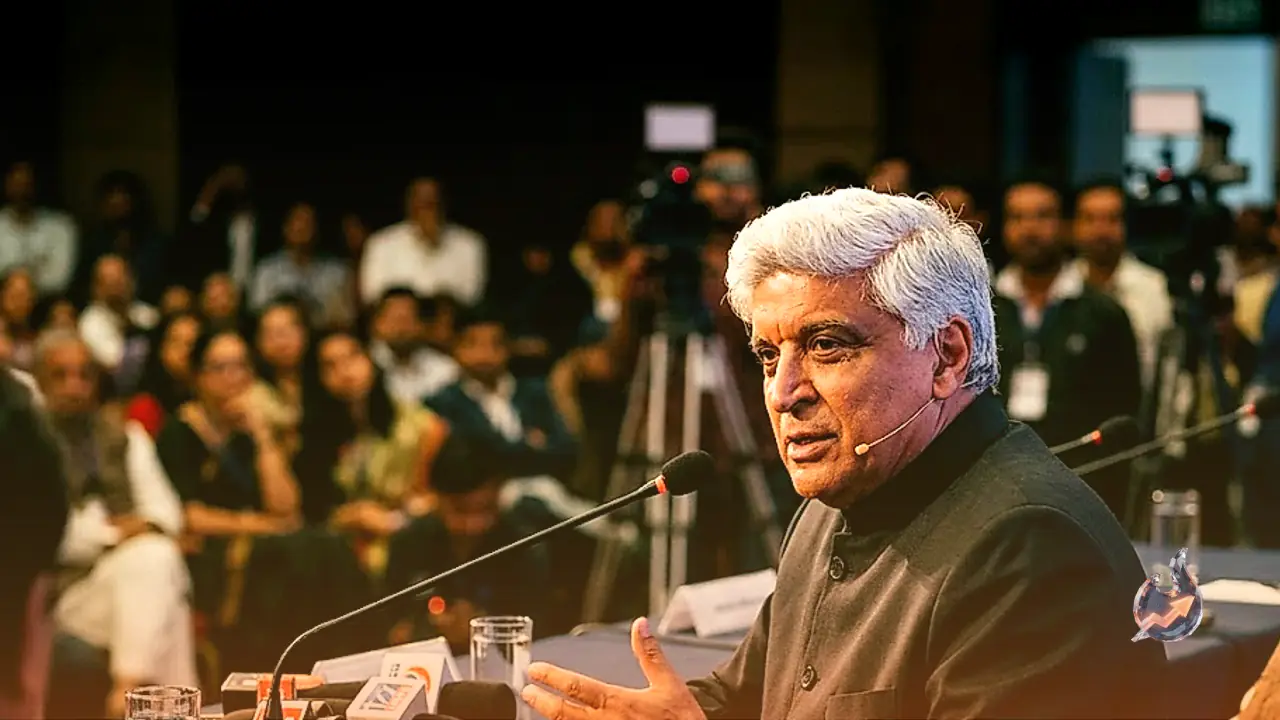

Renowned writer and lyricist Javed Akhtar has called for deep introspection regarding community-led social evolution, arguing that essential reforms in personal laws ought to arise from within rather than awaiting state intervention. Reflecting on the outlawing of instant triple talaq, he questioned why the Muslim community did not take the initiative to discard arbitrary customs on its own, noting that relying on political action to correct obvious social flaws reflects poorly on the collective discourse around secularism.
Questions Over Post-Independence Inertia in Personal Law
Akhtar laid out a historical timeline to emphasize his critique, observing that the Muslim Personal Law came into being in 1937, while India attained independence in 1947. He questioned why, throughout the multiple decades following freedom, there was no organized movement from within the community to modernize these statutes. According to him, any system carrying regressive practices should generate its own reformist impulse rather than resisting change until an external authority steps in.
He pointedly asked why it took a government led by the Bharatiya Janata Party to introduce legislation banning instant triple talaq. Akhtar described that scenario as deeply embarrassing for the community, questioning what kind of secularism allows regressive customs to linger until a legislative mandate forces their end. In his view, failing to clean one's own house inevitably opens the door to outside intervention.
The Supreme Court Ruling and the 2019 Statute
The practice of instant triple talaq, or talaq-e-biddat, remained at the center of judicial and public scrutiny in India for decades. On August 22, 2017, a five-judge Constitution Bench of the Supreme Court delivered a landmark ruling, striking down instant triple talaq as arbitrary and unconstitutional by a 3:2 majority. That judgment effectively nullified the legal recognition of the practice under constitutional standards.
Following the apex court's pronouncement, legislative measures were introduced to enforce the prohibition. In July 2019, Parliament passed the Muslim Women (Protection of Rights on Marriage) Act, formally categorizing instant triple talaq as a criminal offense. The statutory framework established clear legal penalties, closing the avenues that had allowed the practice to continue unchecked.
Prioritizing Internal Housecleaning Over External Critique
Akhtar emphasized the principle that every community has an obligation to confront its own internal shortcomings before seeking to criticize others. He remarked that only a very small fraction of people within the Muslim community openly challenges dogmatic beliefs and social injustices. In his assessment, credibility begins with a willingness to rectify domestic flaws rather than deflecting attention toward outside issues.
Addressing his personal position, Akhtar noted that while he is an atheist, he was born into a Muslim family. He explained that this background gives him both the duty and the standing to speak candidly about regressive elements within the community. He reiterated that his primary commitment is to address problems close to home, maintaining that only after correcting internal failures does one earn the moral authority to challenge external wrongs.
Rejecting Victimhood and Urging Courage Among Progressives
Critiquing what he termed a persistent double standard in social debates, Akhtar pointed out that many individuals from the Hindu community routinely speak out against fascism and communal politics in India. In contrast, he observed, the voices raised against fundamentalism, intolerance, and orthodoxy within the Muslim community remain noticeably scarce.
He argued that no group should permanently adopt a posture of victimhood. Instead, educated, progressive, and liberal individuals emerging from Muslim backgrounds must summon the courage to oppose obsolete customs and rigid orthodoxies. While acknowledging that thoughtful individuals with such views do exist, Akhtar noted that many remain hesitant or fearful of voicing their convictions in public forums.
Parallels With the Hindu Code Bill of 1956
To support his argument that traditions must yield to legal and social evolution, Akhtar referenced the reform of Hindu personal laws. He recalled the contentious passage of the Hindu Code Bill in 1956, which encountered fierce opposition from conservative factions at the time, particularly regarding the proposal to grant daughters rights to ancestral property.
Despite sustained pushback, legal evolution continued, culminating in the 2005 amendment that granted daughters equal inheritance rights in ancestral property alongside sons. Drawing a sharp contrast, Akhtar remarked on the hypocrisy of conservative quarters that once vehemently opposed equal rights for women yet readily embrace contemporary slogans such as 'Beti Bachao, Beti Padhao'.
A Long Record of Speaking Out on Civic Issues
Throughout his career, Javed Akhtar has frequently voiced strong positions on governance, human rights, and social harmony. In August 2026, he publicly questioned remarks made by Pakistan President Asif Ali Zardari concerning the condition of Hindu minorities in Pakistan, demonstrating his consistency in challenging orthodoxy across borders.
His creative work has mirrored these civic concerns, emphasizing secular ideals and shared humanity. In director Rajkumar Santoshi's 2026 partition drama film '1947: Partition', Akhtar collaborated with composer AR Rahman to craft songs capturing the human tragedy and displacement of the 1947 division. His latest reflections on personal law and the urgent need for internal community reforms have once again rekindled national conversations on legal equality and societal modernization.