























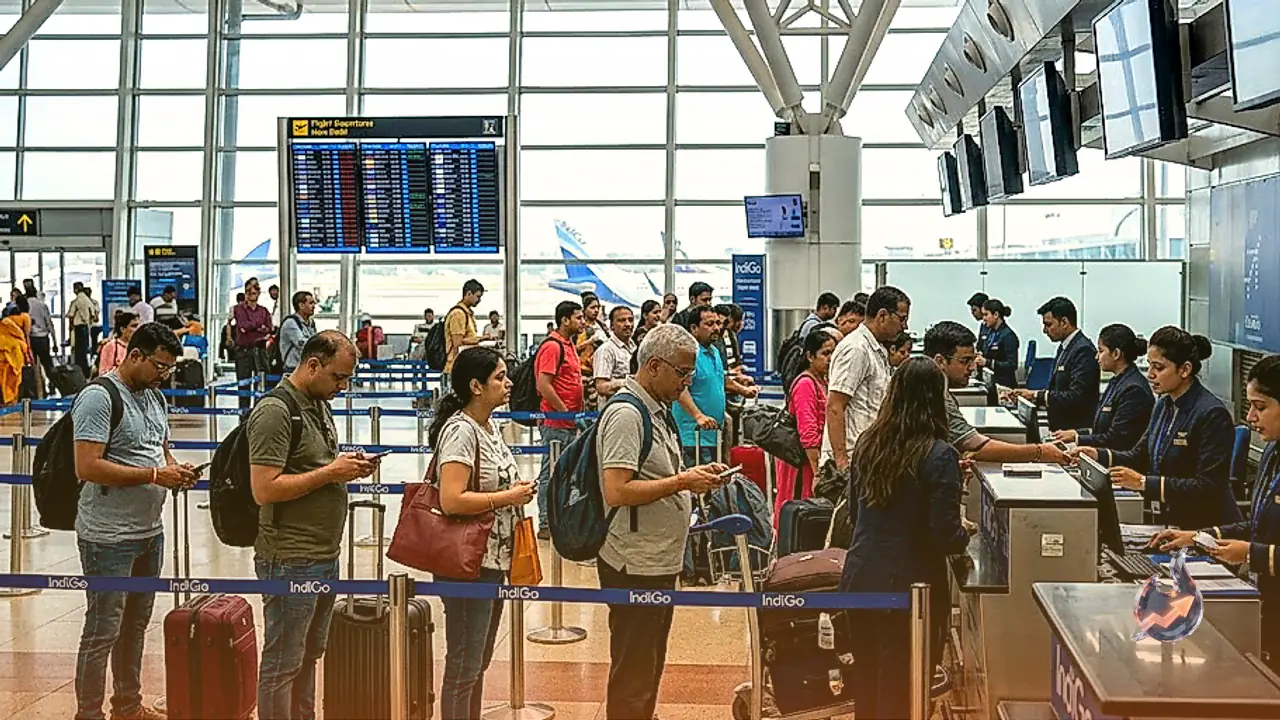

Air travel has turned noticeably steeper from Tuesday, October 6, as India's largest carrier IndiGo moved to offset escalating aviation turbine fuel costs by imposing higher fuel surcharges across its domestic and international networks. The airline communicated on Monday that the revised surcharge structure came into force at 00:01 hours on October 6, raising the final ticket prices across diverse distance brackets.
Distance-Tiered Escalation Across the Domestic Network
For domestic sectors, the carrier has instituted an increase between Rs 100 and Rs 350 based on route length, establishing a revised surcharge ladder that begins at Rs 375 and climbs up to Rs 1,300 per passenger. The move directly raises the baseline ticketing cost for travelers flying short feeder routes as well as long trunk sectors spanning the breadth of the country.
Under the updated schedule, flights covering between 0 and 500 km now carry a fuel surcharge of Rs 375 per passenger. For distances falling between 501 and 1,000 km, travelers must pay Rs 600. The slab between 1,001 and 1,500 km incurs a surcharge of Rs 900, while journeys spanning 1,501 to 2,000 km attract a fee of Rs 1,150. For itineraries exceeding 2,000 km, the surcharge stands at Rs 1,300 per traveler.
International Surcharges Scaled up to Rs 10,000
Overseas itineraries have absorbed an even broader revision, with the airline pricing revised surcharges between Rs 1,000 and Rs 10,000 per passenger depending on global region and flying distances. Neighborhood travel and long-haul connections have been divided into specific destination clusters.
Passengers journeying to SAARC nations over sectors up to 500 km face a surcharge of Rs 1,000, while trips beyond 501 km within SAARC territory incur Rs 3,000. Bookings connecting India to South East Asia, the Gulf and Middle East, and North and East Asia will now attract a uniform surcharge of Rs 5,500. Flights bound for Africa carry an added charge of Rs 6,000 per passenger, whereas European destinations bear the steepest levy of Rs 10,000 per passenger.
Surging Fuel Invoices Disrupt Operational Economics
Explaining the pricing intervention, the carrier cited an ongoing and steep rally in jet fuel rates, highlighting that recent market adjustments included a month-on-month jump exceeding 14%. The sharp escalation in procurement costs forced the airline to reconfigure its operational cost framework to withstand market fluctuations in fuel pricing.
Underscoring the operational pressures, IndiGo stated that jet fuel constitutes a critical portion of any airline's operating expenses. Consequently, sustained surges in aviation turbine fuel threaten to destabilize cost frameworks and network-wide financial viability across the entire aviation industry, compelling the carrier to pass a portion of the expenditure to ticket pricing.