






















Bharat Petroleum Corporation Limited (BPCL), one of India's premier state-owned oil marketing companies, has stunned the financial markets by reporting a massive financial loss in the first quarter of the current financial year. The company recorded a staggering deficit of Rs 3,962.13 crore. This development is particularly significant because it marks the first time in 15 quarters that the oil marketing giant has slipped into the red. To truly understand the magnitude of this reversal, one only needs to look at the corresponding quarter from the previous year, during which the company had posted a robust profit of Rs 3,333.97 crore. The sharp transition from a healthy surplus to a multi-crore deficit highlights the severe vulnerabilities facing state-run fuel retailers in a highly volatile global energy environment.
Geopolitical Tensions and the Crude Oil Spike
The primary catalyst for this massive financial setback was an abrupt and severe spike in international crude oil prices, driven entirely by geopolitical instability. The crisis escalated rapidly following the February 28 attacks involving the United States and Israel striking targets in Iran, which subsequently led to retaliatory measures from the Iranian side. This sudden eruption of armed conflict in West Asia sent shockwaves through the global petroleum supply chain. Panic gripped the commodity markets, disrupting established shipping routes and supply logistics. Consequently, the international benchmarks for crude oil experienced a phenomenal surge, skyrocketing by more than 50 percent in a very short span. For heavily import-dependent nations, this sudden price explosion translated into an immediate and severe cost escalation.
Domestic Price Freeze and Mounting Pressure
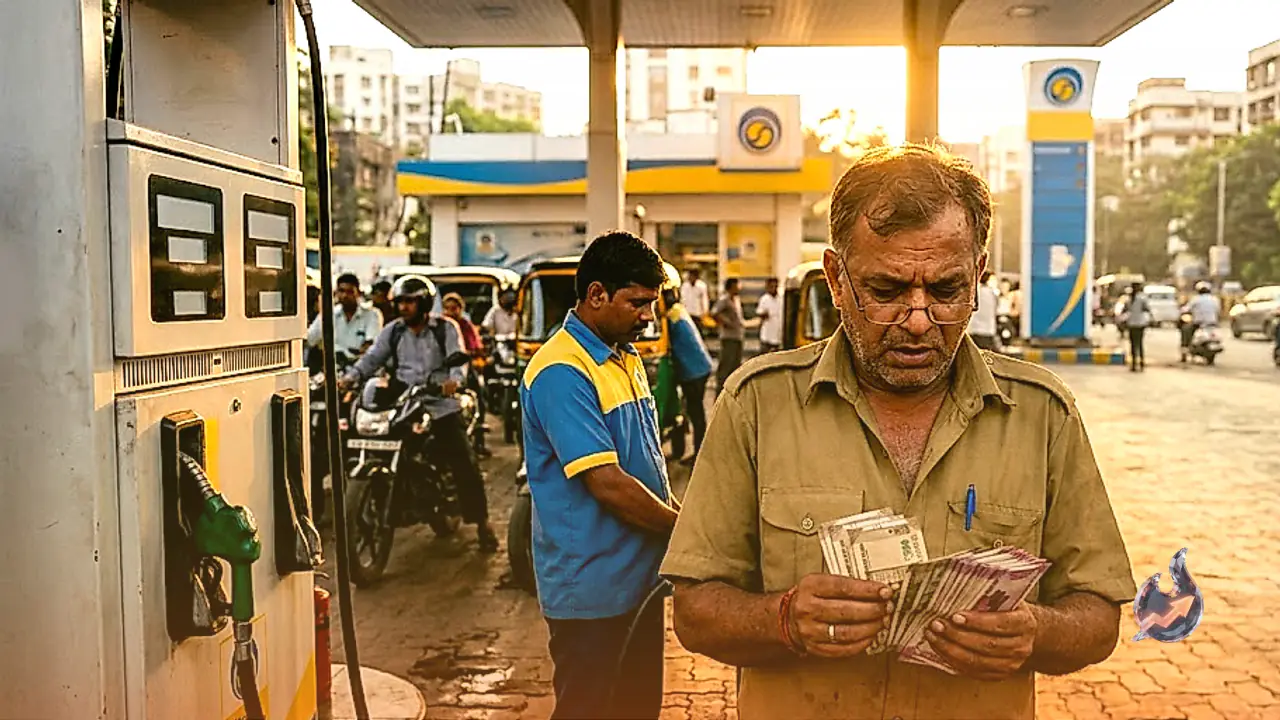
While global crude prices were touching the sky, the situation on the ground in India remained artificially stable for consumers. In an effort to shield the general public from the immediate inflationary shocks of the international oil market, the retail prices of essential fuels like petrol, diesel, and domestic liquefied petroleum gas (LPG) were not revised upwards. BPCL, acting in tandem with other state-owned oil marketing entities such as Indian Oil Corporation (IOC) and Hindustan Petroleum Corporation Limited (HPCL), maintained a strict freeze on retail fuel rates for approximately two and a half months. During this extended period, these companies absorbed the massive difference between their soaring import costs and the frozen retail prices, effectively selling fuel below their procurement and processing costs. This prolonged suppression of retail prices acted as a direct drain on the financial reserves of the oil marketers.
Belated Hikes Fail to Plug the Deficit
As the financial bleeding intensified and the companies' balance sheets came under immense pressure, a course correction became unavoidable. During the second fortnight of May, the three state-run oil marketing companies were finally compelled to pass on some of the burden to consumers. They implemented price hikes exceeding Rs 7.50 per liter for both petrol and diesel. Concurrently, the price of the standard 14.2-kilogram domestic LPG cylinder was increased by Rs 89. However, this delayed intervention proved to be a classic case of too little, too late. By the time these retail price adjustments were executed, the underlying cost of international crude oil had already escalated to such extreme levels that the hikes were entirely insufficient to plug the widening financial hole. The accumulated under-recoveries had simply become too large to be offset by these mid-quarter price increases.
Massive Under-Recoveries on Auto Fuels
BPCL explicitly acknowledged in its official statements that the primary driver behind the massive quarterly deficit was the forced sale of auto fuels at suppressed rates. According to industry reports outlining the extent of the damage, oil marketing companies were incurring severe net losses on every single drop of fuel sold during this turbulent quarter. Specifically, the companies faced an under-recovery of Rs 10.6 on every liter of petrol dispensed at the retail pumps. The situation for diesel was even more catastrophic, with losses amounting to an enormous Rs 18.4 per liter. This meant that the revenue generated from selling refined fuel to domestic consumers was nowhere near enough to cover the exorbitant costs associated with purchasing the unrefined crude from overseas markets, shipping it, and processing it in domestic refineries.
The LPG Burden and Pending Subsidies
The financial hemorrhage was not limited to automotive fuels, as domestic cooking gas also played a massive role in dragging down the company's bottom line. During the April to June quarter alone, BPCL registered a colossal loss of Rs 3,485.22 crore specifically from the sale of LPG. Furthermore, the company was already carrying a massive financial burden in the form of unpaid government dues. As of March 31, 2026, the government owed the company a staggering Rs 12,318.52 crore in pending LPG subsidies. While the company did receive a compensation payout of Rs 1,898 crore from the government during the current quarter, which provided a minor boost to the overall revenue streams, this financial relief was merely a drop in the ocean compared to the massive operational losses and historical dues piling up on the books.
Revenue Growth Overshadowed by Exploding Costs
The intricate financial metrics for the quarter paint a clear picture of a company whose top-line growth was entirely cannibalized by surging operational costs. BPCL actually witnessed a healthy 23 percent increase in its overall revenue, which climbed to an impressive Rs 1.59 lakh crore during the quarter, up from Rs 1.35 lakh crore in the corresponding period of the previous year. However, this revenue growth was completely overshadowed by an exponential rise in expenditures. The company's total expenses ballooned by a massive 36 percent, reaching an unprecedented Rs 1.66 lakh crore. The defining factor behind this staggering expense inflation was the sheer cost of raw materials, primarily crude oil, which saw a monumental spike of 68.7 percent, entirely wiping out any benefits gained from the higher revenue figures.
Sluggish Domestic Demand Adds to the Woes
Compounding the misery of soaring international costs was a noticeable slowdown in domestic consumption. While purchasing raw materials became drastically more expensive, the volume of fuel being sold within the country actually witnessed a decline. During the quarter under review, BPCL managed to sell 13.62 million tonnes of petroleum products, which represents a noticeable drop from the 13.86 million tonnes sold during the same quarter in the previous year. This downward trend in consumption was evident across the entire quarter, with nationwide fuel demand contracting by 4.6 percent in April, followed by a sharper 6.5 percent drop in May, and a further 3.1 percent decline in June. This sustained reduction in consumption clearly indicates that in India, which holds the position of the world's third largest oil importer, the broader inflationary pressures in the economy effectively dampened the overall demand for fuel during this highly volatile period.