






















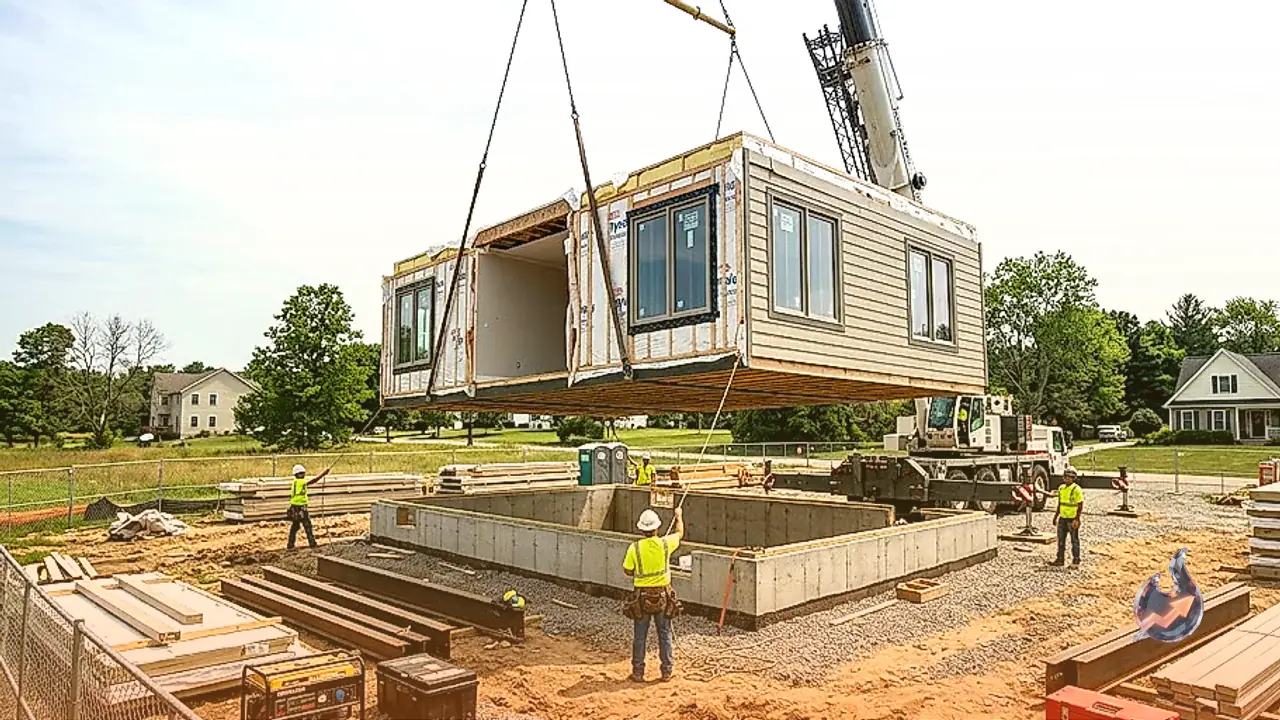

Constructing one's own home is a cherished dream for everyone, but bringing this vision to life often drains both peace of mind and physical energy. From arranging funds to procuring raw materials and finding skilled laborers, the entire process poses enormous challenges at every turn. To overcome these hurdles, the trend of prefabricated houses is growing at a rapid pace. Instead of traditional bricks, cement, sand, and water, everything required for the structure is manufactured inside a factory setting and later assembled directly at the building site.
Materials Used in Prefabricated Construction
Unlike traditional brick-and-mortar buildings, prefab homes utilize specialized materials such as Aerocon panels, Bison boards, steel sections, and iron pipes to construct walls, roofs, and flooring. This approach not only slashes construction time significantly but also reduces overall expenses compared to conventional building methods. This innovative technology is gaining widespread popularity across the country, with its highest adoption rate currently being observed in southern regions.
The Role and Benefits of Aerocon Panels
Instead of conventional bricks, Aerocon panels are utilized to build the walls of prefab houses. Bison boards are installed for roofing, while similar materials are deployed for interior partitioning, flooring, and false ceilings. Aerocon panels function as sandwich panels created from cement-based materials and fiber cement boards. These panels provide exceptional sound insulation, rendering the home completely soundproof. Furthermore, they prevent issues like dampness and fire hazards, while helping maintain a cooler indoor temperature during peak summer months.
Applications and Safety Features of Bison Boards
Bison boards are also heavily featured in the construction of prefab houses. These are specialized particle boards composed of a mixture of cement and wood elements. They are primarily used for creating interior room partitions, as well as for ceiling and flooring applications. These boards offer complete resistance against water and fire, ensuring that prefab homes remain free from moisture-related dampness and protected against potential fire accidents.