























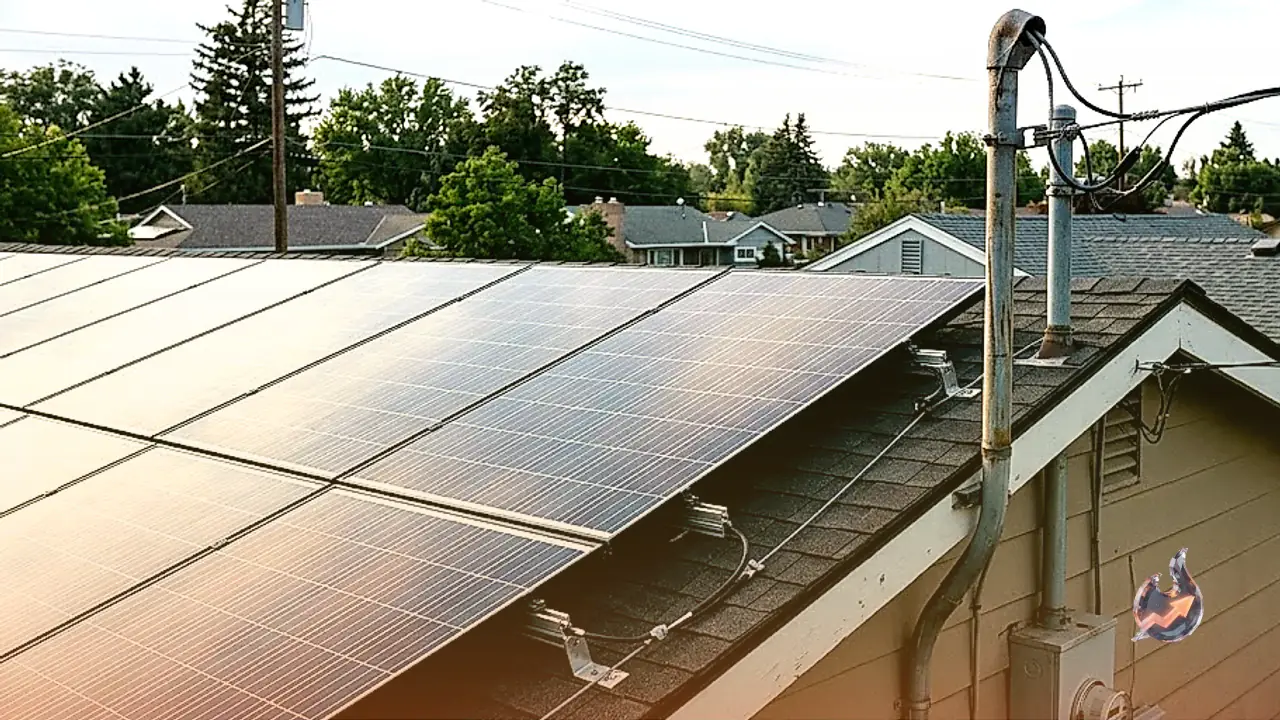

Setting up solar panels on residential rooftops has quickly become one of the most attractive options for households trying to escape rising utility costs. Generating clean electricity directly overhead to run everyday appliances offers both economic relief and long-term energy independence. Government initiatives actively encourage this transition, and energy analysts frequently recommend rooftop setups as an effective solution for urban and rural homes alike. However, this growing enthusiasm has also nurtured a widespread misconception. Many homeowners believe that once photovoltaic panels are installed, their electric meter will stop ticking entirely, doing away with utility bills forever regardless of their connection to the local grid.
The reality of whether your power bill can reach absolute zero is nuanced, leaning on both a yes and a no. While thousands of Indian households have successfully seen their energy consumption costs plummet to nothing, attaining an invoice with literally zero rupees due requires meeting specific regulatory and technical conditions. Before investing in domestic solar power, consumers need to understand how utility tariffs, grid connectivity, and seasonal variations interact with rooftop generation.
What Consumer Research Reveals About Solar Savings
Consumer motivation behind transitioning to solar energy is largely driven by financial savings. According to an extensive study carried out by the Council on Energy, Environment and Water, 81 percent of families planning to adopt rooftop solar identified lowering their electricity expenditure as their primary objective. This underscores that while clean energy and carbon reduction are acknowledged benefits, immediate household savings remain the decisive factor for most adopters.
The findings among households that have already made the switch validate these financial expectations. Families with operational rooftop solar units reported an average reduction of 71 percent in their monthly power bills. Furthermore, the survey found that over 93 percent of rooftop solar adopters express high satisfaction with the resulting drop in energy costs. An impressive 87 percent of these consumers stated they are eager to recommend their solar equipment installers to friends and acquaintances. These findings prove that substantial financial relief is virtually guaranteed, even if complete bill elimination is not universal.
The Stance of the Renewable Energy Ministry on Energy Charges
Clear official guidance helps dispel common misunderstandings regarding total bill elimination. In its official queries section, the Ministry of New and Renewable Energy clarifies that installing rooftop solar panels can reduce active energy charges to zero, but achieving a completely zero-rupee utility bill remains confined to very specific circumstances.
Electricity bills consist of distinct components that behave differently under solar generation. The primary component is the energy charge, which reflects the actual units of electricity consumed during a billing cycle. The secondary components include fixed demand charges tied to the connected meter load, meter rental charges, and administrative surcharges or taxes. A well-proportioned solar installation can match or exceed your total kilowatt-hour consumption, effectively bringing the energy consumption balance down to zero. However, the recurring baseline charges for maintaining an active grid connection remain unaffected by solar production.
Navigating Nighttime Power Requirements and Grid Ties
Solar photovoltaic modules have an inherent operating limit, they generate electricity exclusively when daylight strikes their cells. During bright afternoon hours, a domestic system frequently produces more power than a home immediately needs. But when dusk falls, on-site solar production drops to zero, raising the vital operational question of how nocturnal electricity needs are sustained.
Homeowners generally address nighttime consumption through two pathways. The standard approach relies on keeping the residence tied to the local electricity grid, drawing regular grid power through the night. The alternative approach involves integrating dedicated battery banks to store excess daytime power for evening use. While battery storage performs smoothly during sunny summer stretches, winter months and prolonged monsoon overcast present significant constraints. During extended spells of low sunlight, battery units struggle to attain a full charge and frequently require supplemental charging from the grid. Because complete off-grid reliability remains expensive and seasonally fragile, staying plugged into the distribution grid is essential for most households, locking in basic fixed monthly connection fees.
How the Net Metering Mechanism Balances Your Bill
The vast majority of residential solar systems across the country function through on-grid architecture backed by net metering. Under this setup, power generated by rooftop panels instantly supplies running appliances. When production outpaces the home's live demand, the surplus electricity automatically exports into the distribution grid through a bidirectional meter.
Conversely, during the night or across cloudy weather conditions, the home draws electricity back from the utility network. At the close of each billing period, the local distribution company tallies the net units by subtracting exported solar energy from imported grid electricity. If the total solar generation exceeds the imported units, the surplus kilowatt-hours roll forward as energy credits into subsequent billing cycles. This mechanism eliminates the primary energy charge from your statement, but the utility continues to levy the mandatory fixed charges based on your contracted load capacity.
Generation Metrics and Surplus Compensation Opportunities
To optimize financial outcomes, sizing the solar installation in alignment with actual household demand is critical. For instance, a typical 3-kilowatt rooftop solar system produces approximately 300 to 360 kilowatt-hour units of electricity each month under average environmental conditions. If a household consumes 300 to 360 units or fewer in that timeframe, the net energy usage charges on their statement will clear to zero.
In instances where generation regularly exceeds usage, certain regional electricity boards offer compensation for net positive exports. In some states, distribution utilities credit surplus annual generation at predetermined feed-in rates, or pay out accumulated balances directly. If the value of this excess power surpasses the mandatory fixed connection charges, a consumer can theoretically experience an effective zero-rupee bill or even a net-positive financial return. For the typical consumer, however, the realistic expectation is a drastically lowered invoice carrying only the minimum mandatory connection and meter charges.