























The dynamics of the Indian smartphone market are undergoing a major shift. There was a time when Chinese smartphones completely dominated the country, with Xiaomi first and then Vivo capturing the top spot and maintaining their position as number one for the past decade. However, the scenario has changed, and the standing of Chinese brands is steadily weakening. During the September quarter, Chinese smartphone shipments suffered their largest drop in 10 years. According to the market research firm Omdia, shipments plunged by a massive 26 percent during the July-September period.
Key Factors Behind the Decline in Shipments
The report highlights that due to rising prices, consumers held back from purchasing new phones, while manufacturers reduced supply ahead of the festive season. As a result, shipments in the third quarter of this year dropped to 3.58 million units, marking the lowest third-quarter level since 2016. This downturn completely altered the market rankings, allowing Samsung to overtake Vivo and claim the top spot, while the collective market share of Chinese brands shrank from 75 percent a year ago to nearly 68 percent.
Samsung Emerges as the New Market Leader
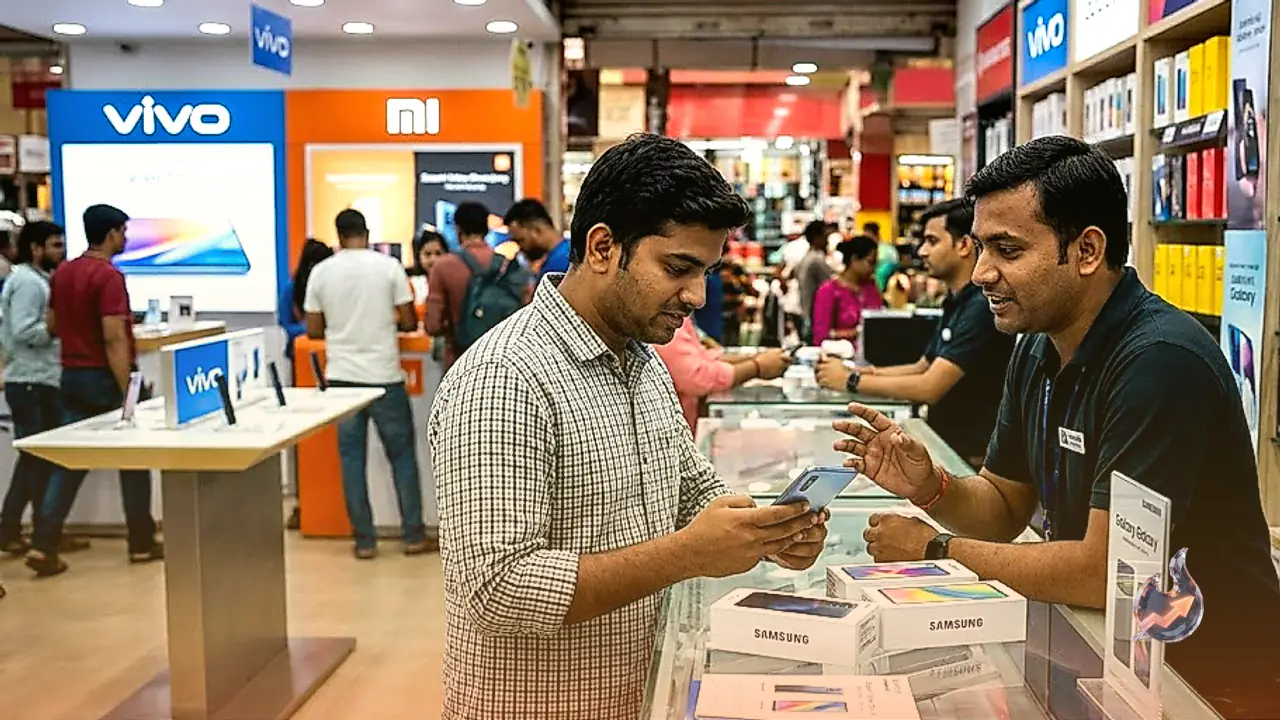
South Korean tech giant Samsung shipped 6.7 million phones, reclaiming the top position for the first time since early 2024. The company's affordable Galaxy A-series helped drive sales, while cashbacks, exchange offers, and extended financing plans attracted buyers across various price points. Meanwhile, Vivo's shipments plummeted 34 percent to 6.4 million units, recording the steepest decline among the top five companies. Frequent price hikes disrupted retailers' inventory planning, and a limited supply of entry-level phones further weakened the brand's standing.
Performance of Xiaomi, OPPO, and Apple
Xiaomi, known for its value-for-money proposition offering more features at lower prices, came under severe pressure. Due to rising component costs, the company had to compromise on pricing and memory configurations, causing its shipments to fall 28 percent to 4.7 million units. Another Chinese brand, OPPO, shipped 4.9 million units and secured the third spot, though its shipments also dropped by 24 percent. During this period, Apple shipped 3.9 million phones, taking the fifth position. Strong demand for the iPhone 16 and the base iPhone 17, along with efforts to stockpile inventory ahead of potential price hikes, provided solid support to Apple's shipments.
Market Outlook and Analyst Insights
Omdia Principal Analyst Sanyam Chaurasia noted that due to fewer exclusive launches, a limited number of affordable models, and fewer promotional offers, online channels missed out on their traditional festive season boost. The later timing of Diwali this year also made the quarterly decline look sharper, as some offline festive stock shifted into October. These figures represent wholesale shipments to vendors rather than direct consumer purchases. This weakness is expected to persist beyond the festive season, and the market could witness a further slight contraction in 2027.