





















The British Pound has experienced a steady rebound against the American Greenback, pushing the GBP/USD exchange pair back up toward the 1.3300 zone during recent trading sessions. This upward momentum comes amidst a broader weakening of the US Dollar, as market participants adopt a cautious stance ahead of scheduled public remarks by Federal Reserve Chair Kevin Warsh. Investors across global foreign exchange desks are keenly watching macro developments, weighing both central bank communication and critical technical thresholds that could define short-term price trends.
Fed Chair Speech and US Dollar Volatility Risks
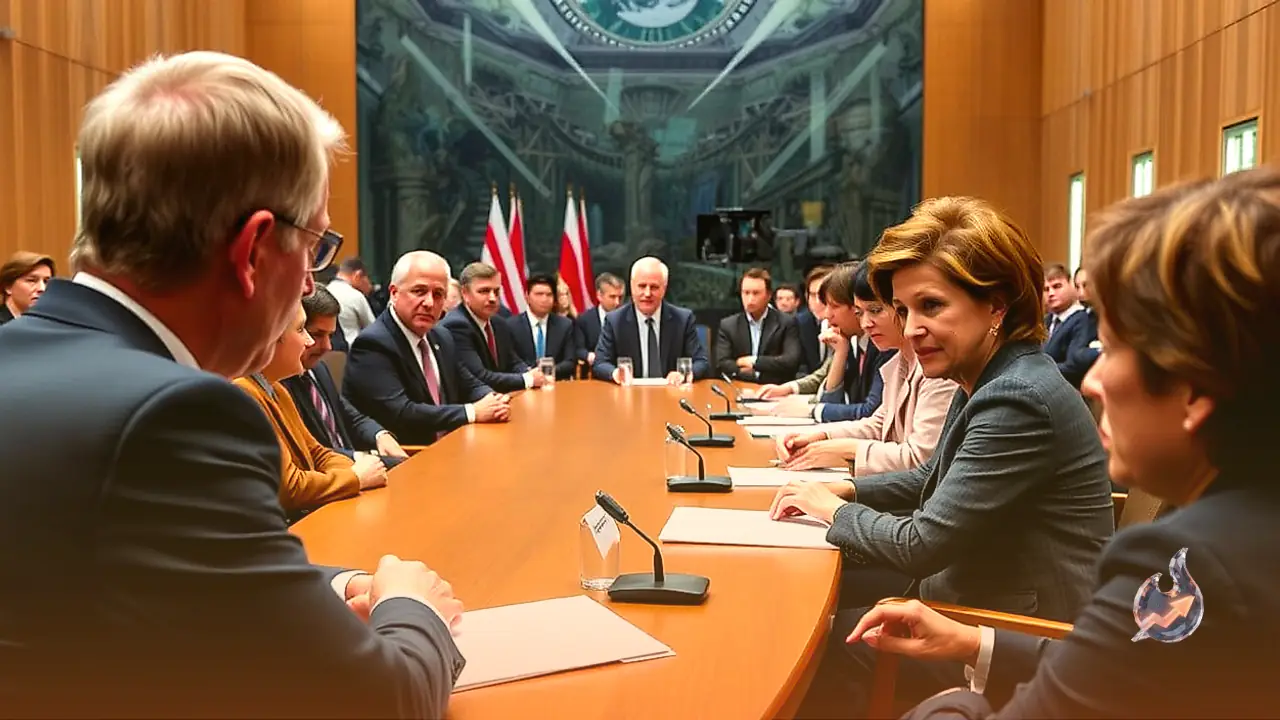
The primary catalyst driving currency market positioning centers on Federal Reserve Chair Kevin Warsh's planned appearance at a fireside discussion alongside International Monetary Fund (IMF) Managing Director Kristalina Georgieva at 03:30 GMT. Financial markets anticipate heightened price swings during and after the address, as traders scrutinize Warsh's assessments regarding economic growth trajectory, labor market health, and persistent inflationary pressures. The US Dollar Index (DXY), which measures the greenback against a basket of six major foreign currencies, has hovered around the 101.90 level after holding onto recent losses.
Although Chair Warsh has reiterated a firm commitment to delivering long-term price stability, his commentary has avoided explicit forward guidance regarding the exact future trajectory of interest rates. This neutral to non-committal stance has kept the US Dollar under modest selling pressure, creating room for high-beta and major currencies like the British Pound and Australian Dollar to stage technical rebounds. Traders are actively evaluating whether sticky inflation metrics could compel the Federal Reserve to maintain elevated policy rates or if cooling economic indicators will eventually force a shift toward easing.
Bank of England Policy Stance and Inflation Outlook
On the British side of the currency pair, Bank of England (BoE) Governor Andrew Bailey provided crucial insights into the UK macroeconomic landscape. Governor Bailey addressed growing market concerns regarding potential energy price shocks and their risk of cascading into wider wage growth and elevated consumer prices. He effectively ruled out the immediate threat of an aggressive second-round inflationary spiral, noting that current business focus remains firmly anchored on cost reduction rather than aggressive price hikes.
However, Governor Bailey candidly described current elevated price pressures as enormously frustrating, emphasizing that overall inflation figures remain above the central bank's target rate. Quantitative analysis from the FXS Speechtracker assigned Bailey's address a score of 6.2 out of 10, slightly below his historical average baseline of 6.4 out of 10. This evaluation indicates a mildly softer market impact than usual, reflecting a subtly dovish tone at the margin. By clarifying that second-round inflation risks are subdued for now, the governor's remarks have tempered expectations for aggressive monetary tightening by the Bank of England in the immediate term, effectively capping aggressive upside spikes for the Sterling.
Technical Levels, Indicators, and Chart Patterns
From a technical perspective, the GBP/USD daily chart demonstrates a cautiously constructive setup as price action attempts to stabilize following recent downside corrections. The pair currently trades near 1.3282 and 1.3300, holding marginally above its 20-day Exponential Moving Average (EMA) located near 1.3277. This key moving average now functions as dynamic immediate trend support, helping buyers maintain control over short-term price action.
Oscillator indicators present a balanced picture. The Relative Strength Index (RSI) fluctuates near 48 to 53, positioned close to the neutral 50 threshold. This reading suggests that while selling momentum has paused, bullish conviction remains tentative and requires further fundamental confirmation before establishing a sustained breakout. Meanwhile, moving average convergence indicators show a subtle bullish histogram signal, with price action staying framed within recent Bollinger Band boundaries.
Key price targets and dynamic levels for GBP/USD include
- Immediate Resistance: The September 30 peak near 1.3311 represents the initial hurdle for bullish traders, followed by secondary resistance around the 1.3400 structural zone.
- Dynamic Support: The 20-day EMA at 1.3277 offers immediate dynamic protection against intraday pullbacks.
- Crucial Downside Support: The 10-month low of 1.3137 remains the primary structural line of defense for buyers; a clean breakdown below this key floor would expose psychological support at 1.3100.
Broader FX, Commodities, and Crypto Markets
The broader financial landscape reflects widespread sensitivity to US Dollar movements and global yield fluctuations. In Asia trading sessions, the Australian Dollar (AUD/USD) regained upward momentum, extending its recovery bounce toward the 0.6950 level as Dollar weakness provided relief across commodity-linked currencies. Conversely, USD/JPY faced renewed downward pressure, dropping below the key 158.00 mark as non-committal Fed remarks weighed heavily on Greenback bulls.
In the commodities space, Gold drifted slightly lower toward $4,150 per ounce, relinquishing a portion of its previous gains. A modest stabilization in US Treasury yields, alongside persistent US inflation numbers supporting bets for potential Fed rate decisions, generated temporary headwinds for bullion despite underlying geopolitical tensions. In the digital assets sector, major cryptocurrencies displayed mixed performance; Bitcoin (BTC) and Ethereum (ETH) defended crucial support thresholds, whereas Ripple (XRP) struggled below resistance as sticky inflation figures damped broader risk-on sentiment.
Market Outlook and Strategy Considerations
As foreign exchange markets digest central bank commentary, traders must carefully manage risk around high-impact economic releases. Live market data highlights a pivot point near 1.3300 with an Average True Range (ATR) around 0.01, suggesting tactical stop-loss buffers should be maintained when managing exposure. Overall, while GBP/USD displays signs of short-term recovery, sustained bullish continuation will depend heavily on incoming US inflation trends and Federal Reserve policy signals.