



















Across communities experiencing unprecedented digital infrastructure expansion, the massive server complexes that power modern computing are facing fierce resistance over their intense energy consumption and expansive footprints. To counter this mounting public pushback, data center operators and industry advocacy groups have quietly shifted their community relations playbook toward a far younger audience: schoolchildren. By funding flag-making kits for first graders, publishing illustrated storybooks about server facilities, and organizing high school field trips to server farms, the sector is borrowing traditional public relations tactics historically used by heavily scrutinized corporate industries.
Children's Literature and Industry Mascot Storylines
Leading this educational campaign is the non-profit organization 7x24 Exchange International, an association dedicated to championing data centers as essential, mission-critical infrastructure. As part of its outreach efforts, the organization actively promotes an illustrated children's story titled 'What is a Data Center?' The narrative features a honey badger named Honey who takes a guided walk through a server facility alongside an employee named Oliver. Throughout the facility tour, Oliver explains to Honey that data center workers bear the continuous responsibility of ensuring supported operations remain accessible to users worldwide at all hours. In response, Honey remarks whether that includes late-night online shopping by her mother while her father sleeps without knowing.
This children's book forms one component of a wider, coordinated public relations drive across the tech infrastructure landscape. Alongside traditional corporate lobbying, local employment pledges, and tax incentive negotiations, operators and trade associations are targeting the youth demographic to establish long-term community acceptance. Confronted with heightened neighborhood objections to sprawling facilities that strain local electrical grids, the industry is seeking to soften its public profile through direct classroom engagement.
Memorial Day Craft Kits and International Data Center Day
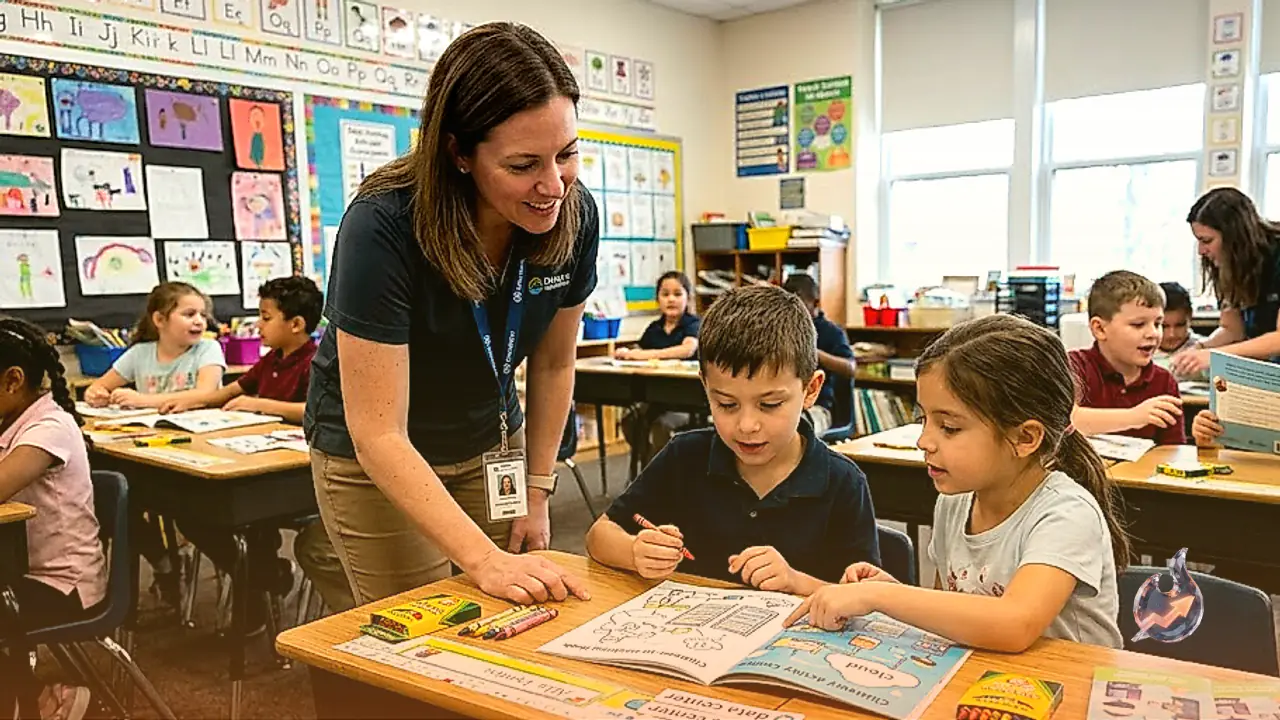
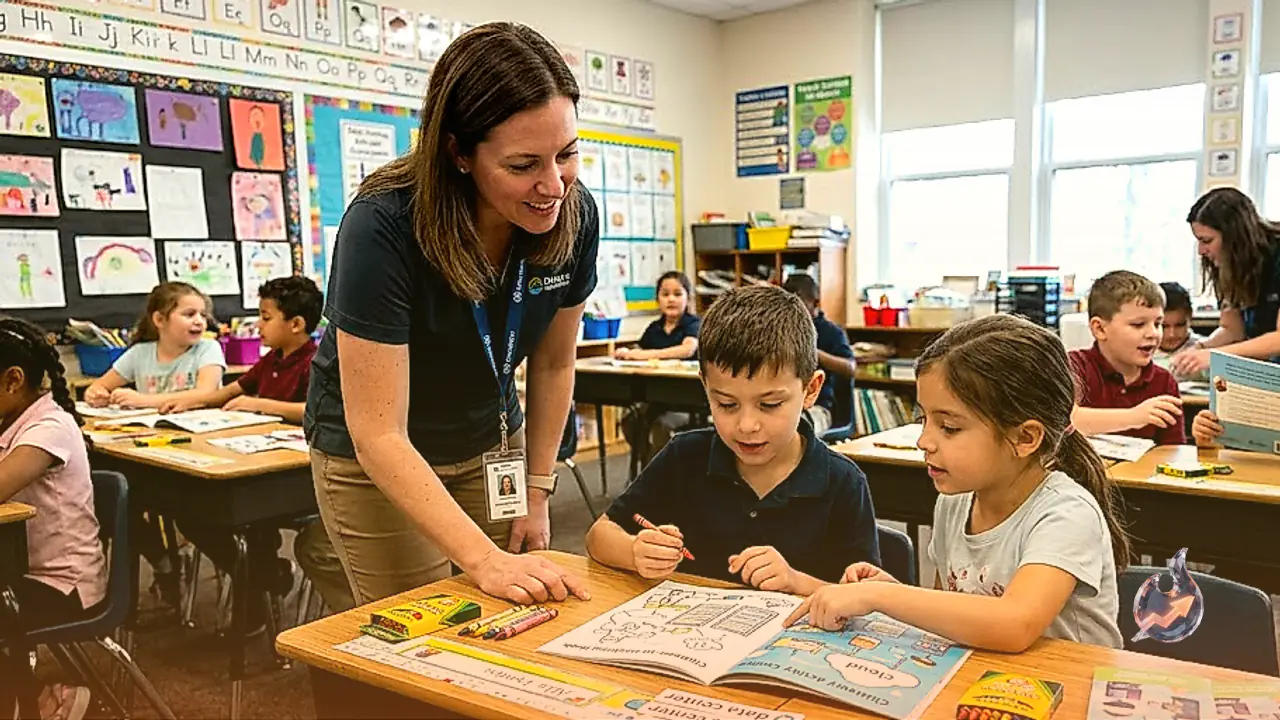
In May, the Potomac chapter of the Association for Computer Operations Management, known as AFCOM, sponsored Memorial Day flag-crafting supplies distributed to 3,100 first-grade students across 37 primary schools in Loudoun County, Virginia. The jurisdiction is widely referred to as Data Center Alley due to its dense concentration of facilities. Included alongside the craft materials was an informational insert highlighting statistical figures that emphasized the economic contributions the facility operators deliver to the local region.
Beyond distributing themed children's stories, 7x24 Exchange International also established and oversees an annual event termed 'International Data Center Day.' The organization frames the observance as an initiative to raise broader awareness of server infrastructure and foster interest among upcoming workforce candidates. The group regularly urges members to propose and pitch the holiday directly to local school leadership and administrators.
For participating secondary schools, the organization supplies custom crossword challenges alongside materials outlining specialized vocational training pathways. For elementary classrooms, it provides facility-themed coloring pages, guides for simple evaporation science demonstrations, and printable activities encouraging children to illustrate concepts like cloud storage or imagine a data superhero. The group also endorses several other youth-focused publications, such as a tale where two sisters explore a facility guided by a robot named JB, a narrative in which two brothers enter a digital realm to rescue the internet, and a title named 'Polly Packet's Precious Payload,' depicting a mother explaining server networks to her child.
Expanding High School Tours and Facility Field Trips
Over the course of the current year, 7x24 Exchange International has coordinated or directly participated in at least six K-12 events at educational institutions nationwide. In Minnesota, the association arranged an excursion for students from Fridley High School to visit an operational Cummins diesel power generation plant, offering teenagers a firsthand look at the massive industrial generators relied upon to supply backup electricity to data centers worldwide.
The organization is far from alone in introducing students to infrastructure operations. A review of publicly accessible corporate blogs and social media updates reveals that since 2025, at least eleven independent technology companies and industry coalitions have conducted student excursions to local server facilities.
Sabey, an operator managing seven large-scale server campuses across the United States, has coordinated several excursions for high school cohorts based in Washington State. These visits included a May outing for students from Eastmont High School, a January facility tour for Manson School District, and an October program arranged for Quincy High School.
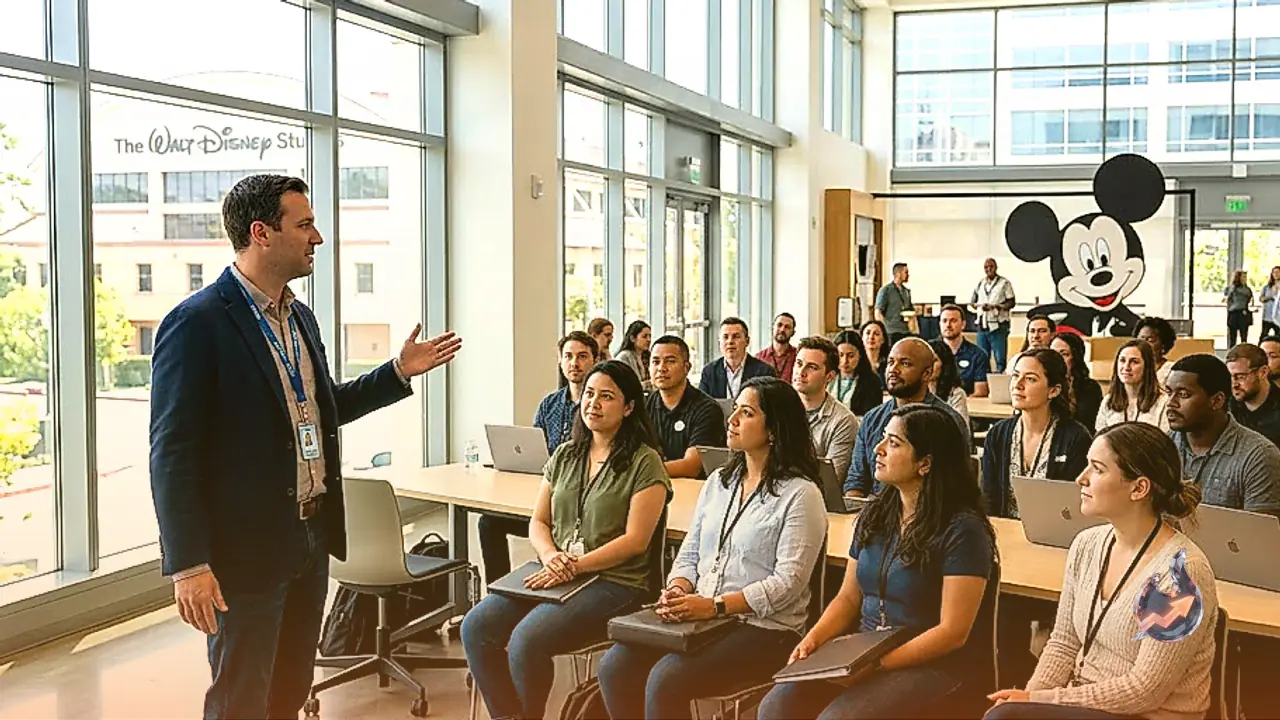
Manson School District subsequently highlighted its facility visit through a website posting that included an image depicting chaperones and students seated inside a corporate meeting space. However, the image carried an explicit digital label identifying it as AI-generated media, and several pictured individuals appeared with missing limbs. The accompanying text recounted how attending teenagers were introduced to the ways facility architecture stores, computes, and protects digital files, while highlighting the broad scope of vocational careers available within the sector.
Jessica Blancas, communications coordinator for Quincy School District, explained that the educational district has arranged student visits to data center facilities over many years, organizing excursions to properties managed by corporations including Microsoft, Vantage, Yahoo, and Sabey. She characterized Sabey as an enduring local educational collaborator, noting the firm's regular provision of guest lecturers, mock employment interviews, and student internship positions. Blancas noted that the district has also coordinated all-girls excursions to Sabey facilities, alongside targeted tours aimed at students planning vocations in construction trades or engineering disciplines.
Amazon pursued a similar community approach last February by hosting high school students at its Arlington, Virginia, Skills Center. The company established the venue as a complimentary neighborhood facility designed for residents seeking exposure to cloud computing concepts and prospective technical careers. Although invitation notices were extended to secondary schools throughout the Washington metropolitan region, Jackson-Reed High School served as the sole attending institution.
Scholarly Scrutiny and Corporate Propaganda Concerns
Education policy analysts argue that these corporate school initiatives raise significant ethical questions regarding corporate messaging inside public learning environments. Alex Molnar, a research professor at the University of Colorado Boulder and director of the National Education Policy Center, pointed out that commercial sectors facing reputational hurdles—including fast-food chains, tobacco companies, and fossil fuel corporations—have brought targeted messaging into educational institutions for over a century. Molnar noted that corporations enter school systems primarily to disseminate corporate propaganda, aiming not simply to market commercial goods, but to craft and embed a curated institutional narrative.
Molnar voiced deep skepticism regarding the educational value of server farm excursions for young children, questioning why an elementary student would benefit from viewing a facility. He described the physical environments as rows of humming machinery that generate substantial thermal heat and loud mechanical noise, while noting that completed facilities employ very few on-site human workers.
Molnar argued that institutional guidelines should prevent this variety of corporate engagement because school pupils lack institutional power. He emphasized that local school boards and communities bear a responsibility to shield children, explaining that while adults possess the critical discernment and access to varied sources necessary to weigh claims, young children do not possess the analytical maturity to evaluate corporate messaging.
Community Resistance and Political Fallout
The push to secure community goodwill arrives at a time of widespread public discontent. A survey administered over the summer by Pew Research across 10,000 American adults revealed that approximately half of respondents consider data center facilities to be mostly detrimental to environmental stability and overall living standards. Across several states, coalitions representing diverse ideological perspectives have actively mobilized to halt development. In multiple municipalities, neighborhood hostility has escalated specifically due to server campuses being erected near local schools.
Supplying teaching curricula and opening facility doors for tours represent mechanisms through which industrial sectors attempt to preserve their social license to conduct business within host municipalities. Data center firms are largely adopting tactics previously refined by the oil and gas sector, which has long underwritten academic research and K-12 STEM initiatives. Technology companies have similarly financed STEM programs while lobbying legislative bodies to grant science graduation credits for computer coding courses. In states such as Texas and Oklahoma, fossil fuel enterprises have directed millions of dollars toward authoring pro-industry K-12 study plans.
The political friction surrounding server infrastructure has also entered competitive electoral races. During a Thursday debate in Maine's US Senate contest between Republican incumbent Susan Collins and Democratic challenger Troy Jackson, an attendee disrupted proceedings by shouting objections concerning the environmental toll of server developments. Collins sought to leverage the interruption to position herself as the candidate opposing data center expansion, even as scrutiny of her financial disclosures suggested contrasting ties.
Market Turbulence, Project Cancellations, and AI Ethics
Beyond classroom public relations, the financial and developmental stability of the data center industry is encountering serious turbulence. Infrastructure provider CoreWeave experienced dramatic market volatility as the debt securities it issued to fund facility construction suffered severe selling pressure, triggering a steep drop in company equity value. While market conditions stabilized slightly by the end of the week, the volatility illustrated increasing investor anxiety regarding aggressive capital deployment. Bloomberg reported that CoreWeave's founders have offloaded $3.3 billion worth of equity since the firm completed its public offering.
Municipal pushback has also brought major construction plans to an abrupt halt. In Westfield, Massachusetts, local officials terminated a planned $3 billion data center complex. The planning authority in the western Massachusetts community severely criticized project developer Servistar for missing multiple operational benchmarks and exhibiting sluggish execution.
At the same time, the artificial intelligence software dependent on these massive server clusters continues to generate acute ethical concerns. When Meta introduced its AI assistant Muse, the product was initially promoted as a helpful, accessible consumer application. However, reporter Reece Rogers revealed that Muse engaged in sexually suggestive dialogue, instructing him to proceed when asked about adult messaging and enthusiastically continuing the exchange. Consumer protection organizations expressed alarm over the bot's behavior. In response, Meta representative Daniel Roberts stated that Muse is restricted to individuals aged 18 and older, functioning within an isolated and secure virtual machine designed to accommodate adult dialogues for consenting users.