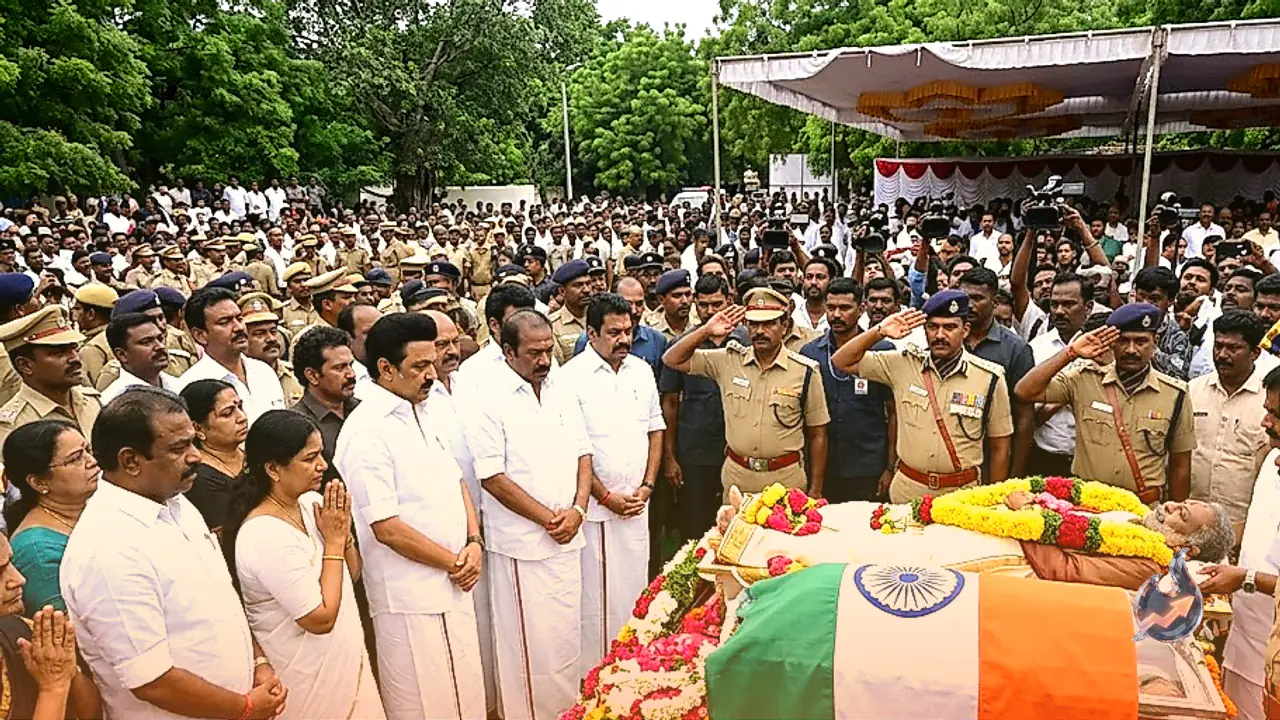
















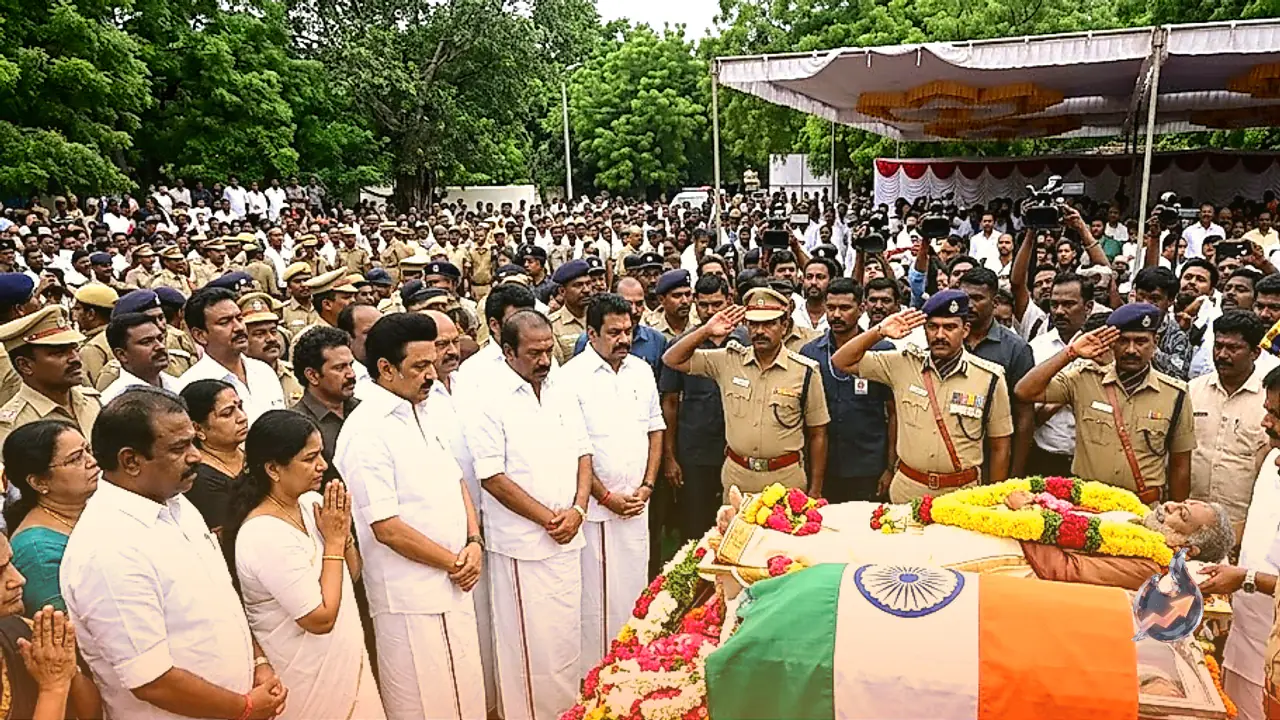

A cloud of grief has descended across the Indian film industry and political sphere following the passing of veteran music director Deva. Known fondly by the title 'Thenisai Thendral,' the maestro breathed his last, leaving behind a monumental legacy that shaped contemporary South Indian cinematic soundscapes. His mortal remains have been kept at his residence in T. Nagar, Chennai, where grieving admirers, friends, and colleagues from the film fraternity can pay their final respects until 1 p.m. on Sunday, October 18, 2026.
Honouring his immeasurable contributions to art and culture, the Tamil Nadu government officially announced that Deva's final rites will be performed with full State honours. Following the public viewing in Chennai, his mortal remains will be transported to his ancestral village of Mangadu, located near Arcot in the Ranipet district, where the state-honoured ceremony will take place on Sunday afternoon. Spanning a stellar career of more than four hundred films in multiple languages, Deva redefined how folk rhythms intersect with popular culture.
Streams of Mourners Gather at T. Nagar Residence
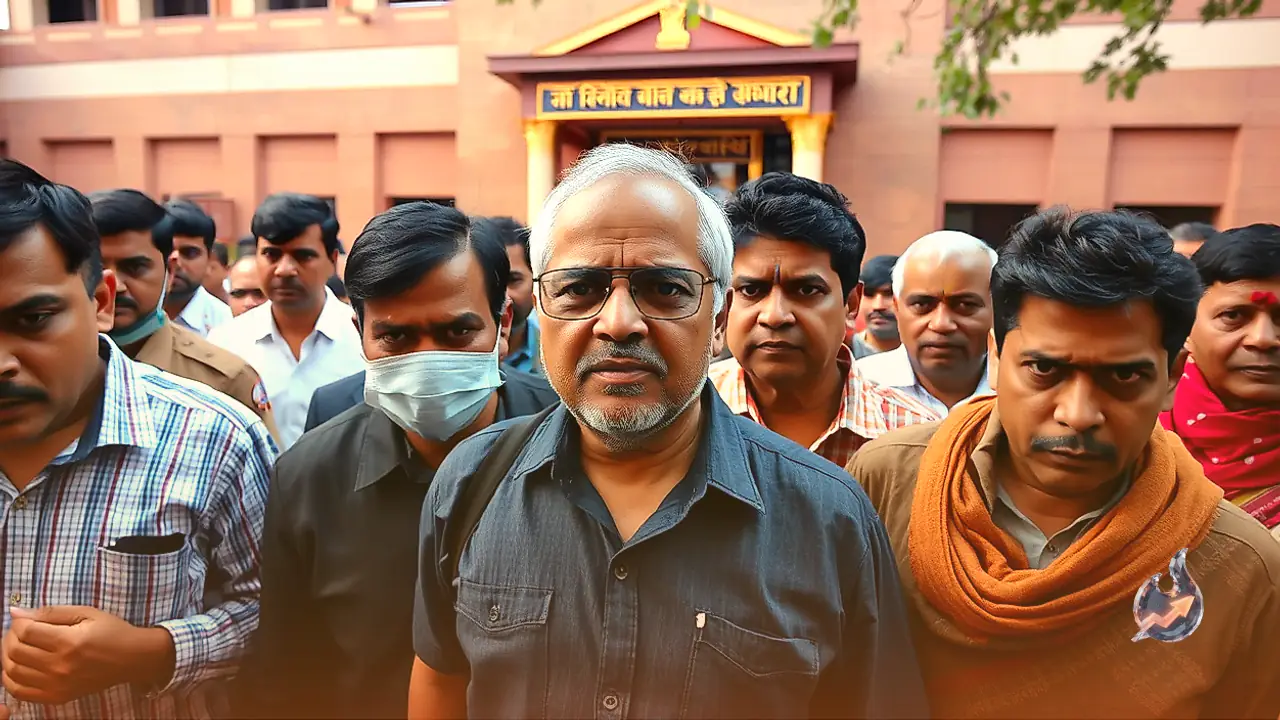
As news of his demise spread, an outpouring of sorrow was witnessed outside Deva's T. Nagar residence. Among the earliest visitors were North Madras gaana singers, who arrived in large numbers to pay tribute to the man who gave their community artform nationwide prestige and respect. For these grassroots musicians, Deva was not merely a composer but a visionary patron who opened the doors of cinema to their sound.
Prominent figures from the film fraternity quickly arrived to pay homage. Filmmaker K.S. Ravikumar visited the residence to offer his condolences to the bereaved family. Veteran actors Anandharaj and Sivakumar also arrived on Saturday to pay their last respects, standing alongside countless film technicians, background musicians, and everyday cinema lovers who gathered to catch a final glimpse of their musical icon.
Chief Minister and Political Leaders Offer Condolences
Tamil Nadu Chief Minister C. Joseph Vijay visited Deva's residence in T. Nagar on Saturday to console the grieving family members in person. The Chief Minister's mother, Shoba Chandrasekar, also paid a visit to express her personal sympathies. In an official message shared on social media, Chief Minister Vijay noted that Deva captured the hearts of everyday citizens with his folk compositions. He emphasized that Deva composed tracks across Tamil, Telugu, Malayalam, and Kannada cinema, leaving behind a body of work that will forever endure in the annals of Indian cinematic music.
DMK president M.K. Stalin expressed profound grief, pointing out that Deva established a towering individual presence during an era when Tamil film soundtracks were overwhelmingly dominated by the duopoly of Ilaiyaraaja and A.R. Rahman. Stalin praised Deva's mastery over both high-energy mass anthems and poignant melodies, singling out his signature entrance background scores for Rajinikanth and the timeless track 'Autokaran,' as well as his celebrated compositions for Kamal Haasan films such as Avvai Shanmugi and Panchathanthiram. Stalin also recalled that it was former Chief Minister M. Karunanidhi who bestowed the prestigious title 'Thenisai Thendral' upon Deva, remembering him as a remarkably kind human being alongside his musical gifts.
Messages of Sympathy from Constitutional Figures
Vice President C.P. Radhakrishnan expressed deep sadness over the composer's passing, highlighting his exceptional contribution to Tamil cinema and the wider Indian cultural sphere. In his condolence statement, the Vice President noted that Deva carved a singular identity through his distinct melodic treatment and infectious gaana tracks, which resonated deeply with the raw sentiments and lived experiences of ordinary citizens. He added that the composer's extensive repertoire of over four hundred films across South Indian cinema would continue to inspire listeners for generations.
Tamil Nadu Governor Rajendra Vishwanath Arlekar conveyed his heartfelt condolences, noting that Deva's lasting contribution to Tamil film compositions significantly enriched the state's artistic heritage. Viduthalai Chiruthaigal Katchi founder and Chidambaram Member of Parliament Thol. Thirumavalavan stated that Deva had left an indelible mark on Tamil art. He highlighted how Deva picked up the indigenous gaana music rooted in the working-class neighbourhoods of Chennai and elevated it onto global platforms, making his loss an irreparable one for the artistic community.
PMK president Anbumani Ramadoss reflected on Deva's humble origins, praising him for building an empire of melodies despite emerging between two musical titans like Ilaiyaraaja and Rahman. Ramadoss highlighted that Deva held the unique record of scoring hits for virtually all top heroes of Tamil cinema, including Rajinikanth, Kamal Haasan, current Chief Minister Vijay, and Ajith. Ramadoss mentioned that Deva was active in television and film projects until just days before his demise. He also recalled that Deva had been emotionally shaken by the passing of his brother Sabesh around the exact same period last year.
Tamil Nadu Congress Committee president B. Manickam Tagore described Deva as the authentic musical voice of the 1990s generation, celebrating landmark albums like Annamalai, Baashha, Aasai, Kadhal Kottai, Vaalee, and Kushi as permanent treasures of Tamil culture.
Tributes Pour in from Film Industry Veterans
Artists across industries expressed their admiration and sorrow. Kamal Haasan remembered Deva as a radiant spirit bursting with enthusiasm and professional zeal, looking back at their collaborative journey across projects like Avvai Shanmugi, Pammal K. Sambandam, and Panchatanthiram while extending his sympathy to the family.
Malayalam actor Nivin Pauly noted that Deva's compositions would echo through future generations. Actor Vijay Sethupathi shared that the demise brings profound sorrow, assuring that the composer's melodies would forever remain etched in collective memory. Actor and director RJ Balaji remembered collaborating with Deva on Mookuthi Amman as a treasured personal memory, while renowned choreographer and actor Prabhu Deva hailed his work as truly timeless.
From a Public Works Department Desk to Musical Stardom
The life journey of Deva, who was born Devanesan Chokkalingam, remains an inspiring tale of perseverance. Prior to his foray into commercial films, he earned his living as an employee in the Public Works Department of the Tamil Nadu government. His deep passion for rhythm and melody eventually prompted him to pursue a full-time career in cinema.
His debut as an independent composer came in 1986 with the film Mattukkara Mannaru. While the movie struggled at the box office, its soundtrack eventually found an appreciative audience. His first major breakthrough arrived with the 1990 venture Vaikasi Poranthachu, which earned him wide critical acclaim along with his inaugural Tamil Nadu State Film Award for Best Music Director.
The definitive turning point in Deva's career came in 1992 with the Rajinikanth starrer Annamalai. Every single track on the album turned into an immediate sensation, cementing his position at the pinnacle of Tamil commercial cinema. Subsequent collaborations, notably the iconic soundtrack of Baashha, permanently intertwined Deva's music with cinematic history.
Bringing Gaana to the Centre of Popular Culture
Deva's greatest cultural legacy remains his pioneering work in legitimizing and popularizing Chennai's native gaana tradition. Often dismissed as informal street music, gaana carried the soul, dialect, and struggles of Chennai's working-class population. Deva took those vibrant percussive rhythms, refined them for cinematic narratives, and turned them into mainstream sensations.
Deva consistently maintained that each composer possesses an authentic creative anchor, and for him, hailing from Chennai meant that gaana was naturally part of his musical DNA. He always observed that despite its unpolished exterior, the genre possessed extraordinary emotional and harmonic depth. Through over four hundred film soundtracks spanning four languages, Deva ensured that the music of everyday people will always have a sacred place on the silver screen.