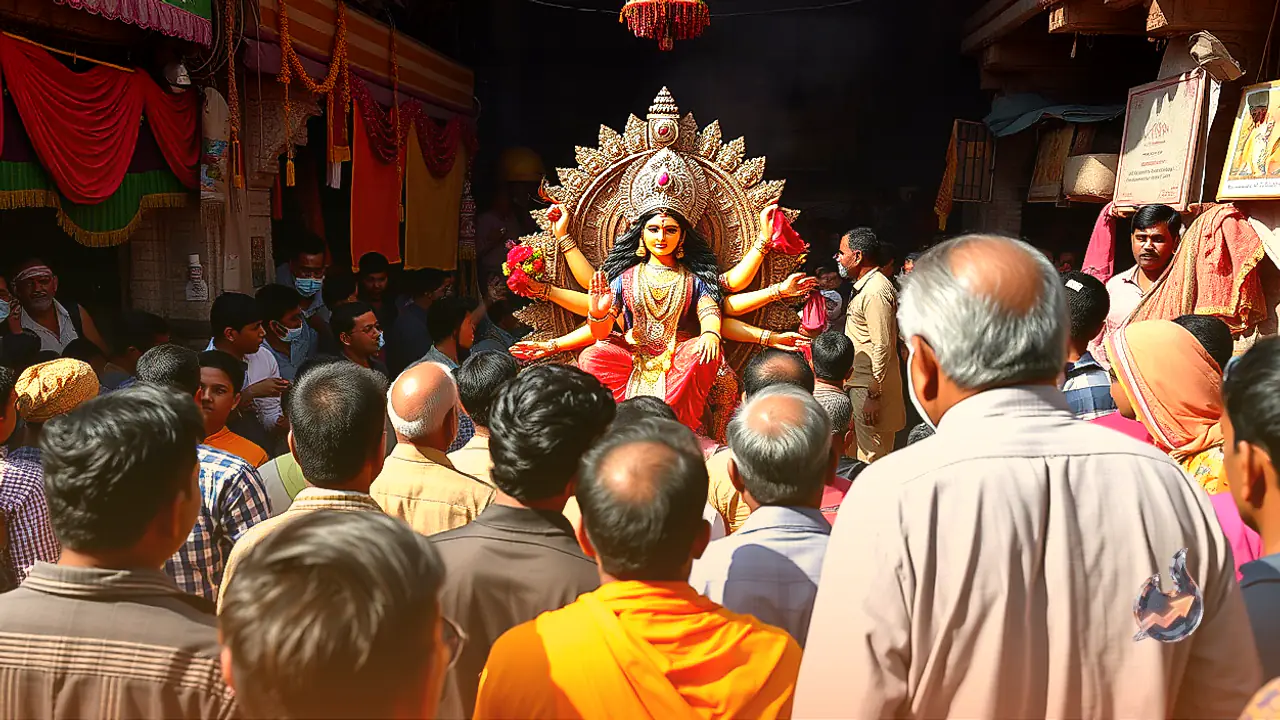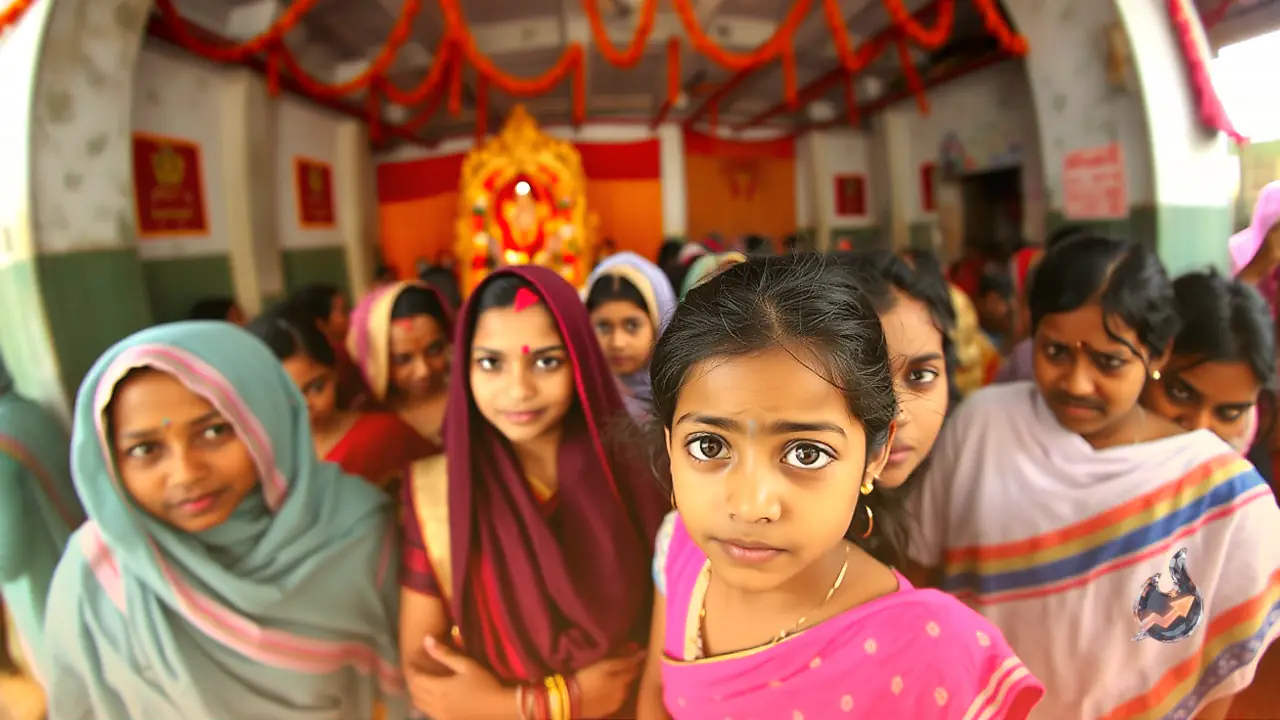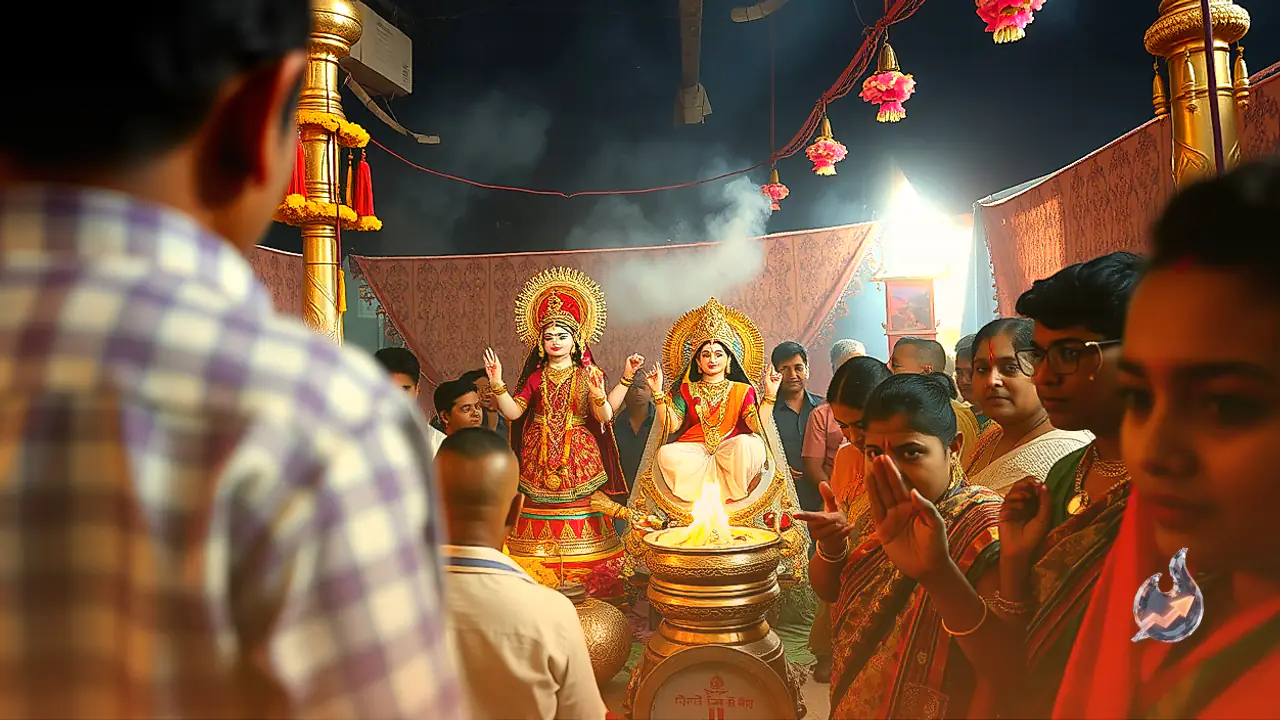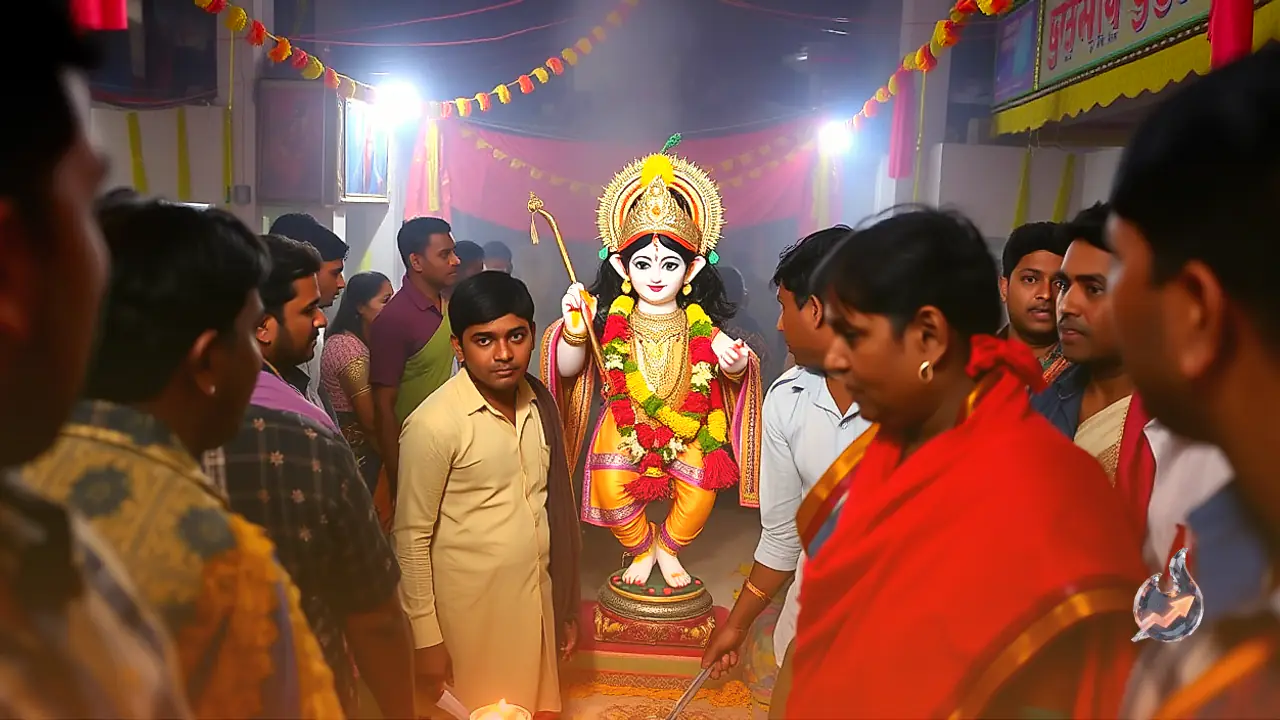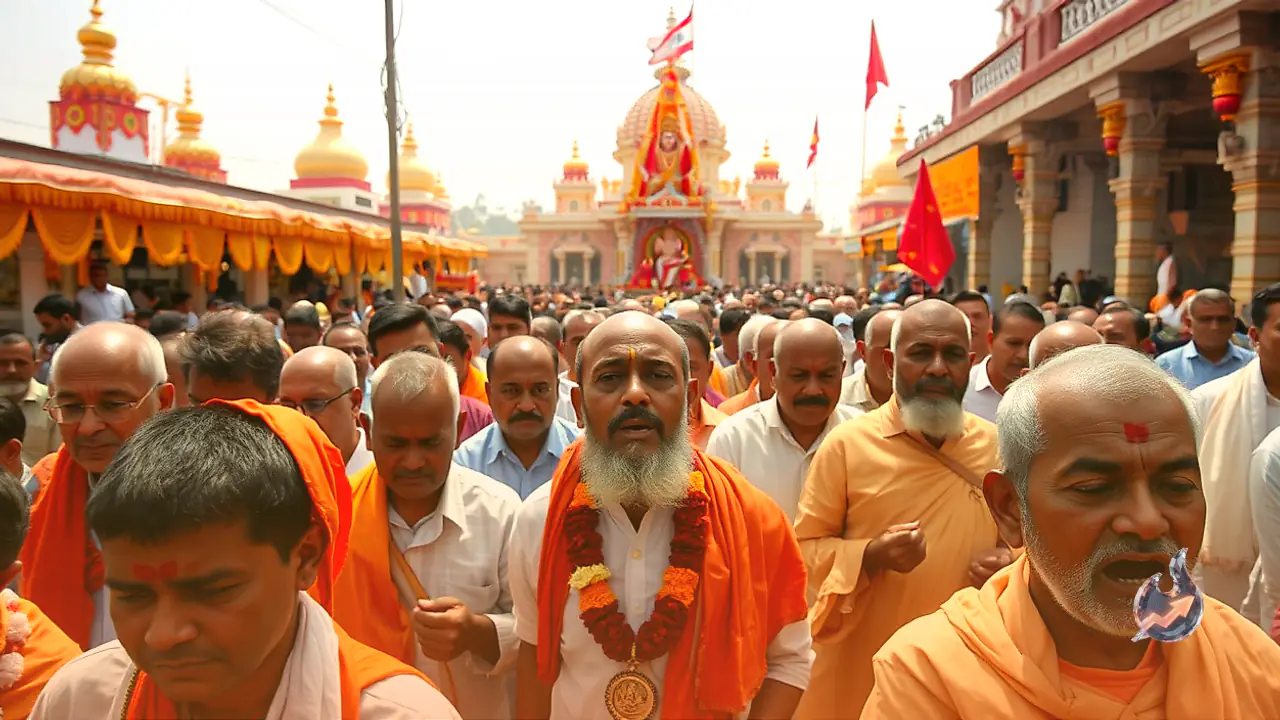

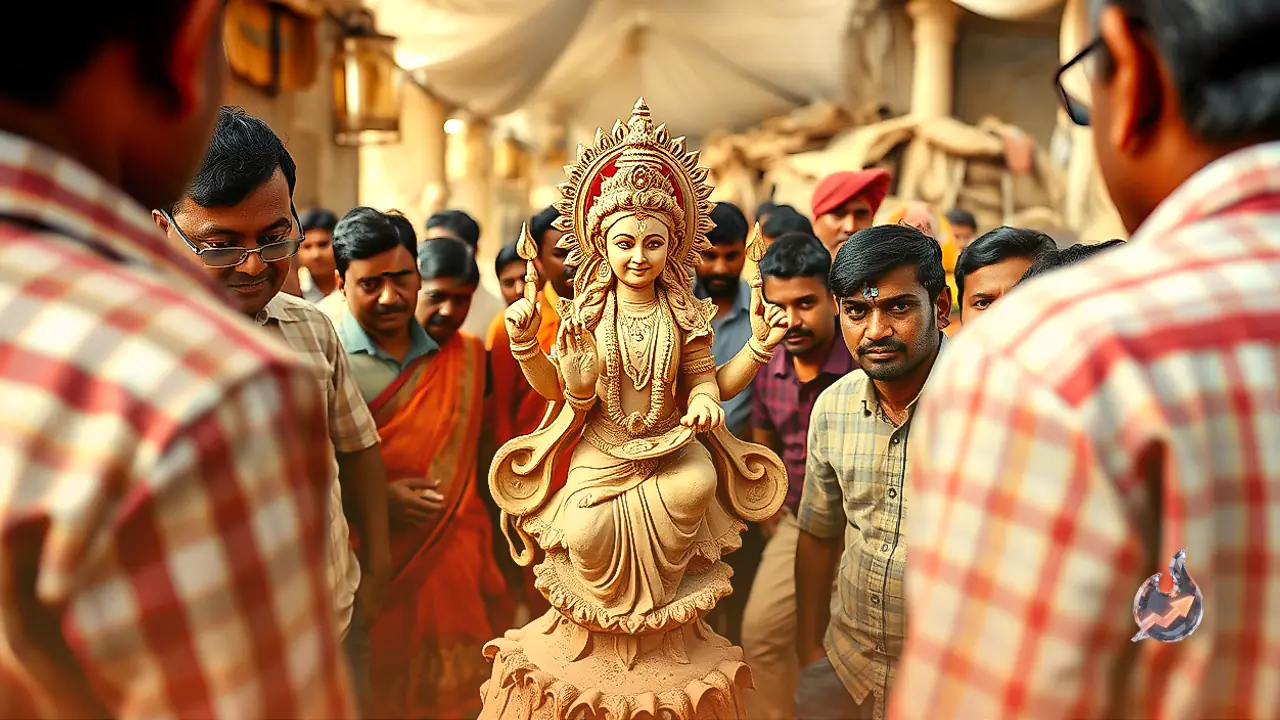


















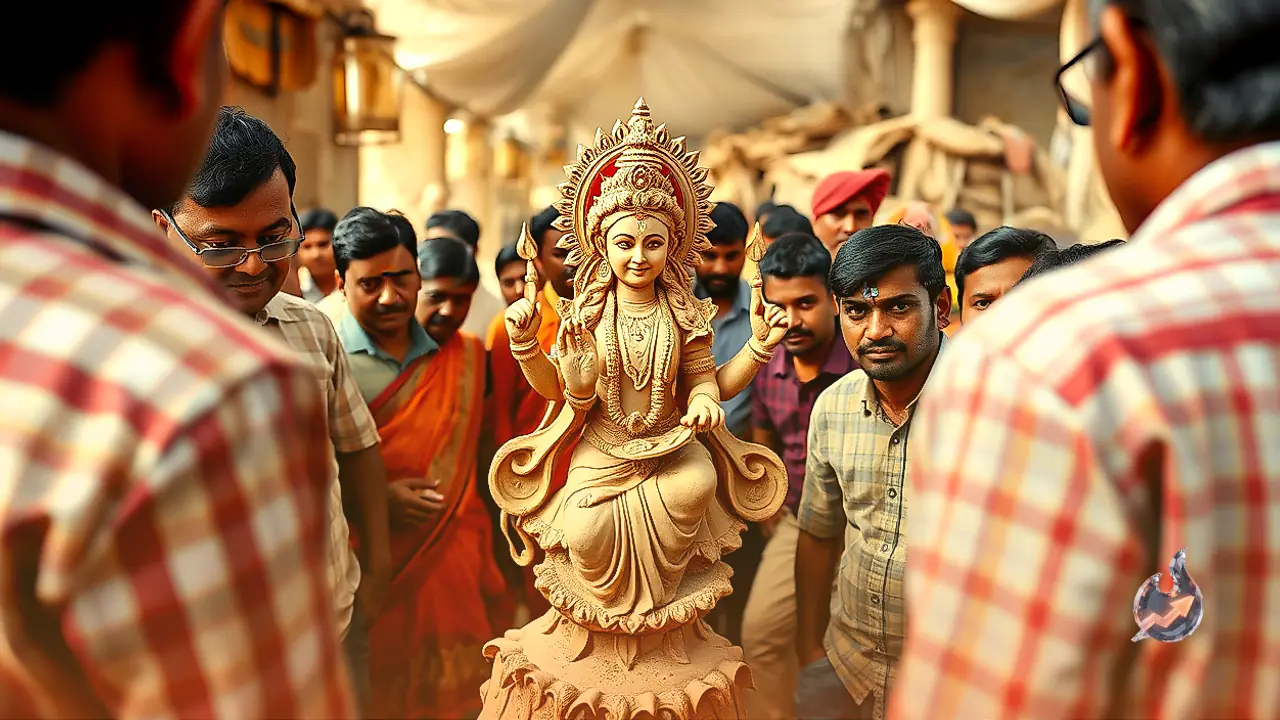

Devotees visiting the Sanchiyav Mata temple in Jawal town of Rajasthan's Sirohi district are witnessing a rare spectacle during the ongoing Navratri festivities. Instead of traditional raw materials such as clay, plaster of Paris, or stone, the sanctum features an intricately crafted divine tableau sculpted entirely out of ghee. The shrine, organised under the banner of the Sanchiyav Mata Temple and Shri Chamunda Garba Mandal, is showcasing Goddess Lakshmi seated gracefully upon a blooming lotus, flanked on either side by elephants with their trunks raised in reverent salutation.
Seven Days of Meticulous Craftsmanship by Anand Artisans
Specialist sculptors travelling from Anand in Gujarat undertook the task of shaping this unconventional creation. Working tirelessly for an entire week ahead of the festive period, the team completed the entire setup in exactly seven days. Approximately 251 kilograms of vanaspati ghee went into constructing the five-foot-tall centerpiece and its surrounding court. The sculptors managed to etch fine jewelry, delicate facial contours, the multi-layered petals of the lotus throne, and the lifelike anatomy of both accompanying elephants directly into the solidified fat, demonstrating exceptional precision with material that softens quickly at room temperature.
The Intricate Process Behind Ghee Sculpting
Sculpting with fat requires methods fundamentally different from standard stone or clay work. The craftsmen first melted the vanaspati ghee completely under controlled heat. It was subsequently submerged and stirred across ice-cold water, forcing the liquid to crystallise rapidly into a workable, firm paste. The material was then gathered, strained, and compressed through fine cotton fabric to remove trapped moisture and establish the exact density required for carving. Only after achieving this specific malleability did the artisans begin etching the Goddess's ornate attire, ornaments, and facial features using specialized handheld tools.
Maintaining Sub-Zero Conditions to Prevent Melting
While building the idol demanded significant artistic ability, preserving its structural integrity over the full nine-day festival poses an equally demanding logistical challenge. Exposure to ambient warmth could easily cause the ghee to soften and lose its detailed contours. Organizing committee member Narayan Suthar explained that continuous cooling mechanisms are stationed inside the marquee to hold ambient temperatures around minus one degree Celsius. Blocks of commercial ice surround the perimeter of the pedestal, while air coolers operate using chilled ice water. Dedicated volunteers from the committee maintain round-the-clock vigil, spraying ice-cold water mist over the five-foot statue every thirty minutes to safeguard the artwork.
A 23-Year Community Custom Born From an Ahmedabad Visit
This artistic custom in Jawal traces back to 2003, sparked when local organizers witnessed a temporary ice Shivling during a visit to Ahmedabad. Inspired by that display, the community decided to explore whether revered deities could be sculpted from ghee, a substance traditionally deeply rooted in Indian ritual life. Over the past 23 years, the town has witnessed 23 distinct representations, featuring deities including Jagdamba, Shiv Shakti, Nandi, and the holy trinity of Brahma, Vishnu, and Mahesh. The overall expenditure for this year's installation totaled approximately 2 lakh rupees, which includes an artisan fee of roughly 50,000 rupees paid to the visiting sculptors from Gujarat.