





















In India's corporate history, very few strategic moves have reshaped both the destiny of a single enterprise and the daily lives of an entire nation. The trajectory charted by Reliance Industries Chairman Mukesh Ambani stands out as a prime study in scalable industrial ambition. The group tackled two monumental tasks decades apart: constructing one of the world's most sophisticated refining complexes in record time in Gujarat, and later democratizing high-speed internet across India through Jio. These decisive projects anchored Reliance across two distinct pillars, turning an industrial manufacturing giant into an indispensable digital ecosystem.
Executing Dhirubhai Ambani's Industrial Vision in Jamnagar
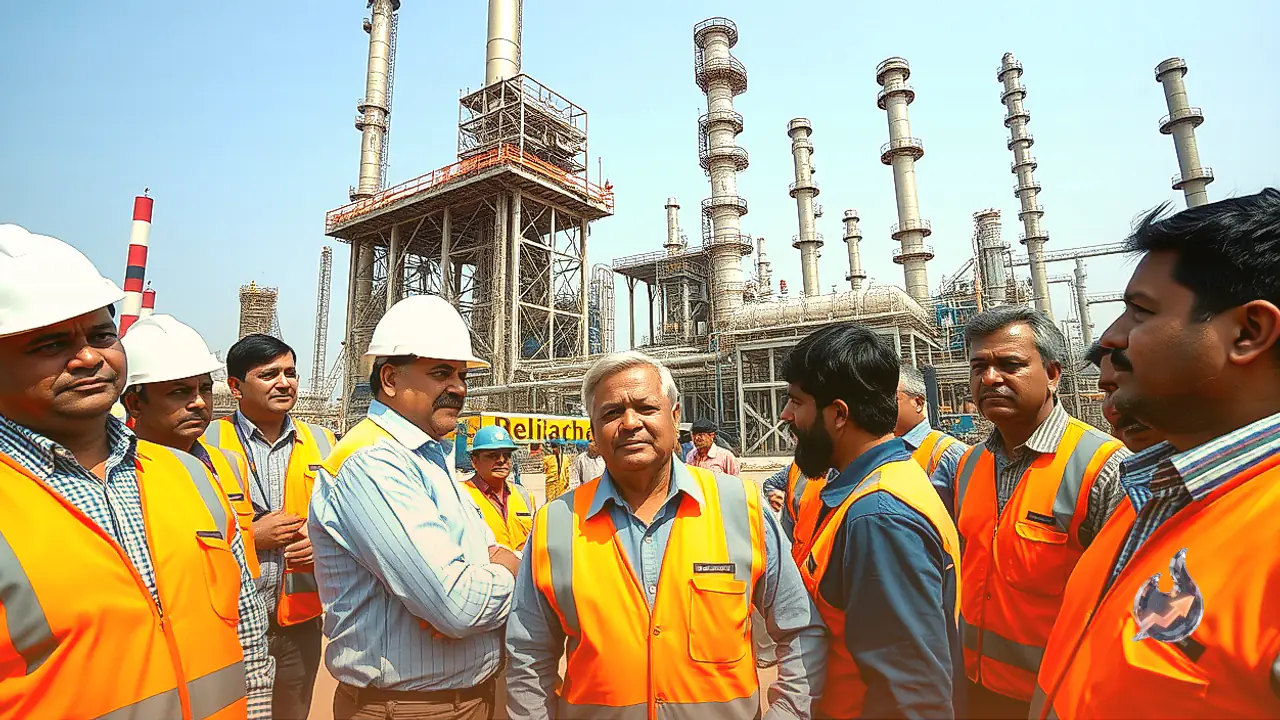
The foundations of Reliance Industries were laid by founder Dhirubhai Ambani, who envisioned massive world-scale industrial assets operating from Indian soil to command global respect. Taking up this ambitious mantle, Mukesh Ambani led the execution of the group's flagship refining complex in Jamnagar, Gujarat. In a pivotal personal choice that underscored his operational commitment, he cut short his studies at Stanford University to return to India and steer the enterprise forward.
The defining element of the Jamnagar refinery was its extraordinary speed of execution. Amid immense technical complexity, heavy capital expenditure, and intricate logistics, the sprawling refining asset was brought to life in just 36 months. The timely delivery of this megaproject demonstrated that Indian enterprise possessed the engineering acumen and organizational discipline to complete world-class industrial undertakings far faster than conventional global benchmarks.
Disrupting Indian Telecom with Jio's Ultra-Affordable Data
After cementing its preeminence in petrochemicals and refining, Reliance took a high-stakes gamble on the consumer digital economy. The formal rollout of Jio in 2016 completely upended the Indian telecommunications landscape. By introducing free voice calls bundled with remarkably affordable 4G data, the company eliminated traditional connectivity barriers, transforming mobile data from an expensive luxury into an everyday utility.
Consumer adoption surged at an unprecedented pace, with Jio crossing the 100 million subscriber milestone in just 170 days. This sudden wave of affordable connectivity triggered widespread adoption of mobile video calls, remote education, unified digital payments, and app-based commerce. As a direct consequence, India's global standing in mobile data consumption and digital infrastructure climbed rapidly.
Crucially, the network footprint expanded well beyond major metropolitan centers. By rolling out infrastructure across remote rural villages, mountainous corridors, and tribal belts, the group brought marginalized communities into the mainstream economy, unlocking modern healthcare resources, digital classrooms, and digital livelihood avenues.
Navigating the Transition from Heavy Energy to Frontier Tech
The critical necessity of robust digital infrastructure became undeniably clear during the coronavirus pandemic. With educational institutions, workplaces, and commerce abruptly shifting online, stable telecom connectivity kept millions of citizens linked and operational during prolonged lockdowns.
Leveraging the cash flows generated by its legacy refining and petrochemical operations, Reliance has channeled deep capital into telecom, consumer software platforms, and frontier technologies. Across both manufacturing and services, the company's continuous objective has been to build domestic capacity at immense scale, equipping an Indian conglomerate to compete directly against the largest technology and industrial leaders in the world.