






















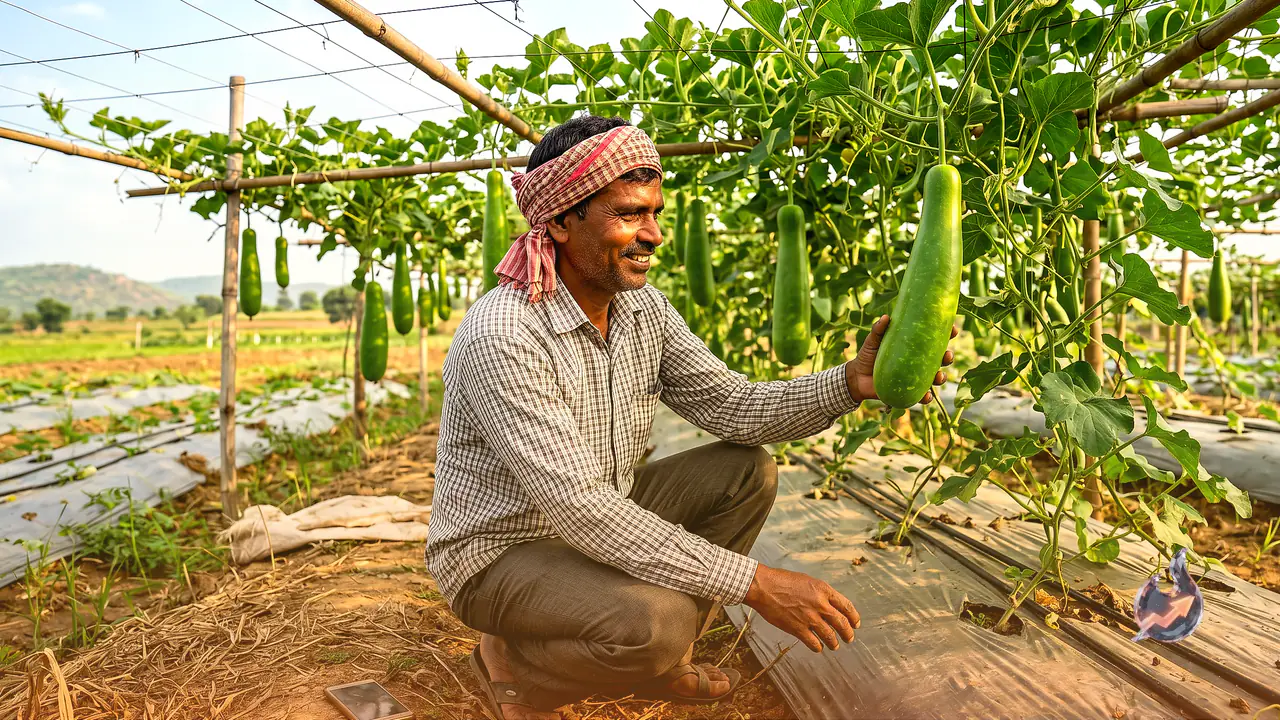

In Jharkhand's Bokaro district, a quiet farming success story is unfolding. By stepping away from traditional paddy and trying his hand at vegetables, one farmer has multiplied his income many times over. Bharat Mahto of Purnibagayri village in Kasmar block has now become a role model for other growers in the area. On just 1 acre of land, he cultivated bottle gourd using the mulching and trellis (machan) method and walked away with a net profit of more than 1 lakh rupees.
YouTube and Local Farmers Changed His Approach
Speaking to TrendKia, Bharat Mahto said his fields once grew nothing but paddy, and his earnings stayed limited. The turning point came when he began watching farming videos on YouTube and studied the methods of progressive farmers around him. Inspired by them, he moved towards modern and smart farming and decided to plant bottle gourd, which has since become a steady source of good income.
Sowing Time, Harvest Window and Yield
According to Bharat Mahto, he sowed the bottle gourd in March. It is a crop that becomes ready within 50 to 60 days of sowing, after which it can be picked continuously across 2 seasons to keep earning. He said growing bottle gourd on 1 acre cost him roughly 40 thousand rupees. With proper care and the right technique, a yield of 70 to 80 quintals can easily be achieved over the full season.
40 Thousand in Cost, More Than a Lakh in Earnings
Explaining the maths of his profit, Bharat Mahto said the wholesale price of bottle gourd in the market is currently between 20 and 30 rupees per kilo. Even if it sells at the lowest average rate of 20 rupees per kilo, the total income works out to about 1.60 lakh rupees. After deducting his costs, he is left with a net profit of around 1.20 lakh rupees. Because a single crop brings in this much, he sees it as a better option for farmers.
Bharat Mahto's Advice on Organic Pesticides
Warning fellow farmers, he said the bottle gourd crop is often hit hard by insects and fruit rot, which makes timely monitoring and care absolutely essential. His advice is to rely on organic pesticides as much as possible instead of chemical ones, so that the soil keeps its fertility and the produce stays healthy.