




















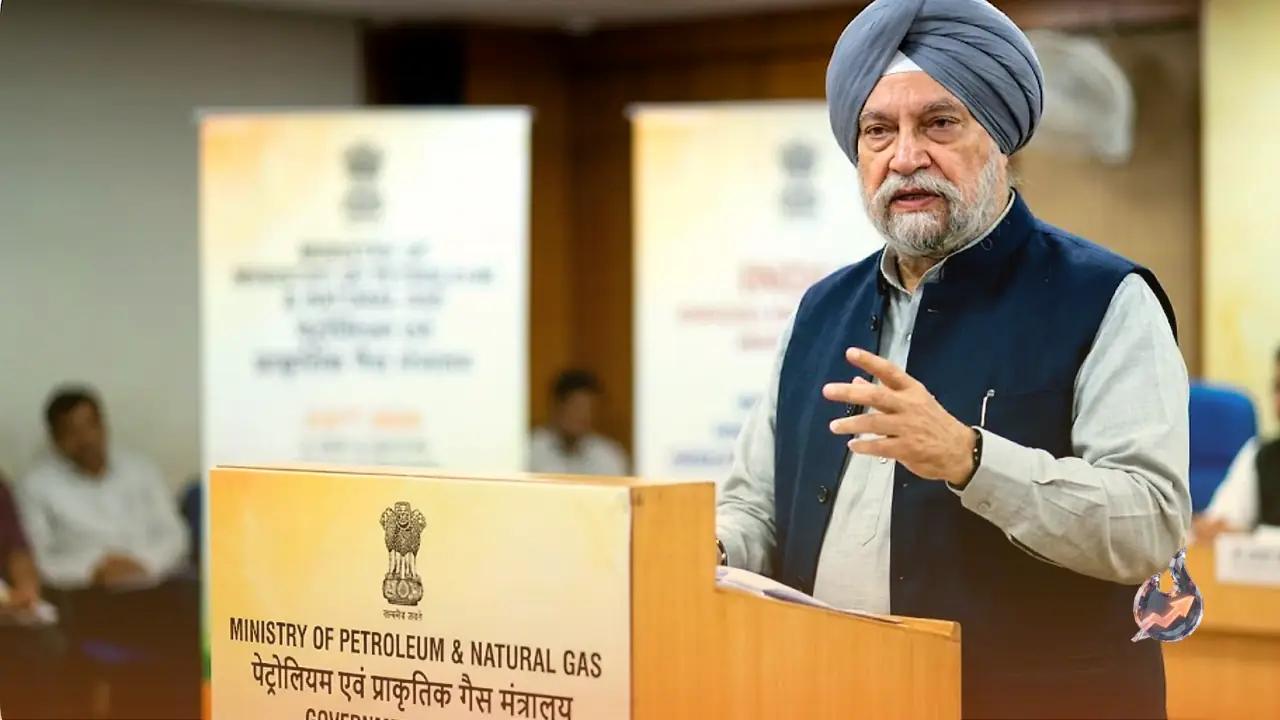

As international crude oil prices experience a downward trend, consumers across India have been eagerly anticipating a corresponding drop in retail petrol and diesel rates. Addressing these expectations directly, Union Minister for Petroleum and Natural Gas Hardeep Singh Puri has shed light on the financial dynamics governing domestic fuel pricing. The Union Minister pointed out that despite the recent soft trend in global oil markets, state-owned oil marketing companies (OMCs) are currently processing crude stock that was acquired at premium rates during the height of the West Asia geopolitical tensions.
The Financial Strain and OMCs' Huge Losses
To provide a clear picture of the situation, the Petroleum Minister shared critical financial data concerning the state-run energy firms. During the peak of the West Asia crisis, the Indian government and state oil companies prioritized protecting citizens from soaring global inflation. To achieve this, OMCs absorbed the shock of high international crude prices by selling petrol, diesel, and LPG (liquefied petroleum gas) at retail rates significantly lower than their actual import and production costs. This deliberate pricing strategy shielded the public but resulted in massive financial strain on the balance sheets of these public sector undertakings.
According to the official figures presented by the minister, this sub-cost selling led to an astronomical under-recovery. By the period ending June 30, the public sector oil marketing companies registered a staggering cumulative loss of ₹74,781 crore directly attributed to the subsidized sale of petrol, diesel, and cooking gas. Since the companies are still recovering from this massive deficit and clearing the high-cost inventory purchased during the conflict, immediate retail price cuts are not feasible at the moment.
Managing the Energy Crisis Without Local Shortages
Highlighting India's robust energy management strategy, Hardeep Singh Puri drew a comparison showing how domestic fuel prices remained remarkably stable between 2022 and 2026. During this four-year span, petrol prices in the country rose by a mere 5.58%, while diesel rates registered a modest increase of just 6.23%. This minimal upward adjustment stands in stark contrast to the massive price spikes witnessed in many other nations during the same period.
The minister emphasized that the domestic financial mechanism and policy measures successfully absorbed the massive price shocks of the global oil market, insulating local consumers. Furthermore, throughout the critical months of March, April, May, and June, when global supply chains were under extreme pressure due to the crisis, India did not experience any fuel shortages. The supply of petrol and diesel remained completely seamless, with no dry outs reported anywhere in the country and no long queues at petrol pumps.
When Can Consumers Expect Price Cuts?
When questioned about the possibility of retail price reductions in the near future, the Petroleum Minister offered a glimmer of hope, though with clear conditions. He stated that if global crude oil prices continue to trade at their current lower levels over the next several weeks, the demand for a reduction in domestic petrol and diesel prices would become a legitimate and valid question to consider.
Essentially, the government and OMCs are monitoring the global market closely. If international crude prices remain soft and stable long enough for oil companies to offset their previous losses and exhaust their expensive inventory, the benefits of cheaper oil are highly likely to be passed down to Indian consumers.