























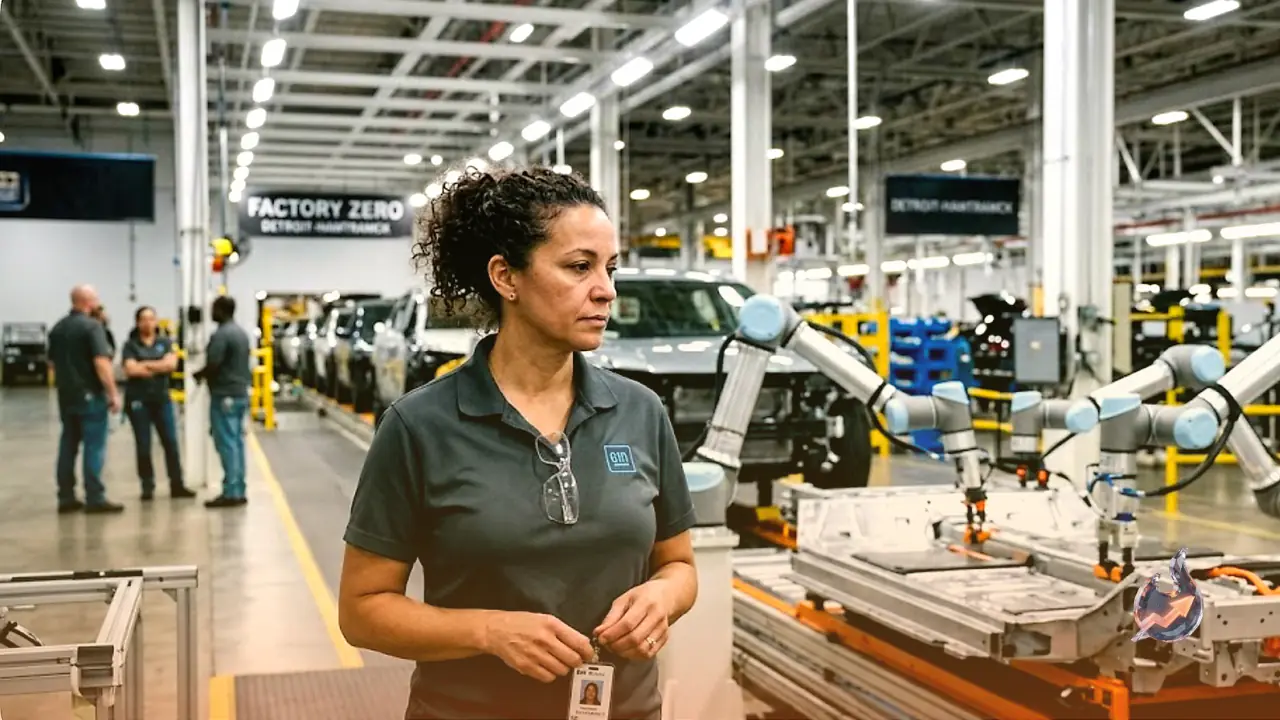

The shift toward automation in the automotive sector has reached a striking milestone. General Motors has deployed 50 cobots, short for collaborative robots, at Factory Zero, its electric vehicle manufacturing hub in Michigan. The move is already having real consequences: more than 1,000 workers at the plant have been temporarily taken off the job, and labor unions are pushing back hard against what they see as a disguised effort to cut the workforce.
GM's Case for Cobots
General Motors has been clear about its stated rationale. The company says cobots are not designed to replace human workers but to work alongside them, taking over tasks that are physically grueling or carry a high risk of injury. According to GM, modern manufacturing demands technological investment to remain competitive, and pairing robots with workers will drive improvements in both safety and production output. The company insists that the human-robot collaboration model benefits the workforce rather than undermining it.
More Than 1,000 Workers Temporarily Out
The restructuring at Factory Zero has left over 1,000 employees temporarily without work. What has compounded the anxiety is that General Motors has not offered a clear timeline for when these workers will be reinstated. That silence has created a sense of uncertainty not just for the workers themselves but for their families. Labor organizations have pointed out that this pattern, where automation is followed by workforce reductions with no firm reinstatement date, is exactly the kind of outcome they have long warned against.
Labor Unions Are Not Convinced
Worker organizations have filed formal complaints and spoken out strongly against the move. Union leaders say that characterizing cobots as mere assistive tools is misleading, and that the real effect is job loss dressed up in technical language. They argue that as machines assume a larger share of production responsibilities, the long-term trajectory points toward fewer human jobs, not more. The complaints on record underscore how seriously the unions are taking this dispute.
A Company-Wide Shift, Not Just One Factory
What is happening at Factory Zero fits into a larger picture of change at General Motors. In recent months, the company has also reduced headcount in its information technology and engineering divisions. Industry analysts view this as part of what is being called the skills swap era in the global economy, a period when traditional job roles are contracting while demand grows for workers with expertise in AI and advanced technology systems. Companies worldwide are redirecting investment from conventional roles toward automation and technical talent. Experts caution that workers who invest in learning new skills and adapt to shifting industry demands will be far better placed to weather this transition in the years ahead.