























Banana has turned into one of the most reliable cash crops for farmers in Gonda district, capable of delivering strong returns in a relatively short growing cycle. But experienced growers agree that the weeks right after transplanting the saplings are the most delicate stage of the whole crop cycle. A little carelessness at this point can stunt growth and cut into the final harvest, while a few disciplined steps can set the plants up for a healthy, high-yielding season.
Water Management Comes First
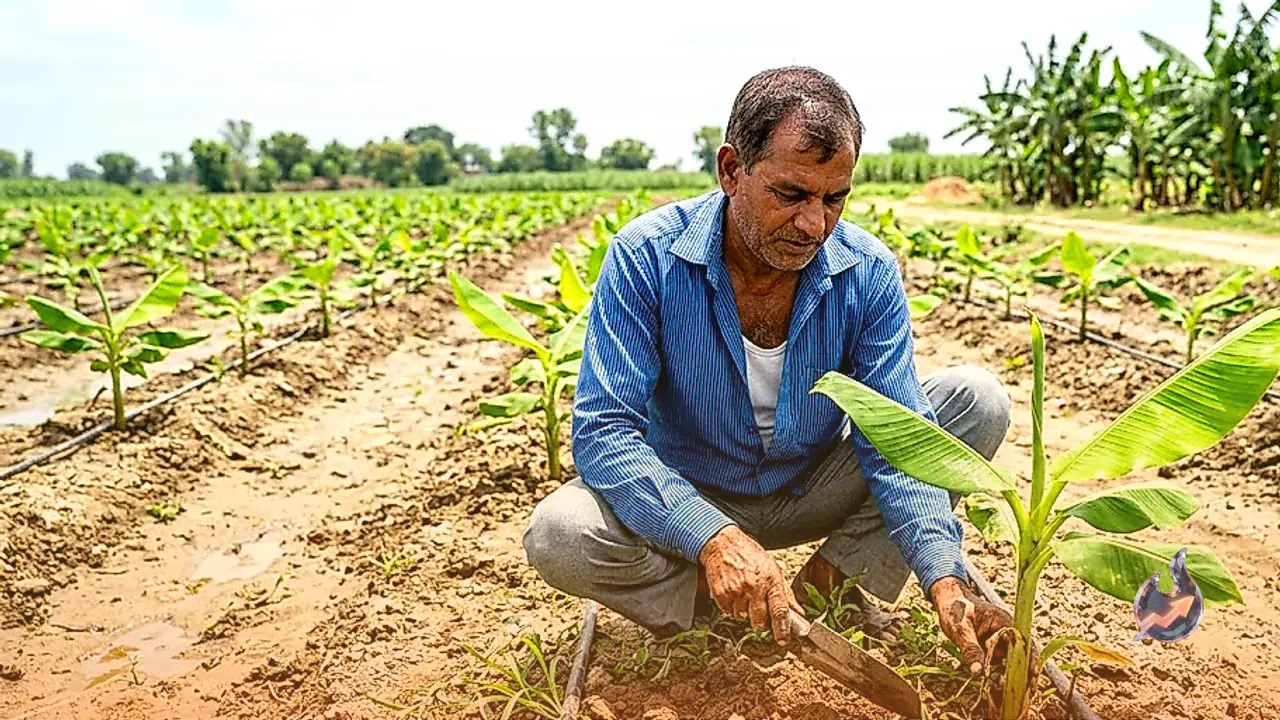
Peshkar Singh, a progressive farmer from Gonda, said that maintaining adequate moisture in the field immediately after banana transplanting is the single most important task for growers. Water should be given to the plants strictly according to their actual requirement, not more. Overwatering the field can cause the roots to rot, which quickly damages the young plants, so the field must also have a proper drainage system in place to carry away excess water. Singh added that farmers who have access to a drip irrigation system are particularly well placed, since drip systems work very well for banana orchards by delivering water directly and evenly to the root zone.
Regular Weeding Protects Growth
According to Singh, keeping the field clean through regular weeding is equally essential after transplanting. Weeds and unwanted grass need to be removed from time to time, because if they are allowed to spread, the banana plants end up competing with them for nutrients and do not get an adequate supply. This directly affects how fast the plants grow and also has a bearing on the final quality of the fruit that the crop produces.
Balanced Feeding and Timely Pest Control
Singh advised farmers to apply fertilizers and manure in a balanced manner and at the right time, rather than in excess or on an irregular schedule. He also stressed that if any sign of disease or pest attack appears on the plants, growers should immediately consult an agricultural expert and spray the appropriate medicine without delay. Acting quickly in this way keeps losses to a minimum and helps ensure that the crop stays protected through to harvest.
Twenty-Five Years of Hands-On Experience
Singh said he has been cultivating banana for the past 25 years, and the advice he gives other farmers is drawn directly from that experience. His central message is that crops need proper care right from the earliest stage rather than after problems appear. He believes that if farmers pay close attention to irrigation, weed control, fertilizer management and disease and pest control together, they can achieve good production and better profit from their banana crop without much difficulty.
Singh also said that when any fellow farmer wants to take up banana cultivation, he shares whatever information and guidance he has with them. He added that if farmers call him for help, he visits their fields in person as well.