





















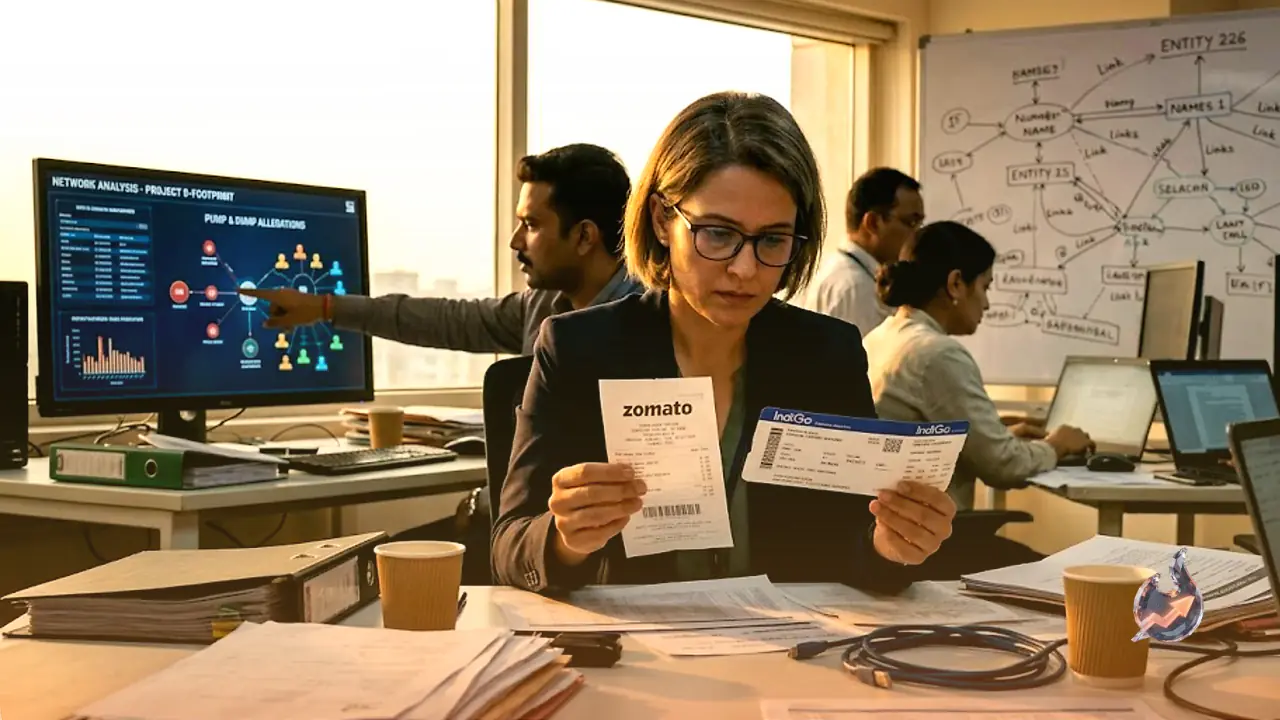

Investors in the stock market have a jolting case to reckon with. The Securities and Exchange Board of India (SEBI) has peeled back the layers of an alleged pump-and-dump racket worth roughly ₹144 crore. What makes this case stand out is that the regulator did not stop at bank statements and trading data. To trace the people behind the fraud, investigators dug into WhatsApp conversations, airline tickets, hotel bookings, food delivery app orders, website records, domain history and even SMS data. The message is clear: rigging the market and walking away clean is no longer as simple as it once was.
A 394-Page File and a Web of 226
The regulator's 394-page investigation report states that between 2017 and 2020, shares of five companies were made to look artificially hot to draw in ordinary investors. In all, 226 entities and individuals are said to be tangled in the scheme. Acting on its findings, the regulator has ordered the recovery of about ₹143.79 crore, slapped penalties of roughly ₹47.8 crore, and barred several of the accused from the stock market for four to seven years.
When the Accused Disowned the Numbers
As the probe deepened, the main accused denied any link to certain mobile numbers. That denial is exactly where the real detective work began. Investigators went after the airline bookings, hotel reservations and food delivery orders tied to those very numbers. The aim was to figure out who was actually using them. WhatsApp chats and other online activity also played a big part in stitching together the connections between the accused.
Over 2 Crore Messages to Pump Up Demand
The inquiry revealed that a massive bulk SMS campaign was run to lure investors. For a single share alone, more than 2.1 crore messages were fired off. On top of that, buy-this-stock messages were pushed to thousands of investors so that demand for a scrip would appear to surge and prices would jump on a false high.
A Close Look at Trades and Money Trails
The regulator also examined the trading behaviour in fine detail. According to the report, tricks like circular trading routed through multiple accounts, synchronised trades executed in tandem, and repeated order modifications were used to fake a frenzy of buying and selling. Once prices climbed, the shares were offloaded at inflated levels to book fat profits. Investigators traced the entire chain of money movement, which helped them reach the ultimate beneficiaries.
Employees and Contractors Under the Scanner
The case also pulled some company employees and labour contractors into the net of suspicion. The regulator combed through their bank accounts, demat accounts and income tax records. The report notes that several people, instead of keeping the money earned from selling shares, transferred it into other linked accounts, a pattern the investigators found deeply suspicious.