























With growing health consciousness worldwide, the demand for chemical-free, organic food products has witnessed a massive surge in recent years. Today, consumers are actively looking for pesticide-free produce and are willing to pay premium prices for it. In this changing landscape, adopting natural farming practices can emerge as a highly lucrative venture for farmers. By shifting away from synthetic inputs, farmers can reduce their cultivation expenses by 50 percent while simultaneously boosting their net profits up to four times.
The Essence of Natural Farming and Resource Management
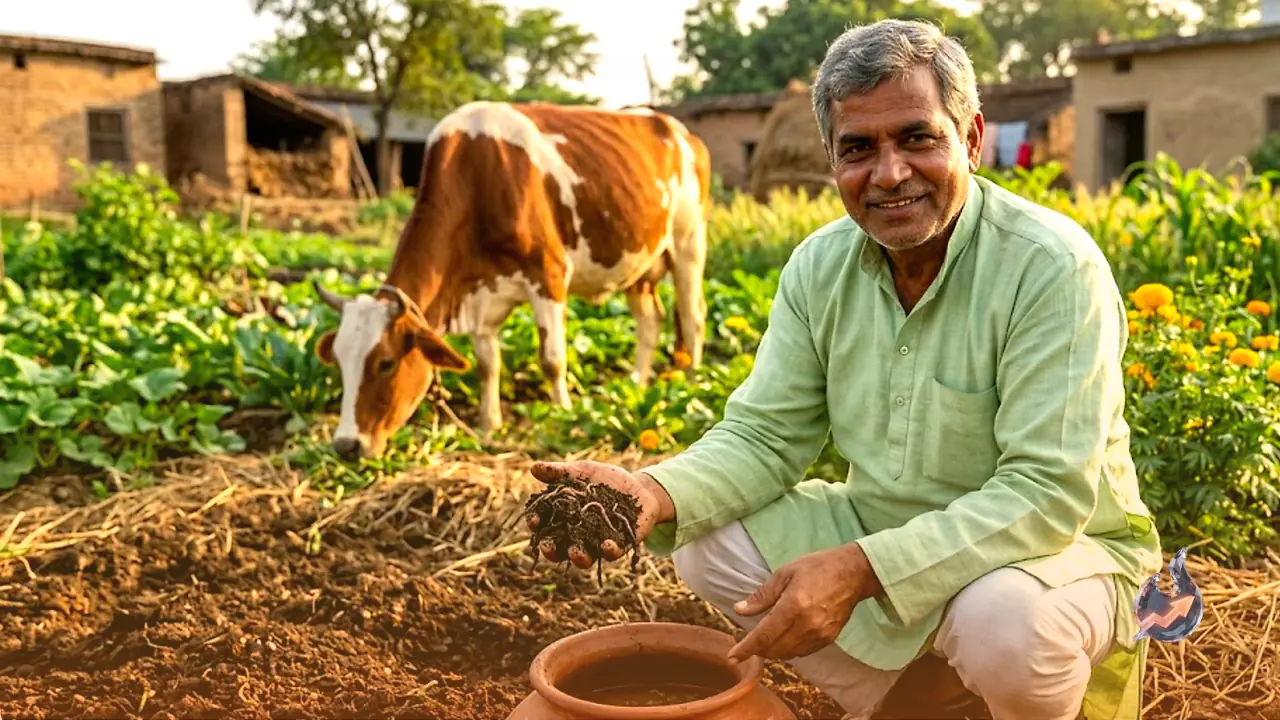
According to Rajesh Pandey, an expert in natural farming based in Azamgarh, this method represents a harmonious and balanced approach to agriculture that aligns with nature. The fundamental principle of this practice is self-reliance, meaning every single input, from seed treatment to soil enrichment, must be sourced naturally. To practice this successfully, farmers need to integrate animal husbandry and maintain biodiversity on their farms. From crop production to pest management, every step relies purely on natural resources, eliminating the dependency on expensive market-bought inputs.
The Power of Indigenous Cow Dung: Jivamrit and Ghan Jivamrit
At a time when chemical fertilizers are degrading soil health and escalating farming costs, organic manures offer a sustainable and highly effective alternative. In natural farming, the dung and urine of indigenous (desi) cows serve as the primary raw materials. Farmers can easily prepare highly potent natural fertilizers like Jivamrit and Ghan Jivamrit at home. These natural formulations do not just feed the crops, they rejuvenate the entire soil ecosystem by enhancing its microbial activity and natural fertility, resulting in a superior quality yield.
Chemical-Free Pest Control via Bio-Fencing
Protecting crops from pests and diseases does not require spraying toxic chemical pesticides. Instead, natural farming utilizes the concept of bio-fencing. By planting specific defensive flora around the borders of the field, farmers can establish a natural barrier that deters pests. This biological shield serves a dual purpose: it protects the main cash crops and provides farmers with secondary produce from the fencing plants, creating an additional stream of revenue.
Empowering the Farming Community with Free Training
To ensure that these sustainable practices reach the grassroots level, Rajesh Pandey is actively working to motivate and educate the agricultural community. He is conducting outreach programs and providing free training sessions to farmers. Through these hands-on workshops, farmers are learning how to prepare natural fertilizers and manage their fields independently, helping them break free from debt cycles and transition toward a healthier, more profitable future.