






















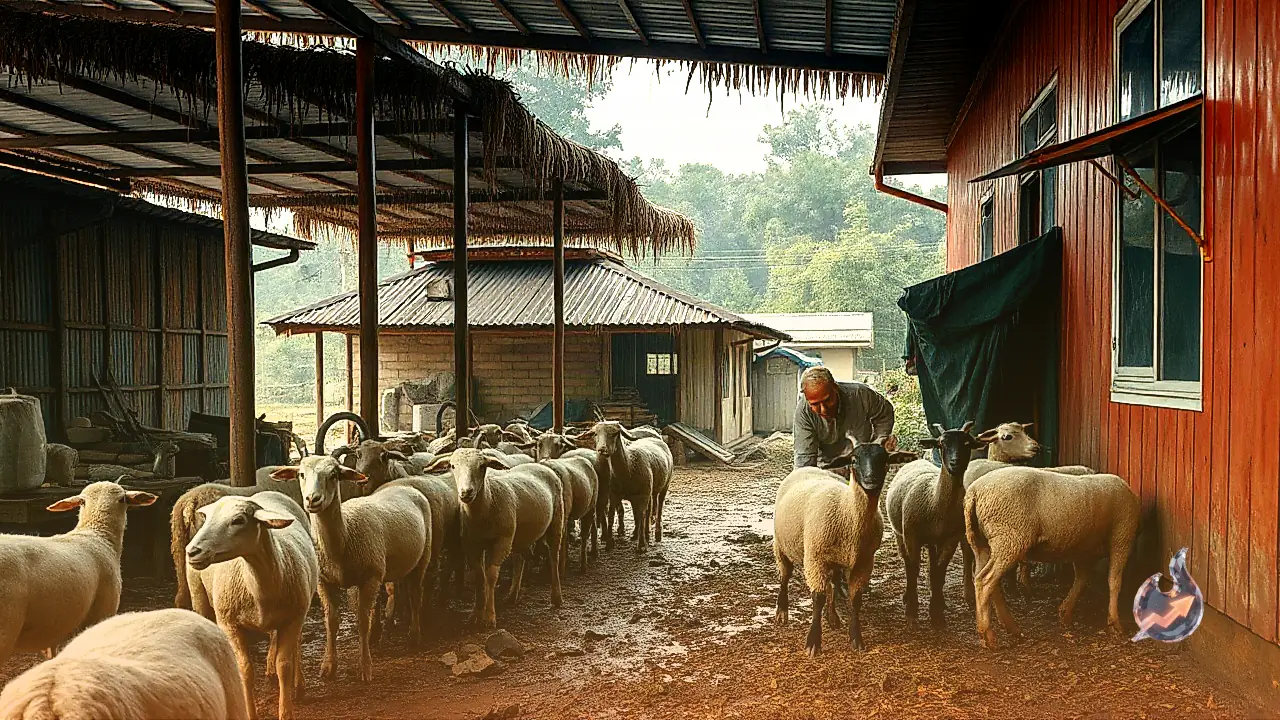

The rainy season introduces multiple challenges for those who rear sheep and goats. During this period, humidity, mud, filth, and parasites begin to degrade the hair and wool of these animals. When moisture remains trapped inside the wool for too long, it can tangle, turn yellow, and lose its overall quality. This degradation directly impacts the prices farmers receive in the market. Consequently, livestock keepers must pay special attention to animal care throughout the monsoon.
Keeping the animal shelter dry and clean
Sheep wool absorbs water and moisture much like a sponge. If the animals sit in wet or muddy enclosures, the risk of fungal growth in the fleece increases significantly. This causes the wool to turn yellow and deteriorate. Therefore, the floor of the animal shed must always be kept dry. If feasible, construct elevated platforms made of wood or bamboo so that urine and dung fall through to the ground, allowing the animals to rest on a dry surface.
Timely shearing and hygiene management
Rainwater tends to get trapped inside thick wool for extended periods. This situation elevates the risk of pneumonia and various skin diseases. Therefore, completing the wool shearing process before the onset of the rainy season is advisable. If shearing the entire fleece is not possible, definitely trim the wool around the lower belly, tail, and rear areas. This practice reduces the problem of mud and dung adhering to the body.
Managing parasites and regulating feed
The rainy season often sees an increase in issues related to lice and ticks. These pests cause itching, prompting the animals to rub their bodies against walls or trees, which breaks the hair and wool. Once the sun comes out, apply parasite control medications under the guidance of a veterinarian. Furthermore, the fresh green fodder available during rains contains high water content. Feeding this in large quantities can cause diarrhea in animals. When the rear area becomes soiled, the wool and hair get ruined. Hence, mix dry fodder with green fodder, and support their health and wool quality with a balanced diet and mineral mixture prescribed by a vet.