






















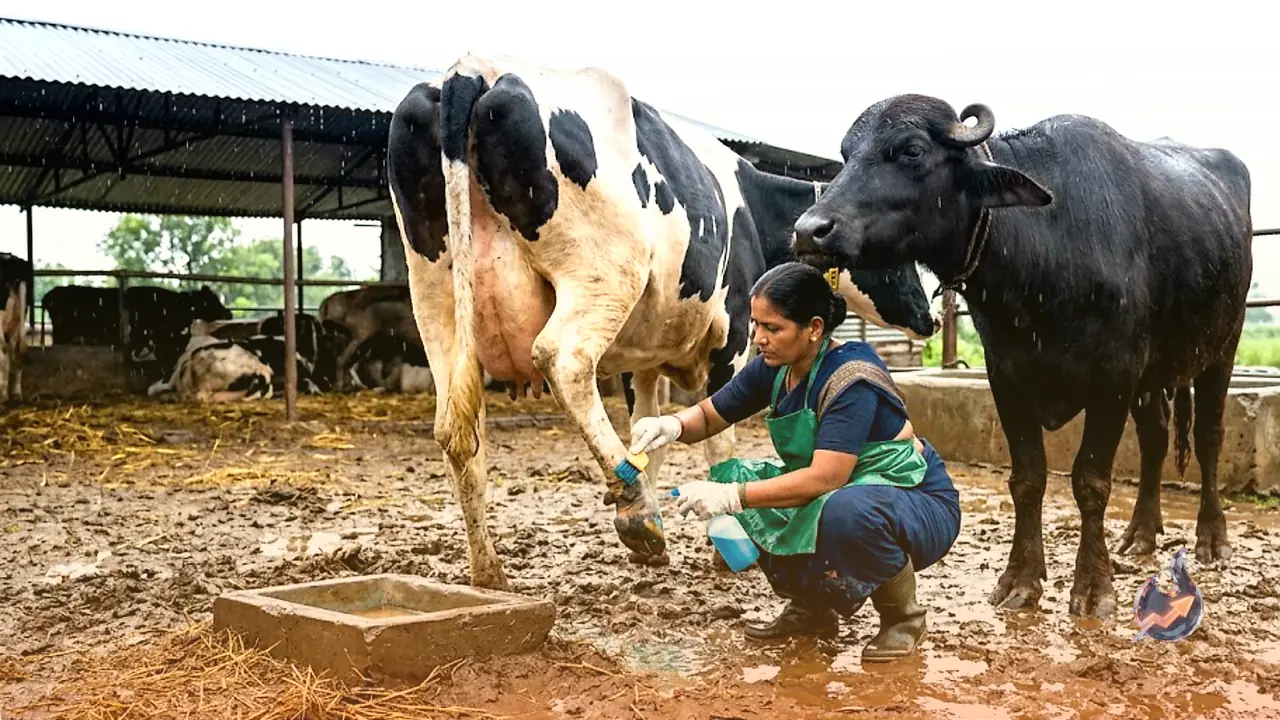

With the arrival of the monsoon season, dairy farmers face a double challenge, managing their crops while ensuring the well being of their livestock. Accumulation of mud, filth, and stagnant water in rural areas during rains poses a severe threat to the hooves of cows and buffaloes. According to veterinary experts, foot rot disease spreads rapidly during this wet season. Many livestock owners initially dismiss the early signs as a minor injury or a thorn prick, but such negligence can lead to severe complications. It causes immense pain and difficulty in movement for the animals, eventually leading to a drastic drop in milk production.
How Foot Rot Develops and Its Symptoms
Speaking to TrendKia, Dr. Poonam Soren, a veterinarian at the Deoghar Krishi Vigyan Kendra, explained the mechanics of this infection. She noted that when cattle are forced to stand continuously on damp, muddy ground, the skin between their hooves begins to soften and decay. This moisture creates an ideal breeding ground for bacteria, leading to painful foot rot.
Initially, an infected animal might exhibit a mild limp, which often goes unnoticed by farmers. As the condition worsens, the animal starts standing with one leg lifted, experiences sharp pain while walking, and attempts to sit down frequently. Swelling and a foul odor emanating from the hooves are clear indicators of advanced infection. If left untreated, the wound can deepen significantly, potentially causing permanent lameness in the animal.
Impact on Milk Yield and General Health
Dr. Poonam Soren emphasized that this ailment directly compromises the animal's physical health and dairy yield. Due to persistent pain, affected cattle lose their appetite and feed less. This lack of proper nutrition weakens their bodies, resulting in reduced milk output. Many farmers incorrectly assume that a decline in milk production is a natural consequence of the monsoon, unaware that the actual culprit is the underlying hoof infection. Therefore, close monitoring of livestock hooves is crucial during the rainy months.
Effective Preventive Measures and Home Remedies
To shield cattle from this painful condition, Dr. Poonam Soren recommends several practical home care routines:
- Maintain Dry and Clean Sheds: Ensure that water does not accumulate where animals are tethered. If the shed has an earthen or raw floor, regularly spread dry soil or sand over it to absorb excess moisture.
- Use of Lime Powder: Periodically sprinkle dry lime powder inside and around the cowshed. Lime acts as a disinfectant, reducing the population of harmful, disease causing germs.
- Routine Hoof Cleaning: Wash the animal's hooves with clean water at least two to three times a week and dry them thoroughly. This simple hygienic practice is highly effective in preventing bacterial onset.
- Avoid Muddy Pastures: Do not graze cattle in heavily waterlogged or muddy areas during the rainy season. If mud or dung gets trapped in their hooves during grazing, clean it out immediately upon return.
- Provide Balanced Nutrition: To strengthen their immune system, animals must receive a well balanced diet. Feeding them a proper mix of green fodder, dry fodder, and essential mineral mixtures helps them ward off various infections naturally.