























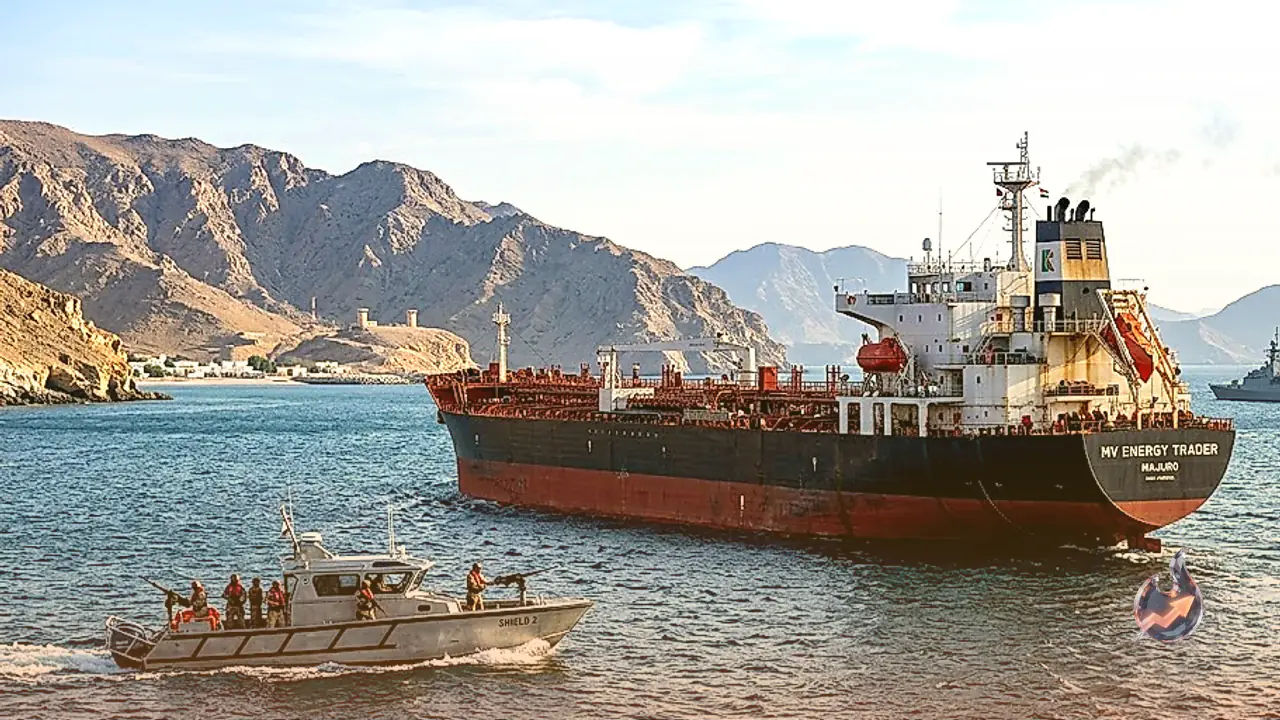

The security threat to vessels transporting crude oil and gas across the Middle East has escalated to its most dangerous level since the outbreak of the Iran conflict, following a concentrated wave of assaults along crucial regional waterways. Experts and industry analysts warn that the situation has deteriorated sharply as alternative shipping routes face mounting hostility, compounding an already severe maritime crisis. Before the outbreak of hostilities, approximately 20% of the world's total oil and gas supplies flowed through the Strait of Hormuz, underscoring the immense strategic importance of these chokepoints to the global economy.
The Strains on Alternative Maritime Routes
In the wake of Iranian blockades closing the Strait of Hormuz, maritime operators increasingly diverted tankers through an alternative shipping lane situated in the Red Sea between the Kingdom of Saudi Arabia and West Africa. Although a temporary peace agreement brokered with the US in early June sparked a brief recovery in vessel transit numbers, the resumption of military exchanges roughly a month later severely curtailed traffic once again. As hostile actions intensified, many commercial operators resorted to going dark during transit, switching off their electronic transponders to evade detection by hostile forces operating in the volatile corridor.
Surveillance Evasion and Selective Targeting
The operational landscape across the region remains fraught with complex security challenges, prompting cargo vessels to adopt covert navigation practices. Data compiled by ship-tracking firm Kpler indicates that on a recent Saturday, only 28 commodity vessels successfully traversed the Bab el-Mandeb strait, with six of those ships operating with their transponders disabled to avoid hostile targeting. While total vessel transit sits at approximately 50% of pre-attack levels because Houthi threats have been specifically directed at Saudi-associated shipping, the flow has seen severe localized impacts. Specifically, the number of ships loading crude oil destined for Asian markets has plummeted to about four per day, marking the lowest point recorded since the conflict began.
Compounding Pressures on Global Energy Markets
Industry leaders have voiced extreme alarm over the compounding effects of these disruptions on global commerce. Matthew Wright, an analyst at Kpler, noted that the situation represents the worst period for crude trade since the crisis started, emphasizing that a vital balancing mechanism for the market is now under direct threat. Tim Wilkins, the managing director of tanker owner trade body Intertanko, echoed these concerns, stating that the industry faces a broadening, deteriorating, and increasingly complex security environment that now extends deep into Saudi waters and portions of the Red Sea, directly undermining freedom of navigation.
Uncertain Outlook and Diplomatic Hurdles
Despite ongoing diplomatic contacts facilitated through Oman, Iranian officials have indicated that no immediate agreement is forthcoming to restore normal traffic through the closed strait. Iranian foreign ministry spokesperson Esmaeil Baqaei asserted that current restrictions would remain in place as long as American aggression persists. Meanwhile, market sentiment experienced sudden shifts following statements from Donald Trump regarding the cancellation of planned strikes on Iran in anticipation of potential talks. Consequently, Brent crude futures experienced sharp downward pressure, trading 4.4% lower at $84.05 a barrel after having fallen as much as 7.3% to $81.55 a barrel earlier in the session. Peter Sand, chief analyst at Xeneta, summarized the overarching sentiment of the maritime sector, warning that the continuous fighting has dragged the shipping industry back to square one with no clear resolution in sight.