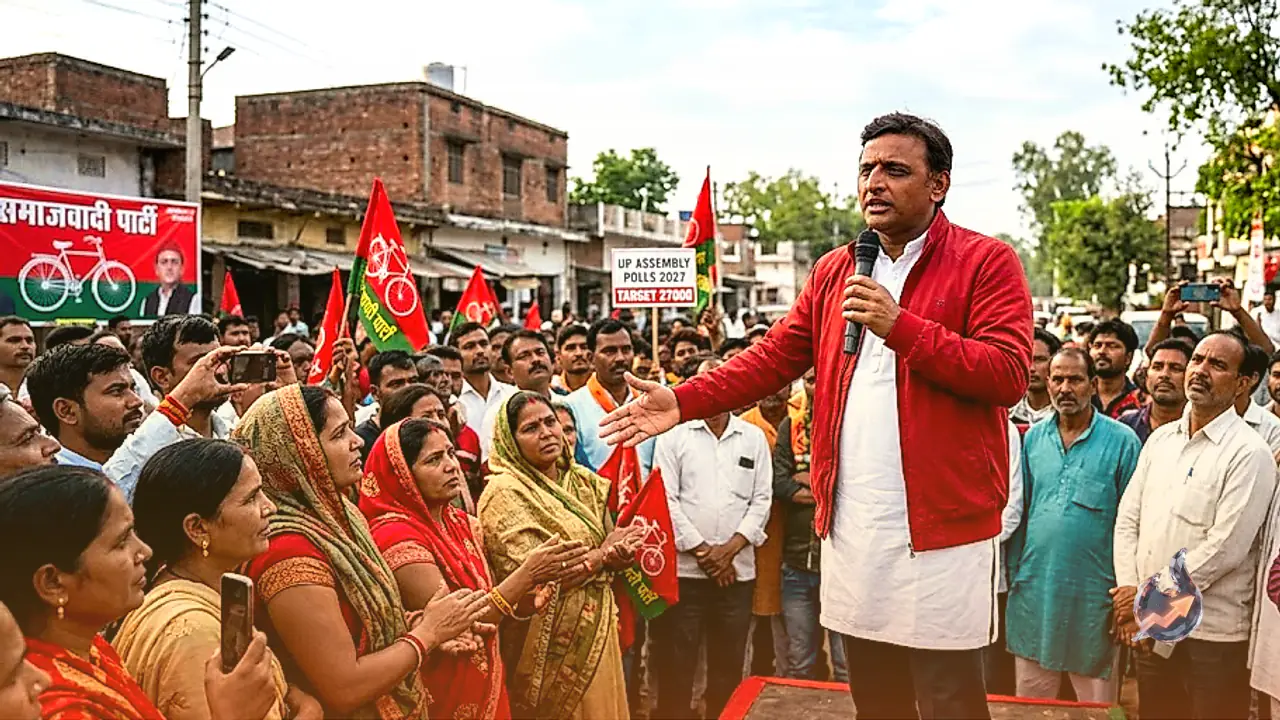



















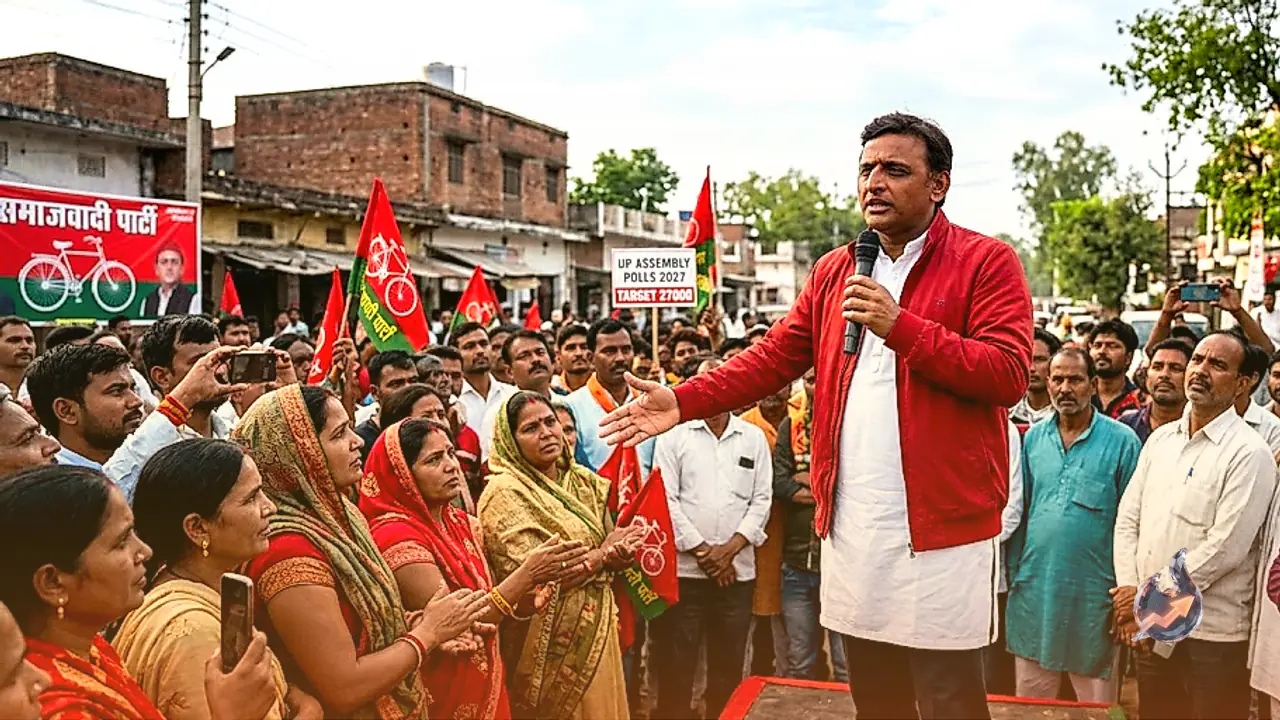

Political maneuvering for the 2027 Uttar Pradesh legislative assembly elections has gathered pace as major contenders roll out their ground game. Following continuous touring, assertive addresses, and a high-voltage campaign by Chief Minister Yogi Adityanath, the main opposition has unveiled its counter-strategy. Samajwadi Party national president and former CM Akhilesh Yadav gathered members of the state executive along with key organisational leaders in Lucknow to formalise a comprehensive electoral plan. The meeting concluded that party workers will no longer restrict their presence to rallies and stages, but will systematically knock on doors across local neighbourhoods.
A Tactical Micro-Target of 27,000 Votes
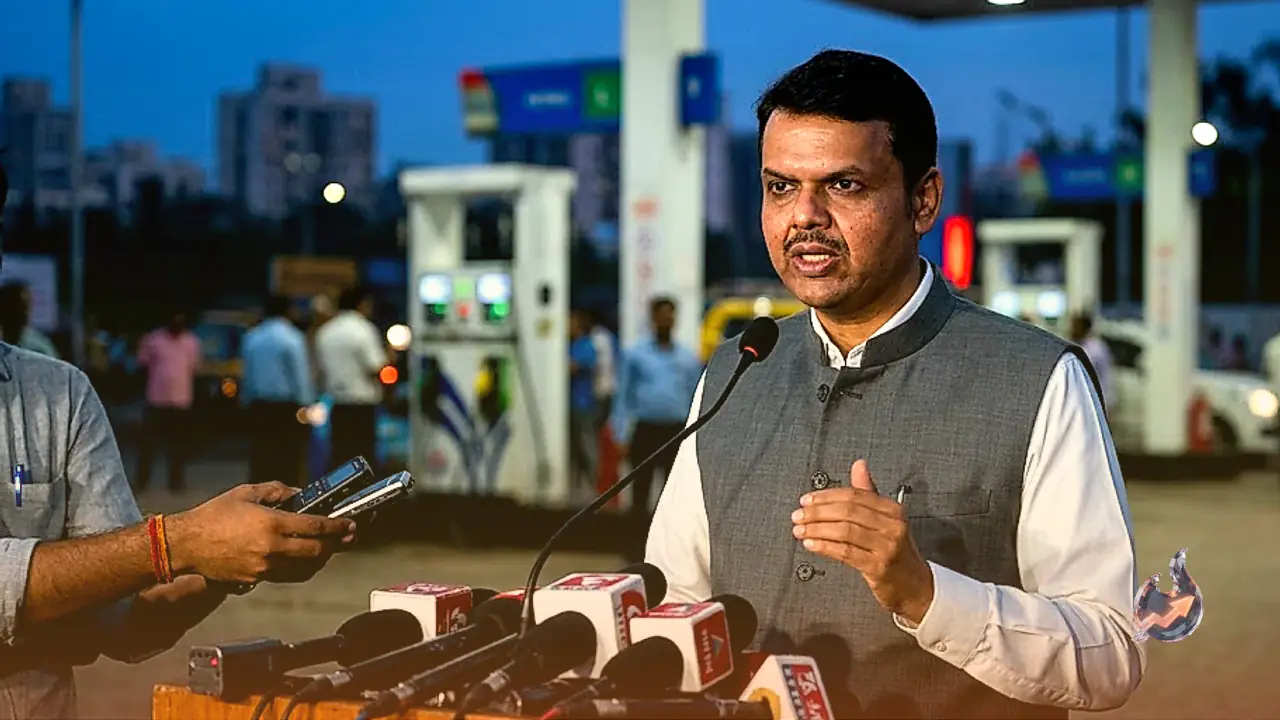
Addressing the press following the strategic discussions in Lucknow, Akhilesh Yadav detailed the party's arithmetic for the upcoming contest. The organisation has unanimously resolved to push the Samajwadi Party's vote tally higher by 27,000 votes in every assembly seat across the state. Framed conversely, the party aims to shave off that precise quantum of 27,000 votes from the ruling Bharatiya Janata Party's tally in each constituency. The cadre will conduct extensive village and neighbourhood visits, sitting down with local residents, noting down daily grievances, and pursuing justice for those facing official neglect or distress.
Explaining the resolution to reporters, Akhilesh Yadav stated,
“We have collectively decided to increase the Samajwadi Party’s vote share by 27,000 votes in each of the assembly constituencies.”By shifting focus toward fine-grained constituency tallies, the party intends to bridge local deficits and establish decisive leads at individual polling booths.
Attacking Agrarian Stress and Economic Measures
The former chief minister directed sharp scrutiny toward the past decade of governance under the BJP at both the central and provincial tiers, asserting that nearly all sections of society are facing deep hardships. Turning specifically to rural distress, he argued that promises regarding doubling agricultural earnings have collapsed into sharply escalated production expenses. Essential farming inputs have witnessed persistent cost hikes.
He noted that petroleum fuels, agricultural pesticides, chemical fertilizers, and DAP have all turned considerably more expensive for growers. Yet, when harvest arrives, farmers struggle to secure fair compensation for their produce. Akhilesh Yadav further alleged that state promotion of ethanol functions as a tool to extract revenue from ordinary citizens, diverting financial advantages directly toward a select few industrialists.
Concerns over Jobs and Affirmative Action
The Samajwadi Party leadership placed strong emphasis on youth employment and affirmative action safeguards. Akhilesh Yadav claimed that young aspirants in Uttar Pradesh have borne the brunt of administrative mismanagement, with fresh public employment opportunities drying up systematically. He also warned that existing reservation systems are facing sustained dilution, depriving marginalized communities of their rightful representation in state administration.
Land Deals in Ayodhya and Healthcare Deficits
Moving against the ruling administration's core political narrative, Akhilesh Yadav brought up alleged real estate malpractices in Ayodhya, describing the holy city as a focal point of widespread land improprieties where real estate deals took place under the cover of religious reverence.
Critiquing the condition of public medical infrastructure across Uttar Pradesh, the SP leader noted that government hospitals lack essential pharmaceutical supplies and fail to maintain adequate patient facilities. Highlighting the institutional decline of local hospitals, he remarked,
“Today, the hospitals of Uttar Pradesh have reached a point where they need treatment themselves.”
Competing Political Blueprints for 2027
The emerging contest between the two heavyweight leaders showcases starkly contrasting campaigning styles and political appeals. Chief Minister Yogi Adityanath is spearheading an aggressive drive anchored in Hindutva messaging, the 'batenge to katenge' slogan, an unyielding anti-mafia reputation, and claims of clean administrative governance, backed by announcements of state welfare schemes and recruitment initiatives.
Conversely, Akhilesh Yadav is anchoring his campaign around the PDA coalition representing backward classes, Dalits, and minorities, paired with rural agricultural distress, escalating inflation, joblessness, and the micro-target of 27,000 votes per seat. By shifting emphasis from massive public rallies toward meticulous booth-level cadre management, participatory village discussions, and direct home visits, the Samajwadi Party has framed a high-stakes grassroots electoral challenge for 2027.