













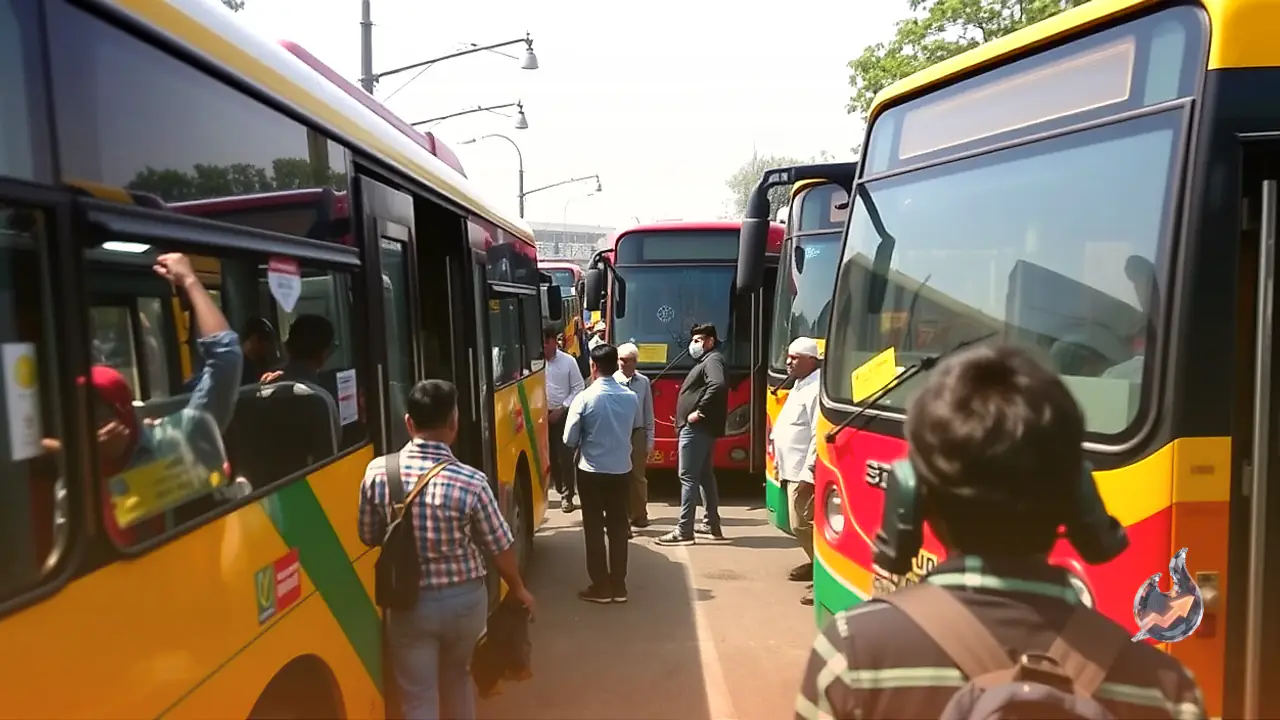

Commuters navigating Mumbai aboard public buses are set to experience major upgrades in urban transit connectivity and commuter comfort in the coming period. The Brihanmumbai Electric Supply and Transport (BEST) undertaking has presented its budget for fiscal year 2027-28, charting an aggressive modernization drive that spans large-scale fleet expansion, universal digital ticketing, real-time bus monitoring, and enhanced commuter safety. At the forefront of this overhaul is a planned induction of 1,500 new electric midi buses into the municipal transit system, accompanied by tenders invited to procure 200 CNG midi buses.
Phased Expansion Target Set for 10,000 Buses
As of September 2026, BEST operated a total fleet of 2,834 buses across the city and surrounding areas. The transport authority has now committed to a structured, phased augmentation drive that aims to initially scale the operating fleet to 4,016 buses, with an ultimate objective of reaching 10,000 operational buses. Under this framework, 1,500 electric midi buses will be procured through the central government's PM E-Drive scheme. Parallel to this green transit procurement, administrative proceedings have also commenced to acquire 200 CNG midi buses. With approximately 25 lakh commuters relying on BEST services daily throughout Mumbai and adjacent metropolitan zones, expanding the operational strength is intended to directly boost vehicle frequency, lower passenger wait times, and alleviate chronic commuter crowding on high-density routes.
ONDC-Powered QR Ticketing and Real-Time Tracking
BEST is also moving forward with comprehensive reforms in passenger ticketing by strengthening its digital transit ecosystem. Under the new budgetary proposal, QR code-based ticketing will be integrated across the Open Network for Digital Commerce (ONDC), making seamless bus booking accessible over numerous third-party digital platforms. Commuters will be able to purchase tickets through widely used mobile interfaces including Chalo, PhonePe, Paytm, WhatsApp, redBus, Rapido, and Namma Yatri. Alongside broader app availability, the Integrated Transport Management System will continue uninterrupted, delivering real-time vehicle tracking, automated vehicle location monitoring, and improved passenger information displays at stops and inside buses. Fleet movements, route adjustments, and schedule monitoring will be coordinated centrally through an active Central Command and Control Centre.
Driver Safety Training with Advanced Simulators
To curtail road collisions and boost defensive driving practices, BEST is enhancing driver education through high-tech infrastructure. Advanced driving simulators will be installed at the Dindoshi Training Centre. These digital simulation modules are designed to train drivers under severe weather conditions, complex and congested urban scenarios, proactive hazard identification, and fuel-efficient operating techniques.
Open-Top Double-Deckers for Heritage Tourism
In a targeted move to support leisure travel and heritage appreciation in the metropolis, BEST has proposed introducing open-top double-decker buses. These specialized open-roof vehicles will be assigned to heritage tourist routes, giving visitors panoramic sightseeing access to Mumbai's celebrated architectural landmarks and historic districts.