






















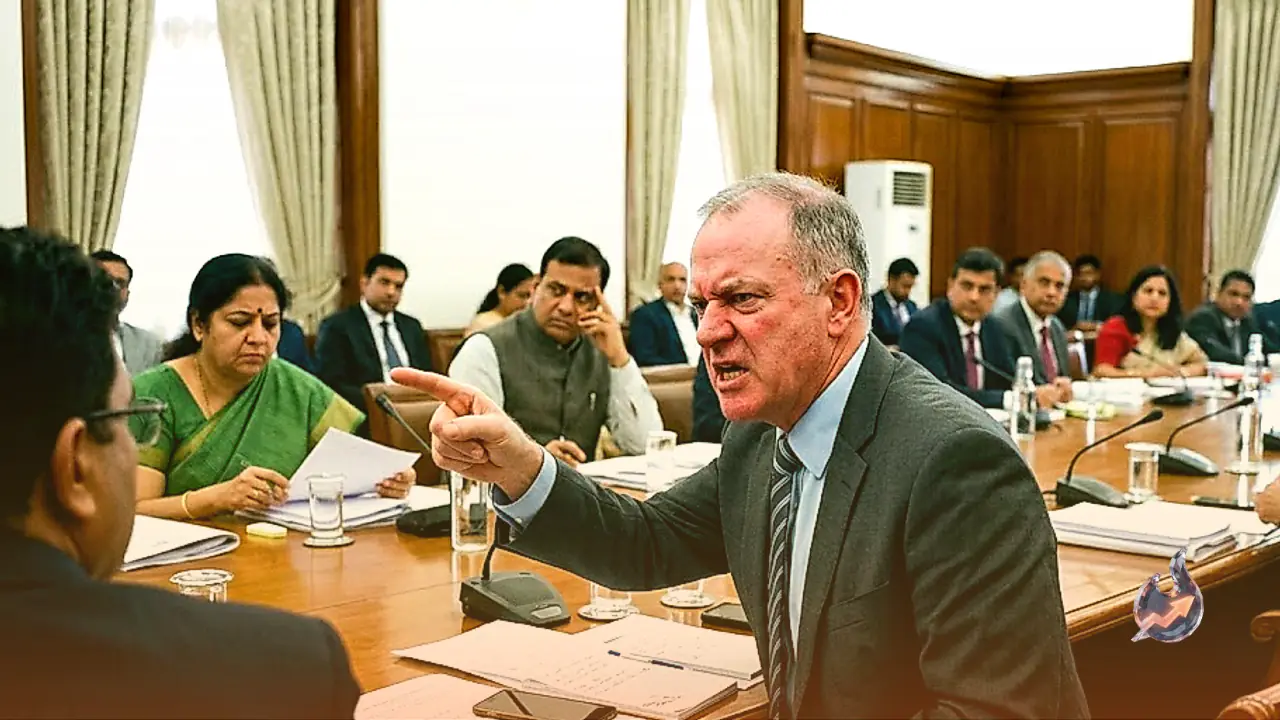

Political friction has intensified following the announcement of a new fee structure on merchant UPI payments. During a recent meeting of the parliamentary standing committee on finance, opposition leaders strongly condemned the move, labeling it as highly anti-people. They argued that this decision would severely burden millions of ordinary citizens and small shopkeepers across the country. Although the meeting was convened to discuss other matters, the imposition of a zero point four percent merchant discount rate on merchant payments exceeding two thousand rupees drew sharp criticism and dominated the entire discussion.
The political uproar and opposition pushback against UPI fees
Even though the parliamentary committee meeting was originally scheduled with a different agenda, opposition MPs prominently raised the issue of UPI charges. RSP MP N.K. Premachandran directly termed the government move as a blow to the common public, emphasizing that a fee on every transaction above two thousand rupees will impact household budgets everywhere. Congress MP Manish Tiwari noted that deep concern and anger prevail across the nation regarding transaction fees, making it natural for public hardship to reflect in parliamentary discussions. Committee Chairperson Bhartruhari Mahtab acknowledged that while the issue was not on the original agenda, comprehensive discussions could be held in subsequent meetings given the intense concern expressed by the members.
Timeline of new rules and potential impact on consumers
Under the government's fresh policy framework, the zero-MDR system that had been in place since January 2020 has been completely phased out, as banks and fintech companies had long opposed the free service. According to the updated guidelines, a zero point four percent fee will apply to merchant payments above two thousand rupees, capped at a maximum limit of three hundred rupees applicable on payments of seventy-five thousand rupees or more. This new rule is scheduled to take effect on October 15, 2026. While the fee will formally be deducted from merchants' accounts, experts believe the ultimate financial burden will indirectly trickle down to consumers.
Questions over GDP growth statistics and virtual digital assets
The parliamentary session witnessed disputes extending beyond UPI, with questions raised over the seven point eight percent GDP growth rate recorded in the first quarter of the current fiscal year. MP Manish Tiwari demanded that the government make the GDP calculation formula completely transparent, questioning which new indices were added and which old indicators were removed after changing the base year. The opposition accused the administration of manipulating statistics to conceal ground realities. Another major focus of the meeting was the future of virtual digital assets and cryptocurrencies, a topic the committee has reviewed for the past year alongside top institutions like the RBI and CBDT. Chairperson Mahtab highlighted that the government neither recognizes these assets nor enforces strict regulations, allowing an unregulated grey-market to foster suspicious activities that pose serious risks to financial security.