

















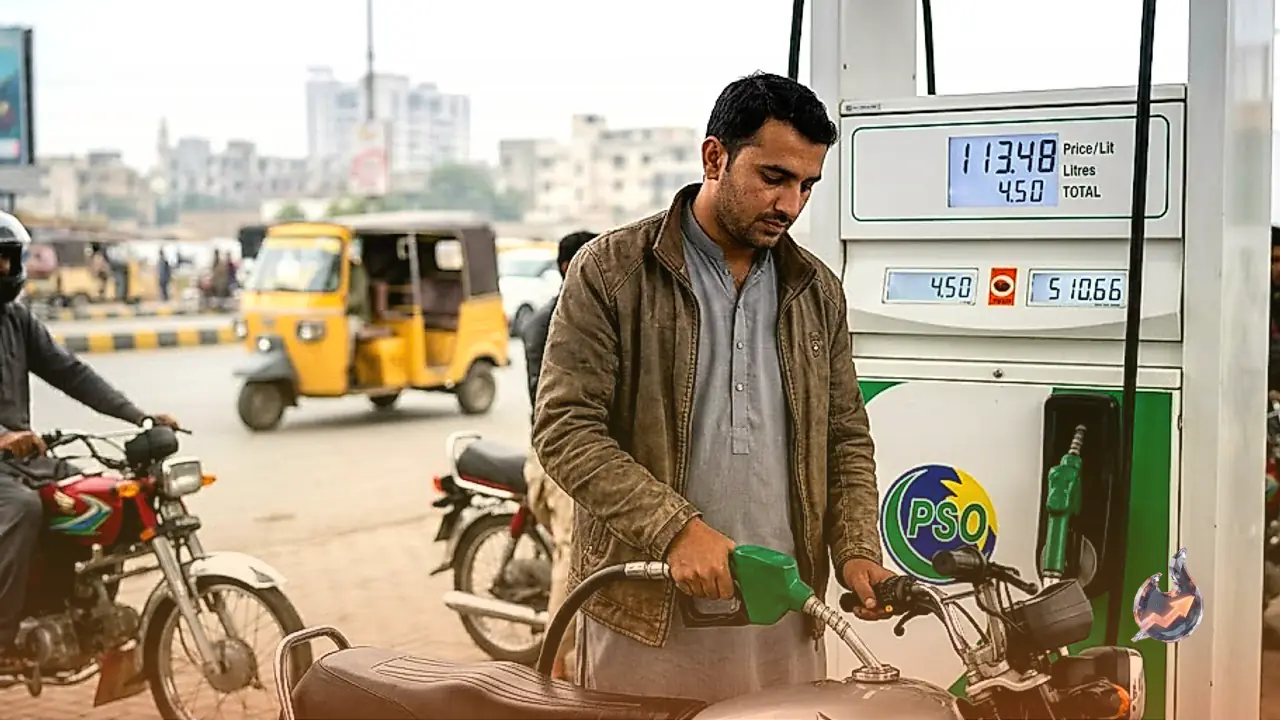

Following a recent decline in international crude oil prices, the government in Pakistan has announced significant cuts in the retail rates of petrol and high-speed diesel. The administration lowered the price of petrol by 4.08 Pakistani rupees per liter and high-speed diesel by 2.45 rupees per liter, offering much-needed relief to citizens grappling with persistent inflation. At present, the retail price of 100 percent pure petrol in Pakistan stands at 331.95 Pakistani rupees per liter, while high-speed diesel is priced at 389.93 rupees per liter. Converting these figures into Indian currency, where one Indian rupee equals 2.91 Pakistani currency units, the price of petrol comes to roughly 113.48 rupees per liter, and diesel costs about 133.78 rupees per liter.
Differences in Fuel Policies Between India and Pakistan
In comparison, India utilizes petrol blended with 20 percent ethanol. E20 petrol is priced at 102 rupees per liter in Delhi, while the rate reaches 113 rupees per liter in Kolkata. Meanwhile, pure, ethanol-free petrol in India commands a higher price of approximately 160 to 170 rupees per liter. A major policy gap exists between the fuel strategies of the two neighboring nations. India has formally integrated ethanol blending into its national energy policy, whereas Pakistan has failed to take any substantial steps in this direction up to this point.
Exporting Ethanol for Foreign Exchange
Although ethanol is produced within Pakistan, the vast majority of it is exported to other countries. The primary driver behind this practice is an urgent requirement for foreign exchange reserves. For Pakistan, ethanol serves primarily as an export commodity used to generate foreign currency, whereas for India, it has successfully transformed into a primary instrument for national energy security. Domestic policy also plays a significant role, as Pakistan has never mandated ethanol mixing within its domestic fuel supply. Consequently, the necessary distribution networks, oil company preparedness, and government incentives remain quite limited.
Disparities in Sugarcane Utilization and Infrastructure
The utilization of sugarcane also highlights a clear structural divide between the two countries. India actively incentivized sugar mills to engage in large-scale ethanol production, establishing a robust supply chain linking farmers, the sugar industry, and oil marketing companies. Pakistan failed to develop a comparable, comprehensive framework. Industry experts believe that if Pakistan were to initiate ethanol blending, it could partially reduce its heavy reliance on imported crude oil. However, the current priority remains earning foreign currency by selling ethanol abroad. In contrast, the extensive adoption of ethanol blending in India has successfully lowered import expenditure on crude oil, curbed carbon emissions, and provided supplemental income to agricultural producers, prompting the country to aggressively advance toward E20 fuel.
Recovery and Fragility of Foreign Exchange Reserves
Over the past two years, Pakistan navigated through a severe economic crisis characterized by rapidly depleting foreign exchange reserves and recurring difficulties in funding essential import payments. However, the situation has shown signs of modest improvement in recent months. Financial packages secured from the International Monetary Fund, assistance from friendly nations, and a slight recovery in exports have contributed to a measured increase in the country's foreign reserves, enabling the government to facilitate essential imports and stabilize the domestic currency market.
Nonetheless, financial analysts caution that this recovery cannot be considered entirely stable. Pakistan's economy remains heavily dependent on imported petroleum products. Consequently, any future surge in global crude oil prices could immediately renew severe pressure on its foreign exchange reserves. This vulnerability explains why the administration is currently keen on passing the benefits of the recent global price softening directly to consumers, making the reduction in petrol and diesel prices a calculated tactical move within this broader economic strategy.