






















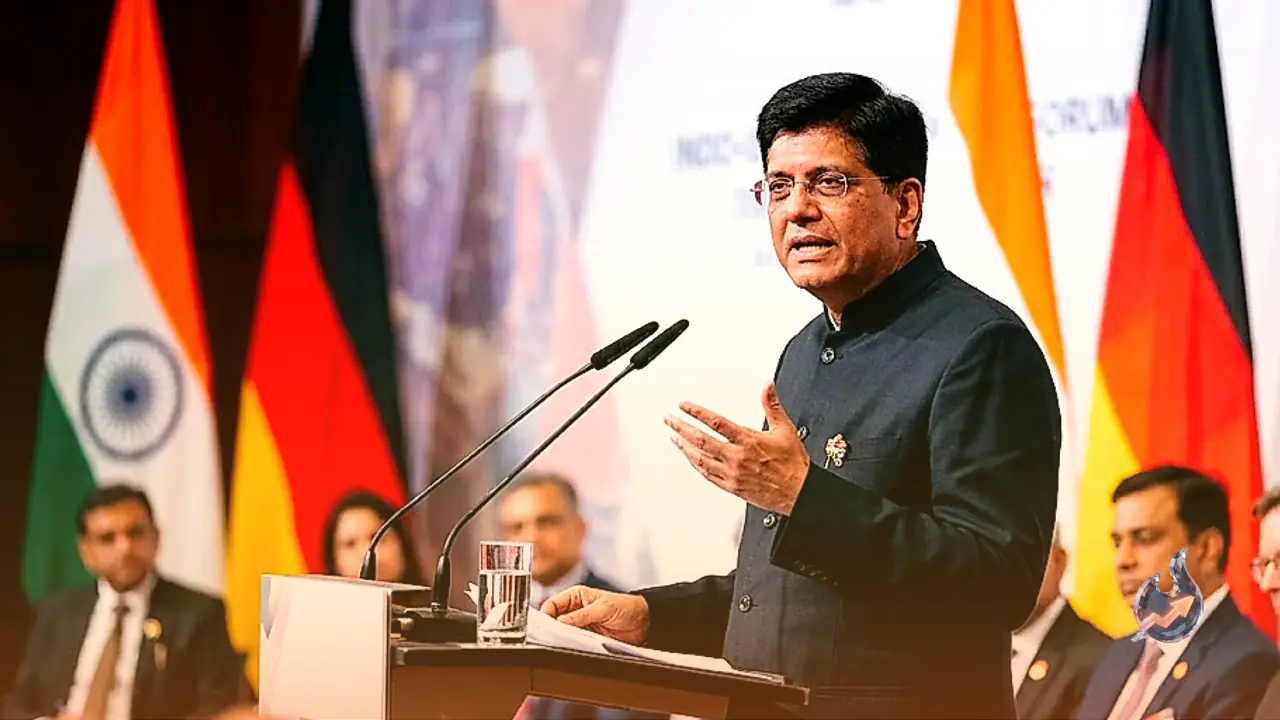

The Indian government is prepared to actively back overseas commercial storage infrastructure to help domestic exporters establish a firmer foothold across European markets. Addressing members of the diaspora in Berlin, Union Minister Piyush Goyal indicated that the administration is ready to facilitate the creation of an international trade hub and warehousing base in Germany, provided that reputable trade bodies or expatriate associations assume ownership of professional day-to-day operations. He made it clear that the state will not manage such commercial facilities directly, but will assist in establishing clear structures around financing, insurance, security, and smooth functionality.
Diaspora as a Vibrant Economic Bridge
Speaking to entrepreneurs and professionals gathered in the German capital, the Union Minister called on overseas citizens to harness their local contacts, professional standing, and business acumen to generate fresh export orders for enterprises back home. He described the expatriate community as a dynamic channel capable of bridging markets, helping domestic producers discover foreign corporate partners, and securing valuable service contracts. By integrating their knowledge, capital, and corporate ties with India's expanding industrial capacity, non-resident professionals can become vital contributors to the country's economic expansion.
Piyush Goyal explained that India is strategically widening its commercial footprint across the globe by negotiating comprehensive free trade pacts and strengthening economic and geopolitical alliances. The overarching objective remains accelerating cross-border commerce while elevating India's stature in global supply chains. He emphasized that the country holds immense potential to scale its manufacturing sector and reinforce its services domain. However, fulfilling these ambitious milestones demands dedicated contributions from citizens living both within India and abroad, noting that the intrinsic drive and ambition to advance must emerge organically from the people themselves.
Logistical Support and Warehousing in Germany
Touching upon the proposal to set up an Indian international trade facility designed to connect small enterprises with European buyers, the Union Minister offered practical clarity on how such initiatives can succeed. He stressed that while government entities will not build or run warehouses overseas on their own, the state will readily support private initiatives backed by sound operational frameworks. The operational blueprint must guarantee transparent management, stable financing, insurance coverage, and strict security protocols.
Having local storage space in Germany would allow smaller Indian exporters to stock goods on European soil in advance, enabling rapid order fulfillment and drastically reducing dispatch timelines for continental clients. This ready availability of inventory would give Indian suppliers a distinct competitive edge in European retail and wholesale markets. Piyush Goyal simultaneously insisted on strict fairness, stating that any such diaspora-led or industry-run facility must offer equitable and open access to every eligible Indian merchant without favoritism.
Facilitating Enterprise and Expanding Bilateral Trade
Highlighting the indispensable role of free enterprise in national prosperity, the Union Minister cited the historic growth of India's information technology industry as a model for public policy. He pointed out that the role of government should focus on delivering supportive infrastructure and removing regulatory friction rather than meddling in day-to-day commercial activities. When authorities step back from unnecessary interventions and concentrate on enabling growth, private innovation flourishes naturally.
At the same gathering, India's Ambassador to Germany, Ajit Vinayak Gupte, highlighted the expanding scale of commercial cooperation between both nations, revealing that bilateral trade has touched an unprecedented record of 53 billion US dollars. The ambassador stated that the Indian expatriate population in Germany has now surpassed 332,000 individuals. This growing demographic continues to contribute significantly across science, technology, finance, and related professions, anchoring commercial connections and building enduring people-to-people bridges between the two nations.