


















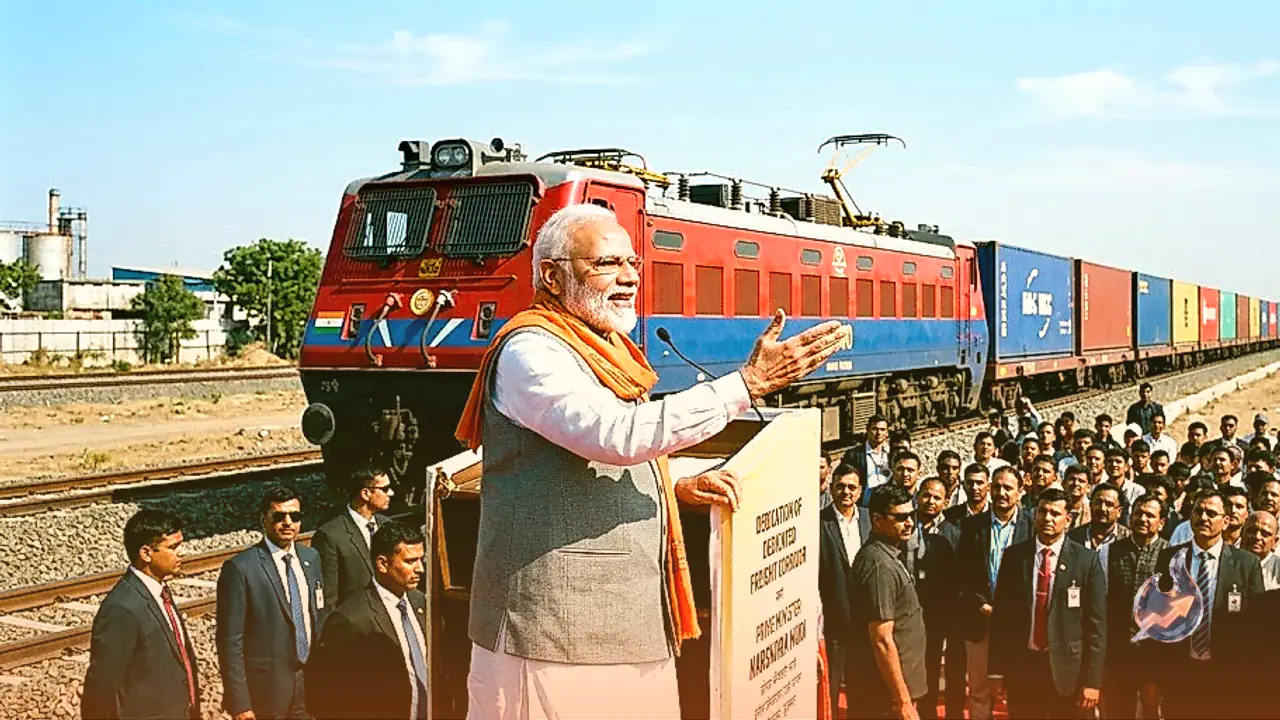

Prime Minister Narendra Modi hailed the completion of the nationwide Dedicated Freight Corridor network as a historic milestone for India's logistics ecosystem, stating that the project will significantly cut freight transit times, lower transportation costs, and help farmers deliver their produce to major markets much faster.
Completion of the Western Corridor Final Sections
Speaking at an event in Vadodara, Gujarat, while dedicating the final critical sections of the Western Dedicated Freight Corridor to the nation, the Prime Minister emphasized that the construction of the over 2,800-kilometer-long freight corridor is a major achievement for 21st-century India. The final three newly operationalized sections of the Western Dedicated Freight Corridor span a total length of 326 route kilometers and involved an investment of more than 20,700 crore rupees. With the launch of these segments, both the Eastern and Western Dedicated Freight Corridors are now fully operational along their entire lengths.
Separation of Freight and Passenger Traffic
The Prime Minister noted that the dedicated network serves as the lifeline of a rapidly developing nation, bringing structural changes to the country's transport sector. Previously, freight and passenger trains had to share the same railway tracks, which severely restricted the speed of both. Now, with dedicated freight tracks, goods trains can operate smoothly along their designated routes without facing passenger traffic bottlenecks.
Speeding Up Goods Movement and Cutting Travel Times
At present, more than 430 freight trains operate daily across the Eastern and Western corridors. While a freight train previously took about six and a half hours to cover a distance of 100 kilometers, the same distance can now be completed in less than half that time. Compared to road transport, cargo movement that previously took around 30 hours via trucks can now be accomplished through the freight corridor in just 10 to 12 hours.
Multi-Fold Economic and Environmental Benefits
The benefits of this project extend far beyond mere time savings. Fuel consumption has dropped, freight transportation costs have decreased, time has been saved, and the environment has also benefited from reduced emissions. The government believes that faster and cheaper freight movement will enhance the competitiveness of Indian industries and make import-export operations much more efficient.
Direct Port Connectivity and Relief for Mumbai Rail Network
The newly commissioned three sections connect Sanand North, Makarpura, New Umbergaon, New Safale, and the Jawaharlal Nehru Port Authority, establishing direct freight connectivity to one of the country's most vital ports. According to government assessments, this will accelerate the movement of export-import cargo, lower overall logistics expenses, and reduce congestion on the heavily burdened Mumbai rail network.
Empowering Farmers and Boosting Agriculture
Farmers across the country are set to reap major rewards from this infrastructure. Growers in eastern and western regions will now be able to transport their harvests swiftly to major consumer hubs. Perishable items such as fruits, vegetables, and flowers will reach destinations with minimal delay, increasing the likelihood of better financial returns for farmers.
Double-Stack Containers and Regional Rail Expansion
Highlighting the sheer scale of the operation, the Prime Minister pointed to a recently operated double-stack container freight train running between JNPT and Vadodara that hauled the equivalent of more than 250 trucks in a single run. During the event, the Jobat-Tanda Road railway line was also dedicated to the nation. This line forms part of the Chhota Udaipur-Dhar rail project, connecting remote and tribal regions including Alirajpur in Madhya Pradesh directly to the national rail network.