























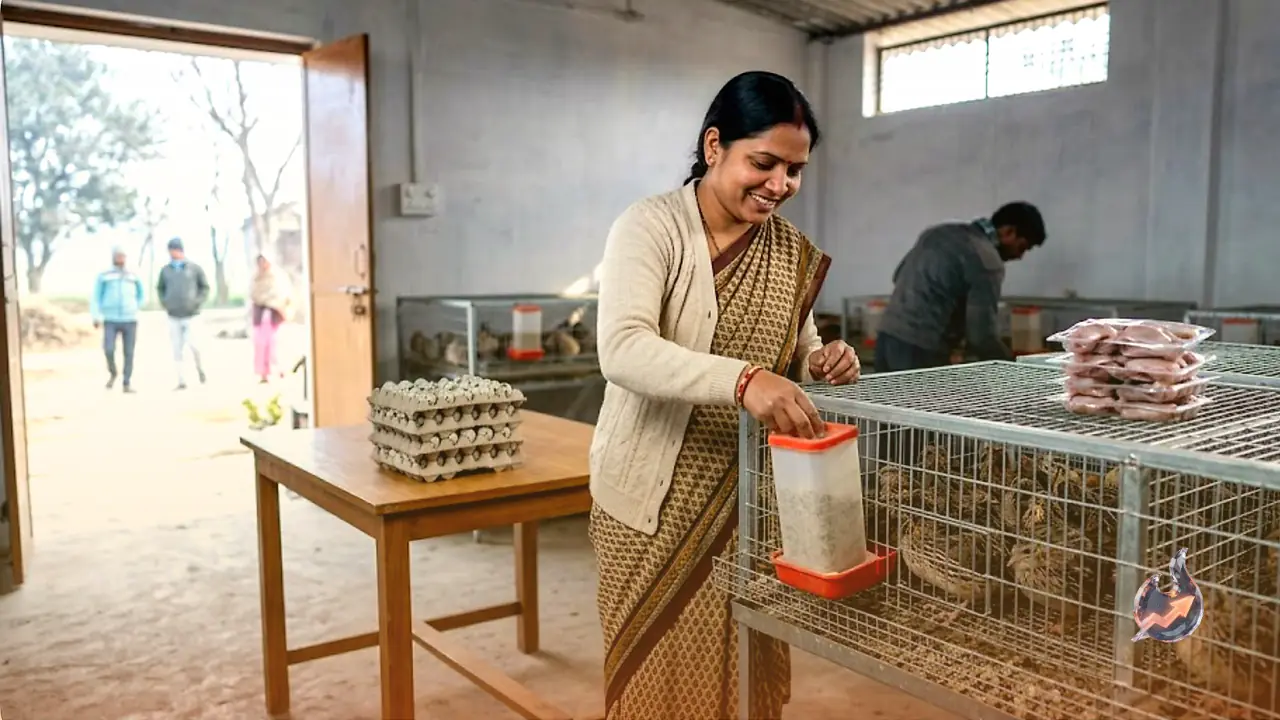

Beyond traditional animal husbandry, quail farming is rapidly emerging as a popular and profitable venture across various districts in Bihar, including Jehanabad. This business has captured the attention of many due to its lucrative returns. In the market, quail meat can fetch prices as high as ₹1,000 per kilogram. Furthermore, the eggs produced are in greater demand than those of indigenous chickens or ducks. As the winter season approaches, the market demand for both meat and eggs escalates, providing producers with an excellent opportunity to maximize their earnings.
The seasonal advantage of quail farming
A key advantage of rearing quails is their quick maturity. These birds begin laying eggs within just 4 to 6 weeks of life. Experts believe that starting this venture just before the onset of winter is an ideal strategy to reap maximum benefits. Dr. Rani, an Assistant Poultry Officer based at the District Animal Husbandry Office in Jehanabad, highlights that quail meat is not only a gourmet choice but also nutritionally significant, offering health benefits that make it particularly useful for managing various winter-related ailments.
Market demand and nutritional benefits
Dr. Rani explains that the health properties of quail meat make it a preferred choice for many, even at premium prices, especially during the cold season when people look for immunity-boosting foods. The eggs are known for their warm properties and command higher prices than standard commercial eggs. A significant driver for these high prices is the supply-demand gap; because the overall production of quail is still relatively low, any available stock in the market is snapped up almost immediately at profitable rates.
Minimal investment, maximum returns
Getting started with this business is remarkably affordable, requiring an initial investment of barely ₹10,000. It does not demand large swathes of land, as the entire setup can be managed within a single small room. When maintained hygienically, one square foot of space is sufficient to house three quails. Additionally, the daily maintenance and feed costs are quite low. For those looking to capitalize on the winter demand, this venture is highly efficient, capable of generating returns up to five times the initial capital investment with proper management.