





















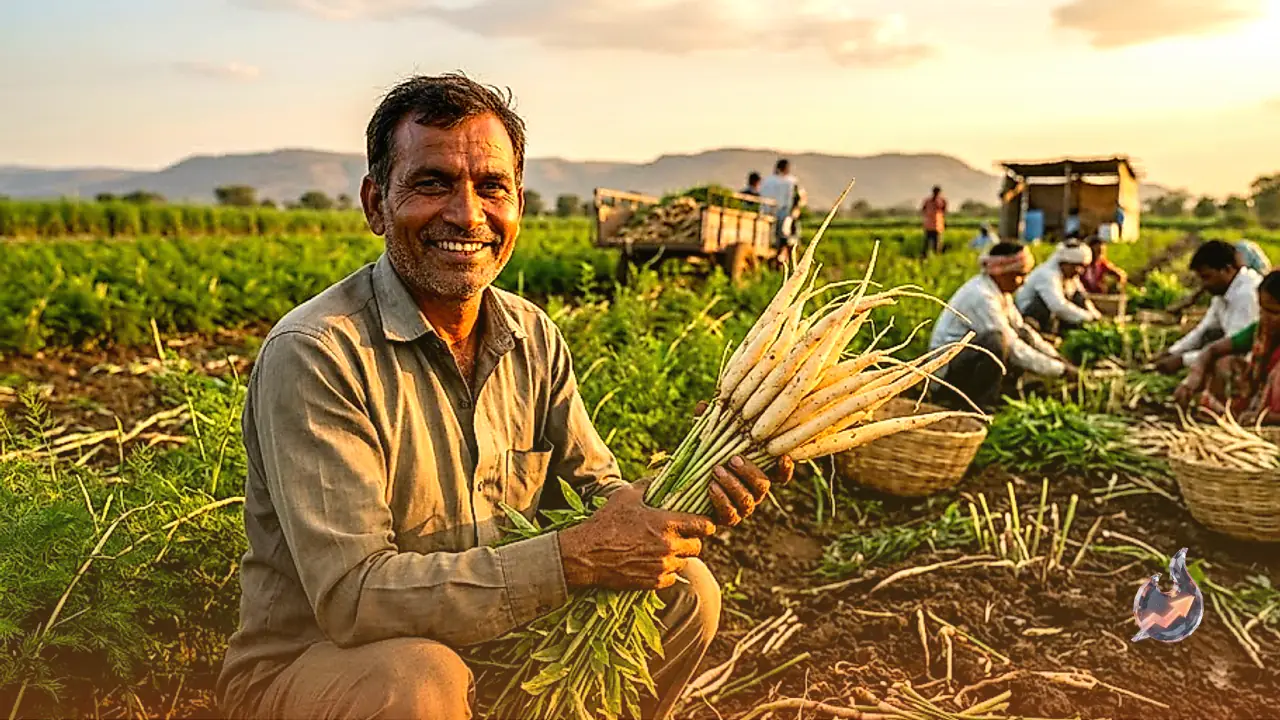

In a significant agricultural shift that promises to reshape the economic landscape for local cultivators, farmers in Madhya Pradesh's Khandwa district are embracing a lucrative new crop. Following their highly successful and profitable venture into Safed Musli cultivation, growers in the region are now proactively turning their attention toward Shatavari, a highly valued and universally recognized medicinal plant. This transition is not merely a temporary experimental phase; it is backed by a robust and reliable financial safety net that completely eliminates the typical market risks associated with growing cash crops. A pre-arranged, institutionalized buy-back system has been firmly established, ensuring that farmers have a guaranteed corporate buyer for their entire harvest. This unprecedented level of market security is sparking widespread interest and instilling a renewed sense of hope for a substantial, sustainable increase in rural incomes across the farming community.
A Pioneering Effort and Guaranteed Returns
The grassroots movement toward this powerful medicinal herb was officially initiated by Tikam Singh Gaur, a dedicated retired panchayat employee residing in the rural Pandhana area of the district. Taking a bold, calculated step away from traditional, low-margin farming practices, Gaur has dedicated a pristine two-acre parcel of his agricultural land exclusively to the systematic cultivation of Shatavari plants. His pioneering and forward-thinking effort is drawing immediate attention from neighboring villages, primarily because of the ironclad financial security it offers. Under a formal, legally binding buy-back agreement meticulously negotiated with the Krishi Namami Group, cultivating farmers are completely shielded from the unpredictable price fluctuations and middleman exploitation that often plague traditional agricultural supply chains.
The specific commercial terms of this corporate partnership are strictly defined and remarkably favorable for the growers. According to the documented contract, the Krishi Namami Group is firmly committed to purchasing the freshly harvested wet roots of the medicinal plant at a guaranteed, fixed rate of ₹10 per kilogram. Additionally, the highly sought-after seeds produced by the mature crop will be directly procured at a premium rate of approximately ₹500 per kilogram. This stable, dual-income stream from both roots and seeds provides an exceptionally reliable revenue model. Unsurprisingly, this transparent pricing structure has prompted a rapid surge in interest among other seasoned agriculturalists in the region, who are now eager to replicate Gaur's highly secure and profitable farming strategy.
Yield Economics and Harvest Timeline
Transitioning to this specialized medicinal crop undoubtedly requires patience from the farmer, but the long-term financial payoff is incredibly substantial. Sunil Pandole, the CEO of the Krishi Namami Farmer Producer Company, meticulously outlined the specific biological growth cycle and the expected commercial output of the plant. He explained in detail that a standard Shatavari crop requires a steady gestation period ranging from 18 to 24 months—roughly two full years—to reach its maximum botanical maturity and be fully ready for commercial harvesting.
During this comprehensive two-year cycle, the measurable yield metrics are highly impressive. A single, properly nurtured mature plant possesses the robust capacity to produce anywhere between 15 to 25 kilograms of heavy wet roots. Beyond the massive root harvest, farmers can also expect to simultaneously gather a significant, commercially viable quantity of seeds, which is estimated to range between 2 to 2.5 quintals per standard plot. When these high-volume yields are mathematically calculated at the agreed-upon corporate procurement rates, the projected financial returns are staggering. Over the comprehensive two-year period, an average farmer can seamlessly generate a total gross income ranging from ₹8 to 10 lakhs. This extraordinary earning potential vastly outperforms the meager profit margins typically seen from conventional seasonal crops traditionally grown in the area.
Medicinal Value and Regional Expansion
The soaring global and domestic market demand driving these corporate buy-back guarantees is deeply rooted in the plant's extensive, scientifically recognized therapeutic properties. Narendra Patel, a veteran agricultural advisor working intimately with the pilot project, emphasized that Shatavari is a premium, top-tier medicinal crop utilized on a massive, industrial scale by the booming Ayurvedic pharmaceutical industry. Within ancient and modern traditional Ayurvedic texts, the versatile herb is permanently elevated to the esteemed, sacred status of a "Maha Rasayan," indicating its supreme restorative, anti-aging, and comprehensive rejuvenating qualities for the human body.
The unique local environment is proving to be a major, irreplaceable advantage for this ambitious agricultural initiative. Patel expertly noted that the specific micro-climate, temperature variations, and distinct soil conditions of Khandwa are exceptionally favorable for the rapid, robust growth of this specific plant variety, setting the perfect stage for high-quality, premium yields. Capitalizing directly on this geographical and climatic advantage, the Krishi Namami initiative has confidently set an ambitious, large-scale expansion target. In the near future, the organization is aiming to rapidly scale up coordinated Shatavari cultivation across approximately 200 acres of prime agricultural land within the district boundaries.
Health Benefits and Broader Applications
Beyond its well-documented human medicinal uses, the hardy plant holds immense, practical value in the broader dairy and livestock sector. In the field of animal husbandry, it is actively and successfully used as a natural dietary supplement to address severe lactation issues; feeding the raw herb directly to cows and buffaloes that persistently suffer from low milk yield has been scientifically shown to dramatically increase their overall daily milk production, thereby providing a lucrative, secondary commercial market for the harvested crop.
For direct human consumption, the verified health benefits are phenomenally extensive. The raw herb is naturally packed with exceptionally high levels of vital antioxidants and potent saponins, which dynamically play a crucial, foundational role in strengthening the body's natural immune system against viral infections. Furthermore, it is widely recognized by medical practitioners for its rapid efficacy in treating various severe gastrointestinal problems, offering fast, soothing relief from chronic acidity and actively assisting in the long-term medical management of painful gastric ulcers. Driven by this diverse, unstoppable commercial demand and the ultimate security of guaranteed corporate purchases, this powerful medicinal herb is rapidly positioning itself as the indisputably profitable, sustainable new face of progressive farming in the Khandwa region.