

















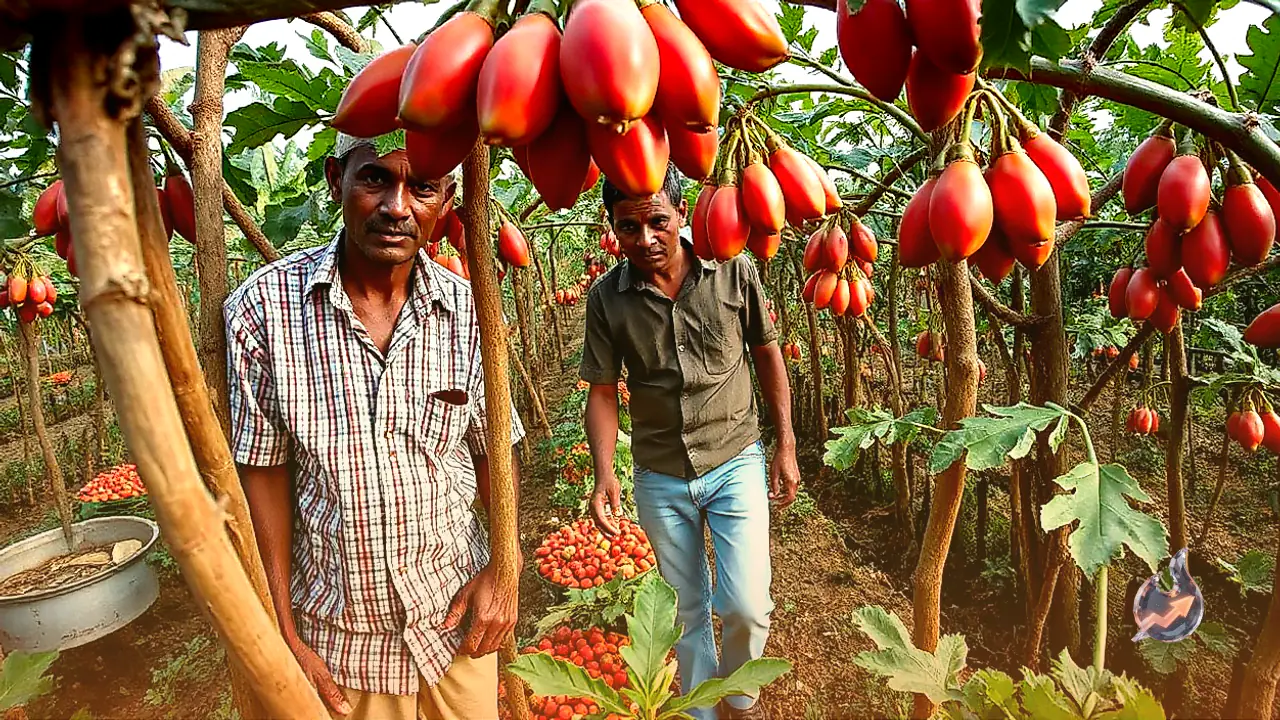

Moving away from traditional farming methods, agricultural producers are increasingly adopting modern fruit and vegetable cultivation techniques. Amidst these evolving practices, a progressive farmer in Sitamarhi has achieved remarkable commercial success. The large, glossy, deep red papayas commonly seen in marketplaces belong to a specific high-yield variety known as Red Lady, which remains in high demand due to its superior sweetness, rich flavor, and massive fruit size.
Understanding the Economics and Yield
Local farmer Vipin Singh explains that this particular agricultural variety serves as a major financial boost for growers. Planting and nurturing a single sapling incurs an overall expenditure of roughly 150 rupees. Within merely 5 to 6 months of initial plantation, the crop begins bearing fruit, continuing its productive cycle consistently for 2 years. Farmers harvest fruits from the exact same tree 3 to 4 times throughout the year. According to Vipin Singh, this cycle allows cultivators to generate an easy return of 600 to 700 rupees per tree against a negligible investment of 150 rupees.
Proper Plantation Techniques and Spacing
Cultivating this variety requires careful preparation of raised beds across the agricultural land. To ensure that every sapling receives adequate sunlight, ventilation, and room for expansion, specific spatial measurements are maintained. A distance of 8 feet is kept between parallel rows, while a 7-foot gap is maintained between individual plants within the same line. Such precise spacing promotes healthy vegetative growth and yields larger fruits. Nonetheless, this crop demands more intensive observation and diligent management compared to conventional farming.
Nutrient Management and Disease Protection
Securing an abundant harvest requires the timely application of NPK fertilizers to nourish the soil. The most significant agricultural challenge associated with this crop is its high susceptibility to rapid viral infections. If left unattended during early stages, the disease can devastate the entire plantation. To counter this threat, growers must regularly spray neem oil or approved protective pesticides at scheduled intervals. Proper coordination of irrigation, fertilization, and pest control enables growers to generate substantial earnings even from limited land areas.