

















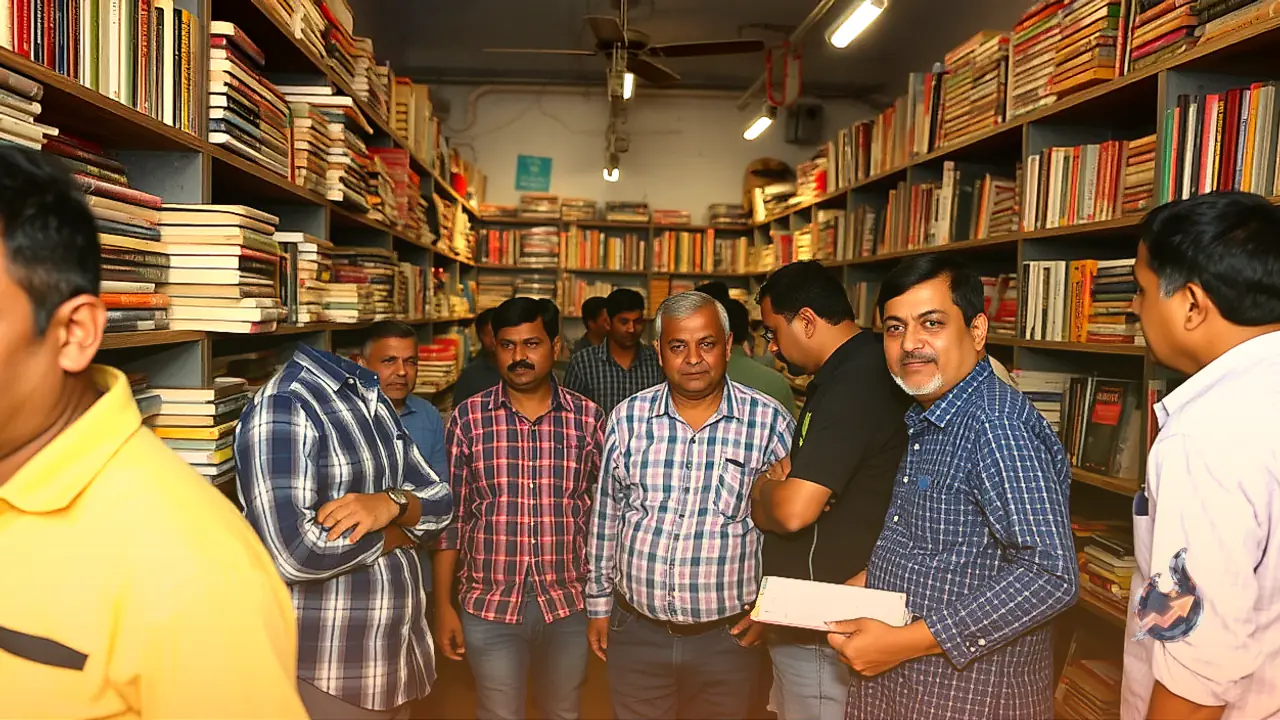

Along the bustling stretch from the Opium Factory to Mahuabag in Ghazipur, the rows of bookshops are far more than ordinary commercial outlets. For decades, they have served as practical guides and study companions for thousands of students working toward competitive recruitment tests. Among these establishments, Raju's bookshop holds a long-standing reputation built over generations. While the local market once housed only a handful of sellers, the landscape has expanded significantly over the years, introducing fierce local competition alongside seismic shifts in retail habits driven by the internet.
Tight Margins and the Demands of Volume
Behind the intellectual appeal of running a bookstore lies a demanding commercial reality. Selling a volume often leaves the shopkeeper with a gross margin of just 5 to 10 rupees per copy. Operating on such razor-thin margins means that simply keeping stock on shelves is nowhere near enough to run a sustainable enterprise or support a household.
To survive under these conditions, a seller must maintain consistent sales volume and repeat footfall. Net earnings fluctuate depending on the category of the publication, the wholesale discount extended by distributors, and ongoing operating expenses such as freight, rent, and electricity. Because each individual transaction yields so little, profitability hinges on moving large quantities of stock daily. Consequently, the merchant must possess an acute awareness of what each customer actually needs so that every visiting candidate leaves with the correct, usable material.
Learning the Trade Through Years of Mentorship
Raju did not step into the trade as a passive heir; rather, he underwent disciplined preparation to understand the market. His father had been involved in bookselling from the very beginning, laying the foundation of the family enterprise. When Raju chose to take up the reins, he spent two to three years working directly alongside his father, mastering the mechanics of procurement, syllabus cycles, and customer handling.
Selling academic and recruitment titles requires an active grasp of changing curricula. A knowledgeable bookseller must know precisely which manual suits a given government exam. While publishers regularly send updates about forthcoming titles and upcoming recruitment drives, the real test occurs at the counter. When an anxious aspirant walks in seeking guidance, the seller must instantly identify the right publication that aligns with the student's preparation level and exam focus.
The Dual Challenge of Online Platforms and Pirated Copies
Following the coronavirus pandemic, consumer reliance on digital platforms surged, hitting regional brick-and-mortar retailers hard. In the book trade, this shift brought an additional hurdle in the form of cheap, pirated prints circulating through online listings. Unauthorised reproductions use substandard paper and printing, allowing operators to sell them at steep price cuts that legitimate retailers cannot match.
The financial disparity is stark. A genuine original copy that retails at the physical shop for around 400 rupees can often be found online in pirated form for approximately 200 rupees. When budget-conscious candidates see such price drops, physical stores can appear overpriced at first glance. While not every discounted internet listing involves counterfeit merchandise, the prevalence of pirated editions poses an ongoing threat to legitimate vendors. It also places a responsibility on students to verify whether a low-priced copy contains complete, error-free printing and authentic material before making a purchase.
Accompanying Candidates from Prelims to Final Selection
Regional bookstores witness the entire lifecycle of student ambition. Many of the patrons visiting Raju's counter are preparing for major state recruitment drives, including the Uttar Pradesh police force, sub-inspector positions, and village revenue accountant (lekhpal) posts. The examination process typically unfolds in stages, each requiring a distinct set of reference materials. Beginners start with foundational textbooks on general awareness, reasoning, and basic subjects before moving on to specialised study packs once they clear the preliminary rounds.
It is not uncommon for successful candidates to return to the counter after their final selection simply to share the good news. This ongoing relationship highlights how preparation needs evolve over time. While the ultimate credit for clearing any recruitment exam belongs entirely to the candidate's dedication, disciplined study, mentorship, and broader support network, having an accessible vendor who understands these syllabus transitions remains an asset throughout the journey.
A Reliable Stop from High School to Career Tests
The credibility of a neighborhood store is best judged by long-term patrons who have relied on it across different phases of their education. Santosh Prajapati, an aspirant currently preparing for police recruitment tests, recalls purchasing his Class 10, 11, and 12 textbooks from this very counter. He notes that the shop reliably stocks Uttar Pradesh Board textbooks alongside materials required for competitive recruitment exams.
Another regular customer, Aditya Mishra, shares a similar experience from his school days. During classes 11 and 12, both CBSE and UP Board curriculum books were readily accessible here. Mishra also points out that specialised academic references, such as geographical atlases that are often hard to locate in other neighborhood markets, are consistently stocked at the counter. The ability to physically inspect a reference book before paying remains an undeniable advantage over ordering unseen copies from web listings.
The Enduring Value of Human Experience in a Shifting Market
Ghazipur's commercial book landscape is no longer what it used to be. The proliferation of physical shops and the widespread availability of online delivery services have given learners unprecedented choice. Yet, traditional sellers continue to hold ground by offering something algorithmic storefronts cannot replicate: firsthand familiarity with the syllabus, personalized recommendations, and the certainty of walking away with the required book immediately. The ongoing journey of Raju's bookstore proves that even in an era of digital dominance, low margins, and aggressive price competition, deep trade experience and customer trust remain potent commercial assets.