

















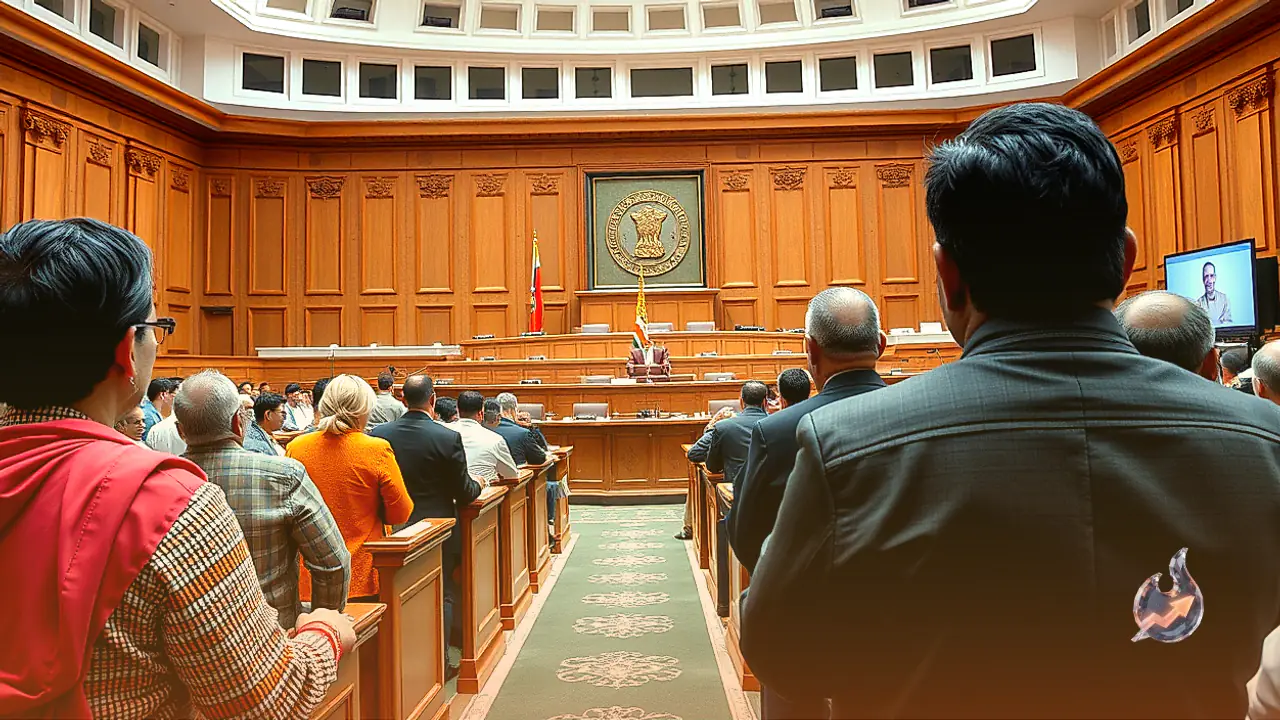

Addressing the escalating controversy surrounding voter list revisions and the Bihar SIR matter, the Supreme Court has cleared the air regarding the status of the new Form-6. A bench comprising Chief Justice Surya Kant and Justice Joymalya Bagchi explicitly observed that the court has neither granted approval to the new format nor struck it down. The bench pointed out that judicial observations should not be twisted to validate unverified narratives, even as a fresh public interest litigation directly naming Chief Election Commissioner Gyanesh Kumar was brought before the court.
Strict Caution Against Sensationalising Court Remarks
During the proceedings, Chief Justice Surya Kant directed stern remarks toward both legal representatives and media personnel present in the courtroom. Chief Justice Surya Kant warned, “Please do not twist the court's words to create sensational news.” The bench emphasized that cherry-picking verbal exchanges during hearings creates widespread public confusion. Maintaining the sanctity of judicial discourse requires reporting proceedings strictly within their intended context, rather than extracting statements to serve predetermined agendas.
New Format Did Not Exist During Original Verdict
Dispelling the prevailing ambiguity, Justice Joymalya Bagchi clarified the procedural timeline governing the documentation. He noted that no judicial determination has ever been made concerning the validity of the new Form-6. Justice Bagchi highlighted that when the judgment concerning the Bihar SIR was delivered, this specific revised form did not even exist. Consequently, inferring that the apex court had granted its stamp of approval or, conversely, rejected the form outright is legally and factually incorrect.
Fresh Public Interest Litigation Targets Election Commission
The dispute intensified further with the filing of a fresh PIL that specifically impleads Chief Election Commissioner Gyanesh Kumar as a respondent. Legal counsel appearing for the petitioner argued that on 5 October, the bench had already put it on record that the new Form-6 had not received any green signal from the court. In spite of that unambiguous stance, counsel contended that the Election Commission sought to project a narrative suggesting judicial endorsement for its revised procedure.
Implications for Voter Enrolment Procedures
This clear stance from the Supreme Court effectively counters attempts to invoke judicial backing for administrative documentation in the voter registration framework. With the fresh petition formally questioning the narrative pushed by election authorities, the responsibility now falls on the commission to clarify its procedural standing. The forthcoming hearings will determine how the electoral body and its leadership justify their reliance on the new format before the country's highest court.