
















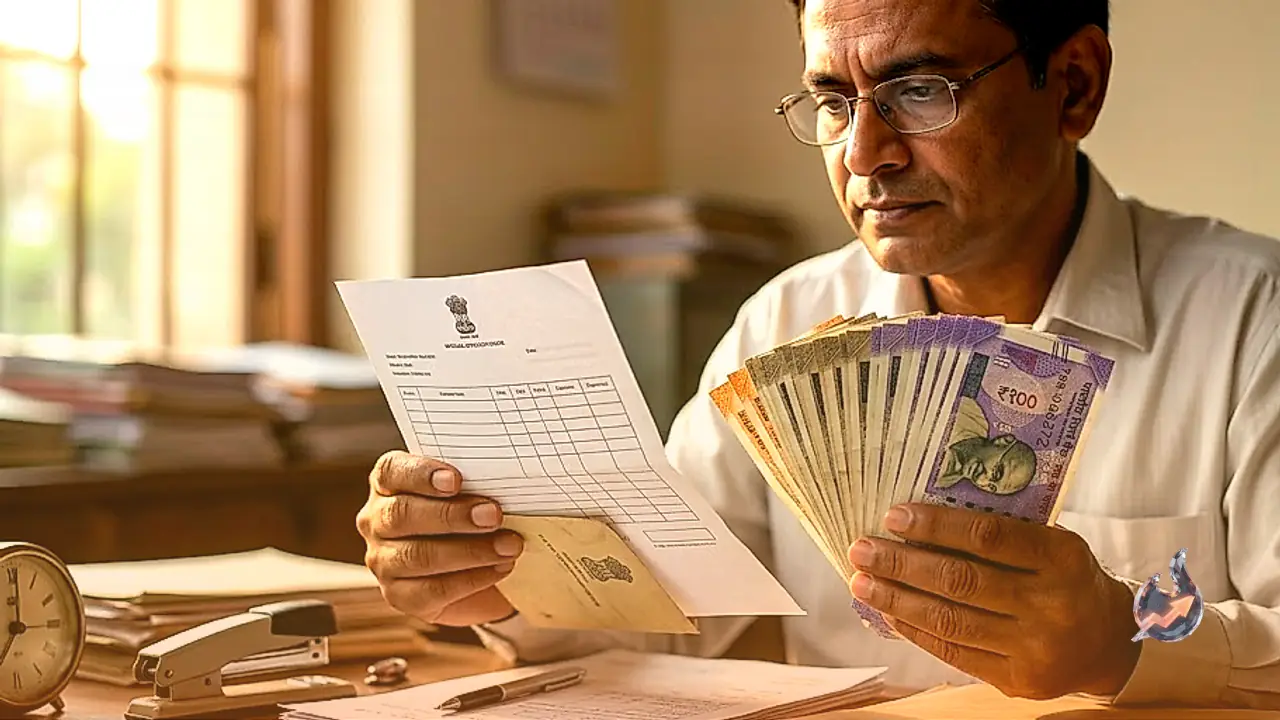

Millions of central government employees and pensioners are once again waiting for a bump in their earnings. This time, going by the latest AICPI figures, a hike of roughly 3 to 4 percent in dearness allowance (DA) is being anticipated. What many overlook is that this allowance does far more than fatten the monthly deposit, it actually reshapes the entire arithmetic of a worker's salary.
Why the allowance exists in the first place
To cushion staff and pensioners from the sting of rising prices, the government adds a separate dearness allowance on top of the basic salary. The logic is simple, the impact of inflation on an ordinary employee's wallet should stay limited. This allowance is reviewed once every six months, which means pay can be lifted through it twice within a single year.
A parallel arrangement for pensioners
Just as serving employees receive DA, those who have retired are given dearness relief (DR). This is the amount that helps pensioners keep pace with their monthly expenses as costs climb.
It is not only about take-home pay
Here is the crucial part, the allowance does not stop at your take-home salary. Alongside basic pay, DA is the component of the pay structure on which PF, pension and gratuity are calculated. So every time this allowance moves up, it ripples across an employee's whole financial picture.
Reviewed twice a year
The government examines DA and DR on two occasions each year, and the entire exercise rests on the All India Consumer Price Index (AICPI) numbers. The review takes place in January and July, while the announcements follow in March and October respectively. That said, a change in pay is not guaranteed at every review.
How much came through last time
In the previous round, the government raised the allowance by two percent, pushing it from 58 percent up to 60 percent. That decision directly benefited 58 lakh employees and 65 lakh pensioners. Now, based on the fresh figures, talk of a further 3 to 4 percent increase is gathering pace.
What the states are doing
This is not a matter confined to the Centre alone. Assam, Arunachal Pradesh, Tamil Nadu, Odisha and Uttar Pradesh have already raised their employees' DA to 60 percent. West Bengal, meanwhile, has lifted it by 20 percent from October to take it to 38 percent. Maharashtra, on the other hand, has cleared over 800 crore rupees to settle old DA arrears.
Bank and railway staff gain too
The relief of dearness allowance does not stop with central or state government employees. Those working in the railways and in banks also draw a direct benefit. The Indian Banks' Association has announced a DA increase for its staff, while the railways too have raised it by two percent.
The tax catch and what lies ahead
It is worth remembering that the DA paid to employees is fully taxable and must be shown separately in the income tax return (ITR). The government has also made clear that there is no plan for now to merge this allowance into basic pay, even if it crosses 60 percent. For the moment, all eyes are on the Eighth Pay Commission and what its recommendations will say on this question.