




















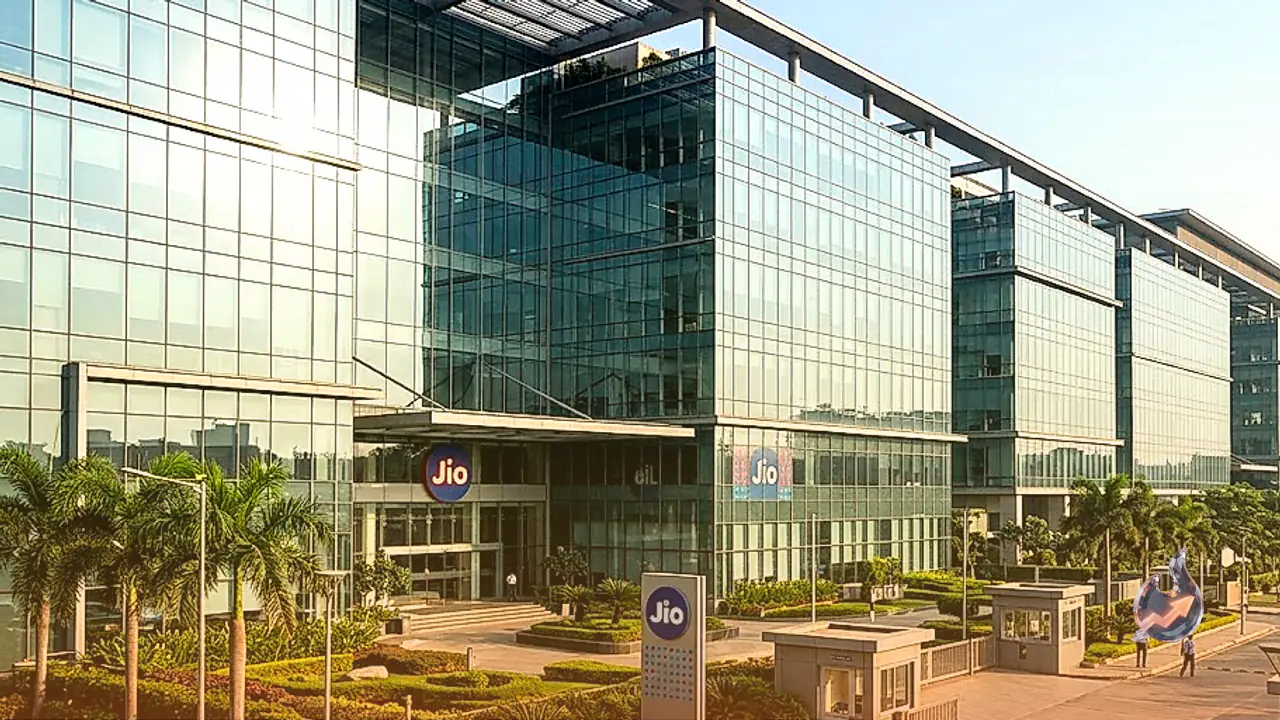

When commercial operations commenced in 2016, the telecom landscape across India was markedly different from the vibrant digital ecosystem visible today. Entering an established sector as the fourteenth player, the new entrant encountered a market dominated by legacy infrastructure, prohibitively expensive data buckets, and costly voice services. Rather than replicating the prevailing operational blueprints of incumbent carriers, the business framed a radically different path. The enterprise positioned itself as a technology-first disruptor committed to universal digital inclusion. By introducing entirely complimentary voice calling alongside aggressive data tariff revisions, the company dismantled the economic foundations of the country's telecom industry and permanently reshaped consumer expectations.
Plummeting Tariffs and Massive Expansion in Data Consumption
Prior to this commercial entry, mobile internet connectivity remained a discretionary luxury for a small segment of the population. Leadership reflections reveal that average data costs hovered near 228 rupees per gigabyte at the time of introduction. Through relentless capital expenditure, proprietary fiber deployment, and all-IP architecture, that metric has tumbled to approximately 4.90 rupees per gigabyte. This democratization of bandwidth caused consumption levels to explode across both urban centers and rural hinterlands. A single customer now consumes an average of 43.7 gigabytes of mobile data each month. This dramatic surge laid the groundwork for India's digital public infrastructure, fintech expansion, video streaming boom, and mobile-first entrepreneurship.
The Foundational Vision Behind Platform Architecture
Addressing the press ahead of the public listing, Isha Ambani recounted the initial deliberations that guided the strategic conception of the business. She recalled detailed discussions with her brother, Akash Ambani, centered on an essential question regarding why India should lag behind developed nations in the ongoing digital revolution. The resolution to that question was not to assemble a standard voice-and-data cellular utility, but rather to architect a full-stack digital technology platform from day one. That philosophy governed every investment decision, prompting the leadership to bypass legacy copper and pure-circuit networks in favor of scalable, software-driven infrastructure capable of powering a wide suite of consumer applications.
Sector Consolidation and Absolute Market Dominance
The aggressive pricing dynamic and operational efficiency catalyzed rapid consolidation across the broader telecommunications field. A crowded marketplace that previously accommodated fourteen different operators contracted into an oligopoly of four primary entities. Emerging victorious from this grueling transition, the company captured the dominant position across nationwide connectivity metrics. By June 30, 2026, the aggregate subscriber registry had swollen to 533.3 million users, a figure that includes 284.9 million active 5G connections. The carrier accounts for nearly 50 percent of India's wireless broadband subscriber volume and routes more than 60 percent of the nation's total wireless data traffic over its proprietary network.
Expanding Frontiers in Fixed Broadband and Enterprise Services
The momentum forged across mobile telephony has mirrored success within the fixed-line and home broadband arenas. Across financial year 2026, the enterprise secured a subscriber base of 27.1 million users within the fixed broadband domain, translating into a commanding 42.60 percent market share. For perspective, chief rival Bharti Airtel maintained a 22.71 percent footprint in the same category. Dominance proved even more pronounced within fixed wireless access supported by 5G and unlicensed band radio technologies, where the carrier locked down 77.49 percent of the segment. These metrics underline how deeply the platform has embedded itself within households, powering smart television systems, connected devices, and home internet solutions.
Proprietary Technology Stack and Intellectual Property Assets
A crucial differentiator separating the firm from conventional cellular operators lies in its internal engineering capabilities. Instead of relying indefinitely on foreign equipment makers for turnkey deployments, the organization engineered its own native technology stack. This encompasses a dedicated 4G and 5G core network, network virtualization software, operational support layers, and an expansive suite of digital consumer applications. Underscoring this technological autonomy, the organization had filed 7,220 patent applications across 4G, 5G, 6G, cloud-native frameworks, and artificial intelligence-driven automation workflows as of June 30, 2026, demonstrating deep intellectual property maturity.
Global Managed Services Strategy and Export Ambitions
Having battle-tested its homegrown technology within one of the world's most demanding, high-volume consumer markets, the enterprise is setting its sights on international frontiers. Akash Ambani outlined plans to monetize this technological prowess by partnering with foreign telecommunications carriers across both developed and developing regions. The strategic model steers clear of merely vending isolated hardware modules or software packages. Instead, the firm intends to function as an end-to-end managed-services provider, operating complex network architectures on behalf of global clients. Leadership views this cross-border service export opportunity as a transformative growth vector capable of taking Indian engineering into international markets.
IPO Details and Capital Structure
Marking the culmination of this transformative expansion, Jio Platforms is scheduled to open its initial public offering for broad retail and institutional bidding on Wednesday, October 21, concluding on October 23. The transaction seeks an enterprise valuation near 108 billion US dollars, positioning it among the landmark corporate market debuts globally. Through this public issue, the company intends to mobilize approximately 30,213 crore rupees in fresh capital. The price band for the equity issue has been placed between 1,065 rupees and 1,119 rupees per equity share, incorporating an issuance of up to 27 crore fresh shares to support continued balance sheet strength and strategic growth initiatives.