


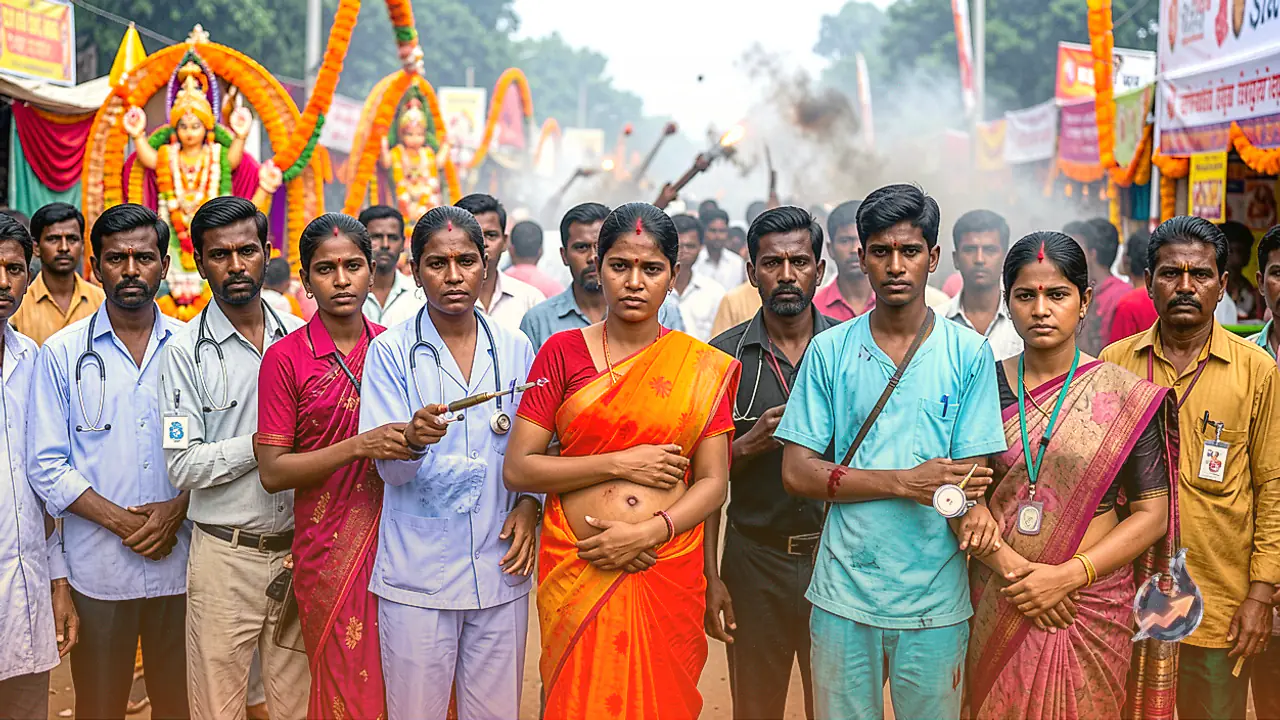


















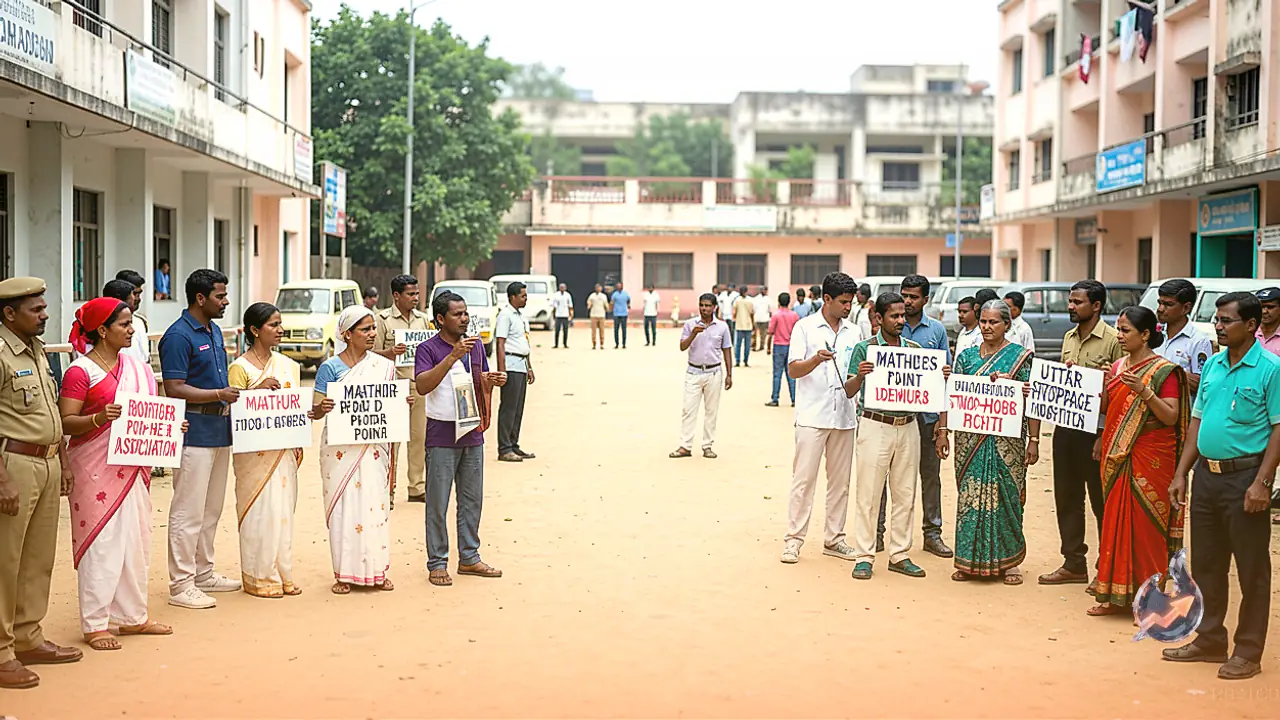

Healthcare services in Uttar Pradesh face escalating strain as members of the Government Nurses Association have launched an agitation following earlier strikes by National Health Mission contractual personnel. Pressing forward a comprehensive 13-point charter of demands, nursing personnel across the state have taken to active protest. At the Women District Hospital in Mathura, dozens of government nursing staff and union representatives halted duties during morning hours, expressing deep discontent over protracted administrative delays and unmet workplace assurances.
Transition from Silent Protest to Daily Work Boycott
The operational disruption at public hospitals is the outcome of an agitation that began weeks earlier. Starting on 9 October, nursing professionals across government facilities performed their shifts wearing black armbands to register their dissent peacefully. Despite this sustained symbolic demonstration, the state administration failed to convene dialogue or provide any concrete commitment regarding their pending demands. Left with few alternatives, the association escalated its demonstration by announcing a daily two-hour work stoppage beginning 21 October.
Under the schedule established by the union, staff members refrain from patient care duties between 8:00 AM and 10:00 AM each morning. Sunil Srivastava, president of the Government Nurses Association in Mathura, stated that nursing personnel have been pushed to take this step after systematic administrative inaction. He cautioned that if the state government continues to overlook their 13 core demands, the association will escalate the current morning boycott into an intensified, round-the-clock agitation across all state hospitals.
Demands for Home Postings, Allowance Parity, and Regulatory Leadership
At the center of the association's 13-point charter is the demand for geographical equity in service postings. The association is seeking home district postings for nursing cadre personnel serving under the Department of Medical and Health, aligning their service conditions with other department cadres and peers working under the Medical Education Department. Currently, prolonged distant postings impose significant domestic and professional burdens on frontline nursing staff.
Financial equity forms another core pillar of the agitation. The union has demanded that nursing staff employed within the Department of Medical and Health and the Medical Education Department be granted allowances equivalent to those provided at premier medical institutes. These include the Sanjay Gandhi Postgraduate Institute of Medical Sciences (SGPGI) in Lucknow, King George's Medical University (KGMU) in Lucknow, Dr. Ram Manohar Lohia Institute of Medical Sciences (RMLI) in Lucknow, and Uttar Pradesh University of Medical Sciences in Saifai, Etawah. Additionally, the association insists on regulatory representation, demanding that the registrar of the Uttar Pradesh Nurses and Midwives Council in Lucknow be appointed strictly from the nursing cadre in accordance with statutory rules, mirroring practices followed in other Indian states.
Cadre Restructuring, Promotions, and Pension Safeguards
The charter extensively addresses long-standing institutional bottlenecks in career advancement. The association demands the immediate filling of vacant promotional positions at the Directorate General and hospital levels that have remained unaddressed since before 2010. Furthermore, they are urging the state government to restructure the entire nursing cadre within Uttar Pradesh in alignment with staffing standards formulated by the Government of India.
Immediate permanent recruitment across vacant nursing positions in district healthcare facilities and administrative headquarters is another central demand. Alongside these career concerns, the union has aligned itself with broader public service appeals, calling for the restoration of the Old Pension Scheme (OPS) and an outright halt to privatization initiatives within public healthcare. They have also requested the prompt and timely dispersal of Assured Career Progression (ACP) increments and related service benefits in accordance with established government timelines.
Workplace Amenities, Recognition, and Professional Development
Field-level working conditions and official recognition feature prominently in the nurses' representation. Drawing parallels with the police force and government school teachers, the association contends that nursing professionals should be brought under the state honors framework. Furthermore, they propose that nurses conferred prestigious national accolades by the President of India be granted an automatic two-year extension of service. Childcare security at public hospitals remains another critical grievance; the union highlighted that an official meeting chaired by the Principal Secretary of Medical, Health and Family Welfare on 22 February 2019 had explicitly mandated under point 10 of its minutes that crèches (palnaghar) be established by all Chief Medical Officers and Medical Superintendents. The association has demanded immediate compliance directives, noting that this welfare mandate remains unfulfilled on the ground.
To support higher clinical education, the union demands that nurses be granted paid leave and permission to pursue two-year MSc Nursing programs, building upon the precedent established in the government order dated 20 May 2010 that authorized Post Basic BSc Nursing training. Addressing workforce security, the charter calls for a transparent policy to regularize contractual and outsourced nursing personnel against permanent sanctioned vacancies, prioritizing seniority and clinical experience.
Finally, the association highlighted administrative complications stemming from district hospital conversions. In locations where district facilities under the Medical and Health Department have been integrated into newly formed autonomous state medical colleges under Medical Education, nursing staff must either be formally relieved alongside their posts back to their parent department or granted explicit operational guidelines similar to those governing legacy medical colleges in Prayagraj, Gorakhpur, Lucknow, Kanpur, Agra, Jhansi, and Meerut. Union leaders noted that Deputy Chief Minister Brijesh Pathak had assured consideration of these 13 points during the association's annual convention on 8 November 2025. Following that assurance, the Director General of Medical and Health Services forwarded an official communication dated 19 November 2025 to the Principal Secretary under Medical Section-8, where the proposals currently await formal government approval.