























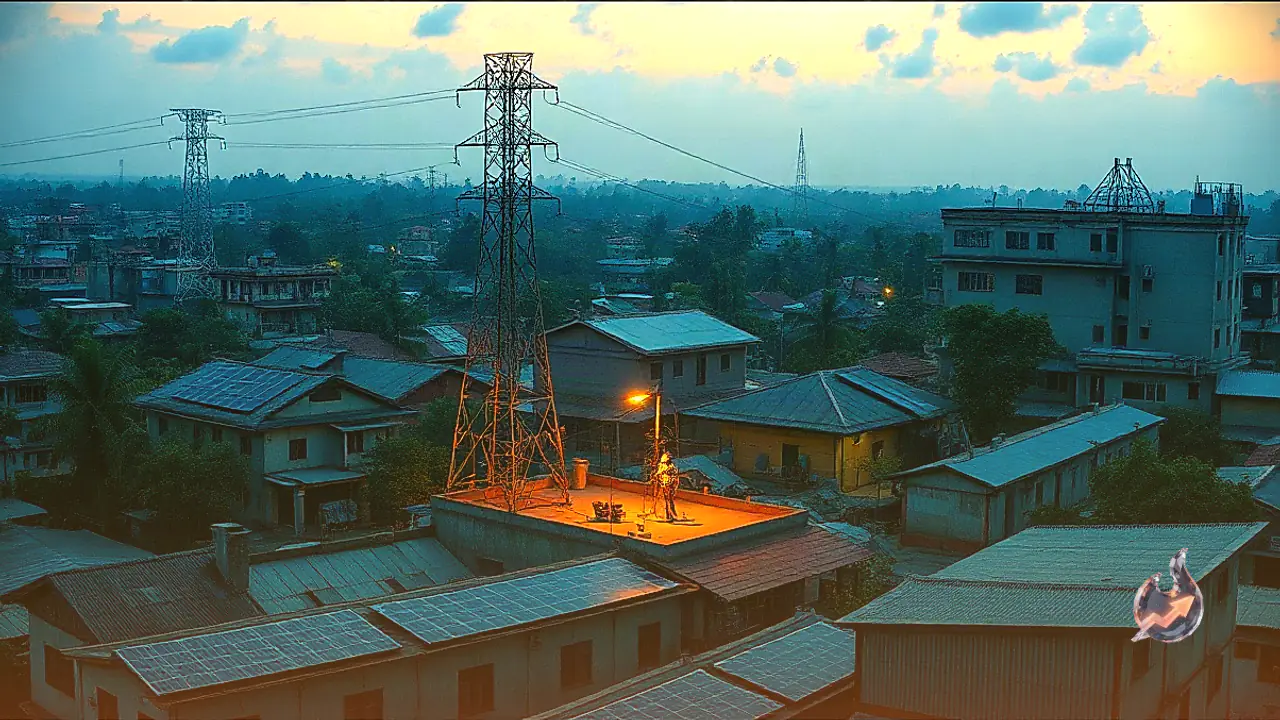

Tripura Power Minister Ratan Lal Nath has called for a quicker transition toward renewable energy sources, putting special emphasis on rooftop solar installations. The push comes as the state deals with climbing electricity consumption alongside a noticeable decline in the availability of natural gas for power generation.
Council Meeting on ULA Model
Addressing a special council meeting held at the Agartala Municipal Corporation Conference Hall on Monday, discussions centered around the installation of rooftop solar plants under the ULA Model. During the session, Nath stated that the government remains firmly committed to ensuring that the advantages of ongoing development reach marginalized and economically weaker communities across the state.
Consumer Base Growth and Low-Usage Households
The minister pointed out that the overall count of electricity consumers in Tripura has grown to approximately 10.68 lakh, a significant rise from the nearly seven lakh consumers registered before the current administration took office. Out of this total, more than four lakh consumers utilize 50 units or fewer of electricity on a monthly basis. This metric highlights that a large portion of households belong to economically disadvantaged backgrounds.
Protecting Vulnerable Consumers from Cost Shocks
Nath mentioned that the government is actively designing a mechanism to shield these low-consumption consumers from the effects of surging demand and any future hikes in electricity pricing. Stressing the critical need for an uninterrupted power supply, he noted that electricity is a fundamental requirement for operating industries, hospitals, educational institutions, and waste management facilities smoothly.
Declining Gas Availability Curtails Generation
As power demand continues its upward trajectory, both the central and state governments are directing greater focus toward strengthening the power infrastructure. However, the minister also highlighted Tripura's heavy reliance on natural gas for electricity production, explaining that shrinking gas availability has severely hampered output at major generating units.
Output Drops at Major Plants
The Palatana power plant, originally engineered to generate around 700 MW, is currently restricted to producing about 500 MW because of constrained gas supplies. In a similar trend, the Ramchandranagar plant, which was anticipated to yield roughly 100 MW, is currently delivering only 50 to 60 MW of power. Faced with these production shortfalls, the central government is pivoting sharply toward cleaner alternative sources such as solar and hydropower. Nath observed that solar, wind, and hydroelectric power offer much cleaner energy alternatives compared to conventional fossil fuel plants that contribute to environmental pollution.