






















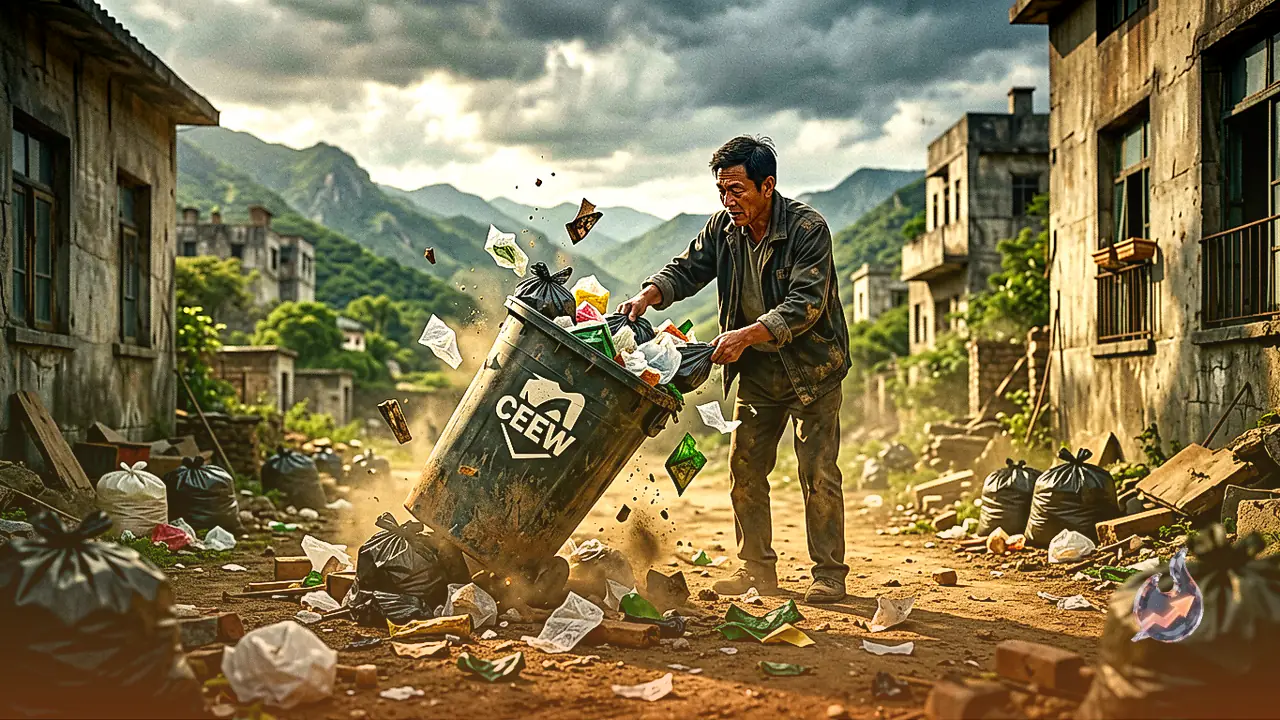

Households typically collect daily waste in dustbins and hand it over to garbage collection vehicles every morning. If trash accidentally stays inside a home for a day or two, the foul odor spoils the entire atmosphere. While individuals may feel relieved after sending waste away from their premises, have they ever considered where all that trash actually goes? If this garbage is simply hauled away and dumped continuously in one spot, entire cities would eventually be buried under massive mounds of refuse.
Disposing of waste carelessly triggers severe environmental consequences. Piling up wet waste without proper processing produces heavy negative impacts, making effective waste management an absolute necessity. Biological waste shares a direct link with climate change, raising the crucial challenge of communicating these realities to the public. CEEW Senior Program Lead Priyanka Singh breaks down these dynamics across Indian cities.
Open Burning and PM2.5 Emissions
Priyanka Singh highlights that open garbage burning incidents across Indian cities account for approximately 10 percent of total PM2.5 emissions. Between 1994 and 2020, emissions originating from the waste sector surged by roughly 226 percent. This steep rise has turned the sector into the fourth-largest emission contributor in the country.
Future Emission Projections and Green Transitions
Under a business-as-usual scenario, emissions stemming from this sector could approach roughly 119.5 million tonnes of carbon dioxide by the year 2047. However, adopting aggressive policies and ambitious green transformation pathways could drive these emissions down into negative territory, hitting -67.5 or even -100.5 million tonnes. Achieving net-negative levels means that instead of accumulating, carbon dioxide equivalents will actually decrease.
Shifting Public Behavior and Mindsets
Instilling the true value of waste management requires shifting public behavior and dismantling the common mindset of keeping waste away from one's immediate neighborhood. Cities need to roll out grassroots information, education, and communication campaigns. Effective strategies include door-to-door outreach, involving school children and spiritual leaders in awareness drives, setting up transparent demonstration projects to build public trust, and establishing robust grievance redressal systems.
Implementing Fee Structures and Incentives
To encourage proper waste segregation between wet and dry refuse, pilot projects can introduce a pay-as-you-throw fee structure or incentives such as rebates on electricity and water utility bills. Such measures can drive meaningful behavioral changes among citizens and help build a practical, large-scale implementation model.