






















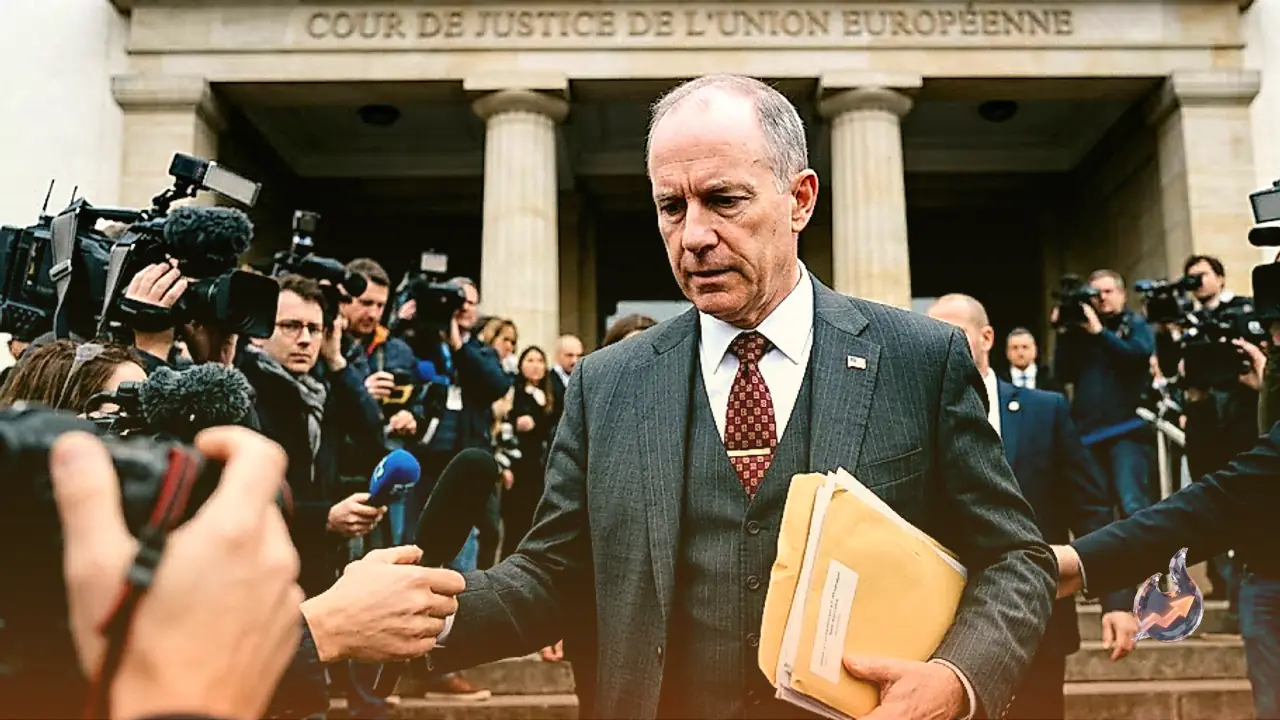

Federal authorities in Washington have formally stepped into the legal fight surrounding the punitive actions taken against social media platform X and its owner Elon Musk across the Atlantic. Working alongside the Department of State, the US Department of Justice submitted an application to the European Union General Court located in Luxembourg. The filing seeks permission for the American government to intervene in support of the legal appeal filed by Musk, which aims to annul the disciplinary action handed down by Brussels. The European judges must now evaluate whether the United States holds sufficient legal standing to take part directly in the ongoing proceedings.
Defending American Tech Engines Against Foreign Oversight
Officials representing the American government maintain that their participation is crucial to safeguard the interests of domestic technology corporations operating overseas. The dispute carries broad significance because it represents the opening financial sanction issued under the Digital Services Act, a sweeping framework mandating that digital networks, particularly major operators, enforce strict curbs against illicit and harmful material. Washington emphasized that a substantial cluster of these premier platforms, including Meta's Facebook and Instagram, Google's YouTube, and Microsoft's LinkedIn, maintain their headquarters on US soil while serving as vital pillars of the nation's economic strength.
Assistant Attorney General Brett A. Shumate of the Justice Department's Civil Division stated that the administration will not tolerate regulatory overreach from the European Commission aimed at exerting control over the country's prime engines of innovation and commercial progress.
Mounting Friction in Transatlantic Relations
The intervention highlighted that the confrontation holds wider implications for diplomatic and trade ties between Washington and Brussels. The enforcement of European digital statutes has turned into a persistent flashpoint for senior policymakers. US President Donald Trump previously characterized such cross-border financial sanctions as overseas extortion. Last year, Trump threatened to impose trade tariffs against nations enacting digital platform regulations, asserting that these rules are deliberately structured to damage or discriminate against American technology firms. Vice President JD Vance similarly condemned the content moderation frameworks within the DSA, labeling them an exercise in authoritarian censorship.
Transparency Violations and the Penalty Blueprint
The punitive ruling traces back to December, when the European Commission levied a 120 million euro penalty against X, which translates to roughly 137 million dollars, following a two-year investigation into the network's operational transparency. Regulators concluded that presenting paid blue checkmark subscriptions as verified accounts misled the broader public. Furthermore, the Commission cited systemic deficiencies in X's advertising archive, noting that incomplete and inaccessible commercial records, combined with restricted access to public data for independent analysts, severely undermined scrutiny into platform risks. While the Commission approved an action blueprint from X in July to rectify the research data access issues, the firm was granted a six-month window to carry out those fixes.
Legal Counterclaims and Scrutiny over Global Mandates
Musk and his company mounted their official appeal in February, challenging the European determination on multiple fronts. Their filing asserted that the preliminary inquiry was incomplete and superficial, while arguing that the official reading of statutory obligations under the DSA was entirely tortured. The appellants additionally protested that they were deprived of their fundamental rights of defence, claiming this demonstrated clear prosecutorial bias from European officials.
The pushback forms part of a broader grievance voiced by Musk regarding the administrative overhead and financial costs tied to mounting disclosure obligations as worldwide authorities seek greater oversight over social networks. During July, Musk similarly argued that the extensive investigative powers enacted under Australia's social media ban for users under 16 conflicted with international legal norms. At the time, internet law specialist Professor Julia Hörnle from Queen Mary University of London pointed out that domestic oversight authorities remain fully entitled to demand operational disclosures from commercial platforms active within their national territory.