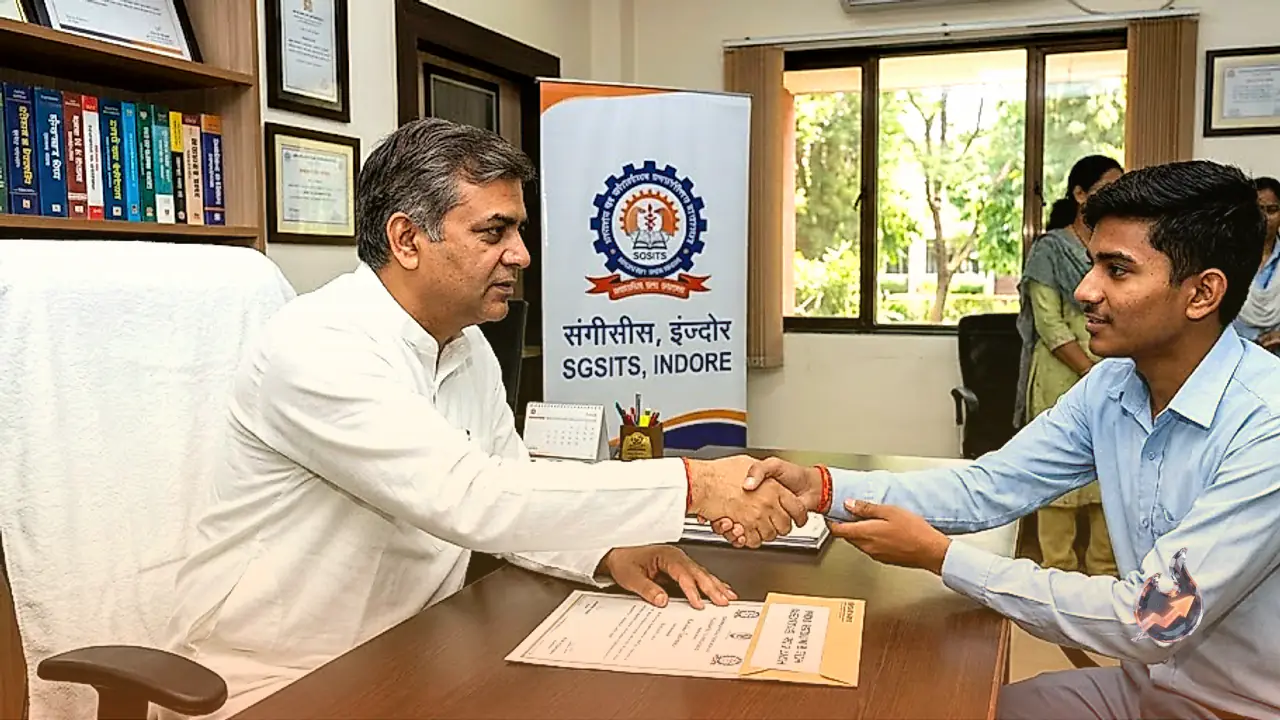
























A story doing the rounds on LinkedIn shows how a professional flagged and returned a salary payment that was never meant to reach him, weeks after he had already left the company. The account belongs to Shreyansh Jain, whose experience has turned into an unusual case study on workplace honesty and corporate process failure.
Jain's last working day at the company was July 31. He did no work for the organisation for the entire month of August. Despite that, on September 1, his bank account was credited with his full salary for August. The payment caught him off guard, since he knew the money was not owed to him.
At first, Jain assumed it was a small slip by the payroll team that would be corrected on its own, and he expected the transaction to be reversed automatically. But an entire day passed with no call, no email and no message from the company. Rather than continuing to wait quietly, he decided to act.
He emailed the founders directly
Instead of sitting on the money or waiting for the company to notice, Jain wrote directly to the company's founders, explained the error in detail, and asked for the company's bank details so he could return the amount. The move worked fast: HR became active within hours, and the full sum reached the right account within 48 hours.
Jain could easily have kept quiet about the extra money or waited for days, even weeks, for the company to reach out on its own. He did neither, choosing instead to go straight to top management. The episode showed that when intentions are honest, even a serious corporate error can be sorted out in as little as 48 hours, without bitterness or legal trouble.
When even the system forgot he had resigned
According to Jain, mistakes by an individual or by payroll software are not unusual. What stood out here was that the company's own automated system failed to catch such a significant error. Had a former employee not stepped forward on his own, the company may not have realised for months how much of its budget was leaking away. The lesson, he suggested, is not limited to one organisation, it applies to any company that assumes technology alone will catch every slip.
A lesson for fast-scaling startups
The incident is not just a story about one person's integrity, it is also a warning for companies that are expanding quickly. When organisations hire at a rapid pace, their offboarding process often becomes the weak link. A salary landing in a former employee's account is a clear sign of poor coordination between the HR and finance departments, and in most such cases the fault lies with the system rather than any single individual.
The risk of 'ghost employee' fraud
In the corporate world, such cases are often classified under 'ghost employee fraud' or 'payroll slippage.' At many large companies, salaries keep getting paid out in the names of former employees for months, and without regular internal audits, the losses can run into crores of rupees. Such leaks usually surface only when an employee comes forward voluntarily or a major audit is carried out.
To guard against this kind of leakage, companies are advised to put three safeguards in place
- Three-way verification: Resignations should trigger an automated cross-check at the HR, finance and manager level, so no single department can miss the update.
- An offboarding checklist: An employee's status should be marked 'inactive' in the payroll software on their very last working day.
- Six-monthly payroll audits: Data on active and relieved employees should be reconciled every six months to catch any mismatch early.
Jain's experience is a reminder that no matter how advanced payroll technology becomes, it cannot substitute for human vigilance and honesty. One employee's alertness, and his decision to act rather than stay silent, not only saved the company from a loss but also set an example of trust that technology alone could not have delivered. That combination of honesty and exposed corporate carelessness is likely why the post struck a chord with so many people online.