




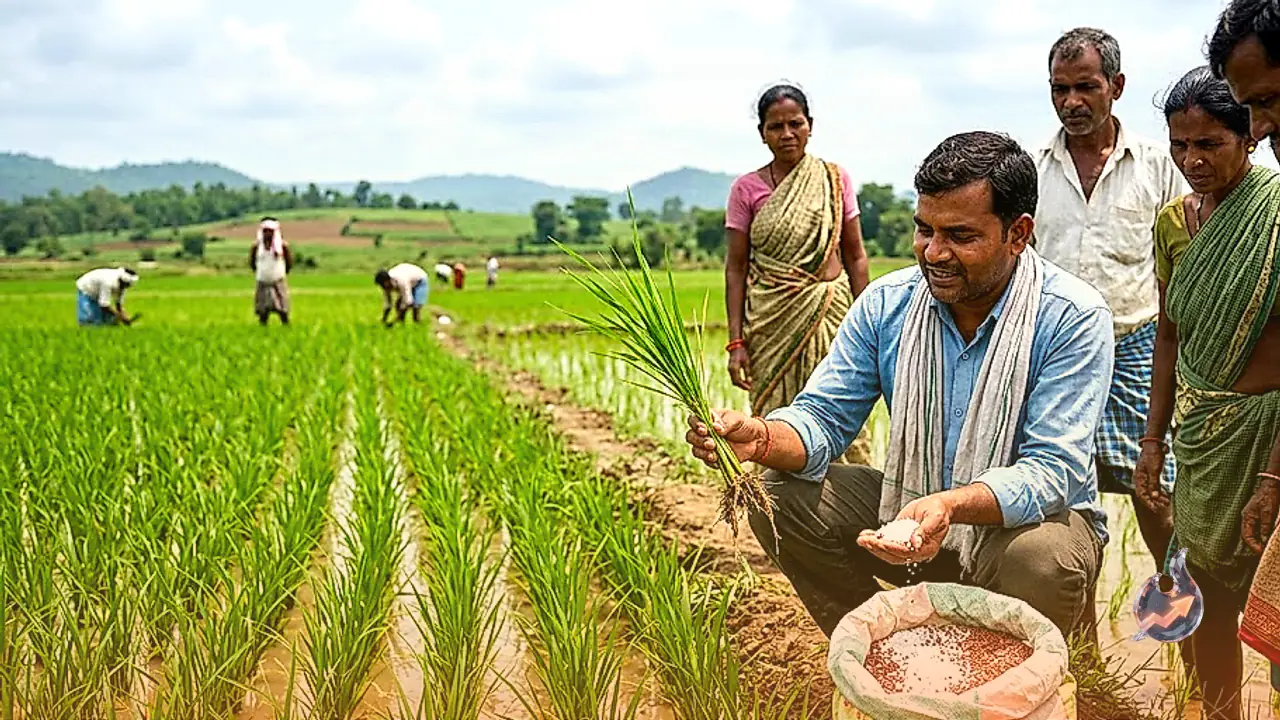


















In Chhattisgarh's Surguja district, paddy fields have entered the tillering stage as September begins, a phase that experts say can make or break this season's yield if it is not managed with care. Agriculture expert Sanjay Yadav has laid out a set of practical steps growers should follow right now.
According to Sanjay Yadav, September is the most crucial month for tiller development before paddy plants move on to forming grain heads. He has advised farmers to first assess the current condition of their fields and check how much nourishment the plants actually need, then apply fertiliser accordingly. Only when plants get the right nutrition at the right time do tillers develop properly.
Potash Can Toughen Up the Crop
The expert explained that potash can be used in kharif crops as needed. Potash strengthens the stems of the plants, helping them cope better with adverse weather and difficult growing conditions. It also helps improve the shine, quality and weight of paddy grains, which directly translates into higher final output.
Sanjay Yadav also pointed out that balanced nutrition improves the overall strength of the crop, which in turn can improve the plants' ability to resist diseases and pests. However, he cautioned that the exact quantity of fertiliser and potash to use should never be fixed, it must be decided based on the specific condition of the soil and the particular needs of the crop in that field.
Time Urea Use to Clear Weather
On urea, Sanjay Yadav urged farmers to exercise extra caution. He said urea should only be applied when the weather is clear and the crop genuinely needs it. Following this practice helps plants retain their green colour and allows tillers to develop more effectively.
Don't Rely on Just One Fertiliser
The agriculture expert appealed to farmers not to depend on a single type of fertiliser for their paddy crop. Instead, they should understand which growth stage the crop is at and what nutrients it specifically needs, then manage nutrition in a balanced way. Sanjay Yadav said this kind of balance is what ultimately guarantees a stronger crop and better yield.