























Educational societies, trusts, and individuals aiming to establish new private schools in the national capital now face a restructured regulatory process. Authorities have introduced significant revisions to the school establishment framework to enhance transparency and enforce greater procedural rigor. The primary objective behind this regulatory intervention is to upgrade institutional quality across the capital's education system and curb the arbitrary spread of substandard campuses opened without proper planning.
Revision of Delhi School Education Rules 1973
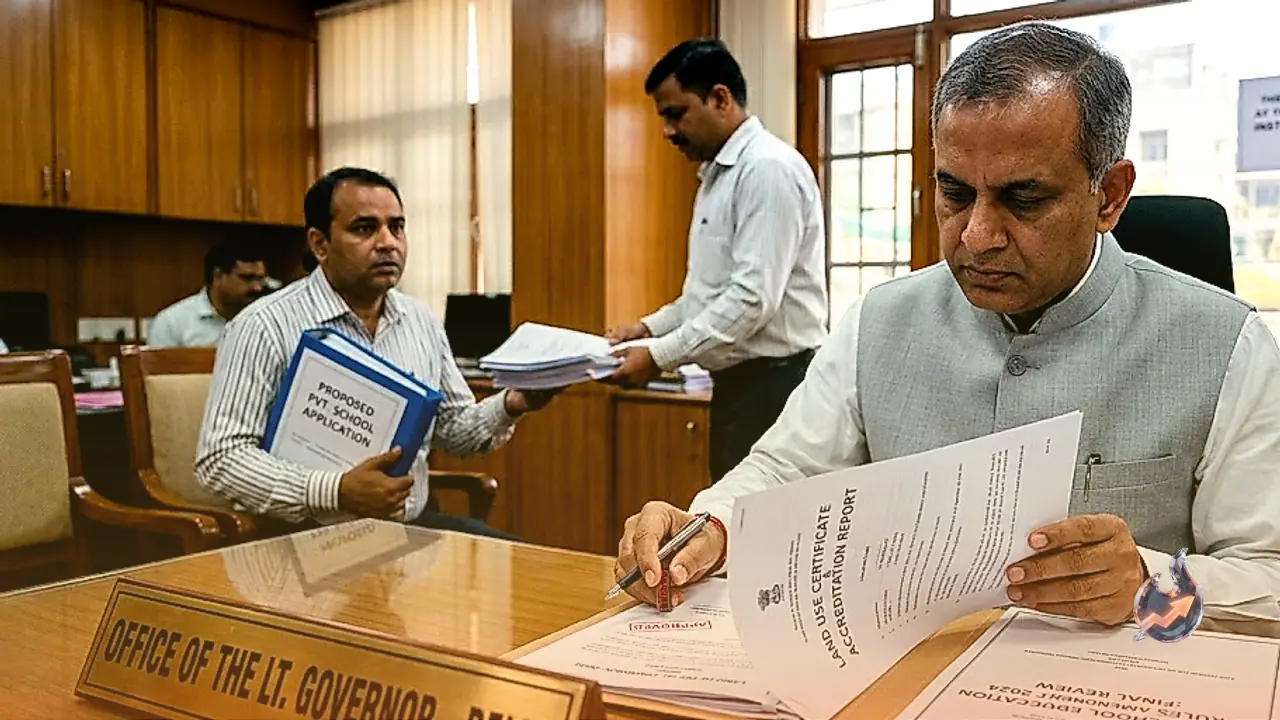
The updated framework comes through an official revision of the Delhi School Education Rules 1973. Following prior approval from the central government, the official notification received the formal assent of the Lieutenant Governor (LG). Under these revised regulations, the administration will scrutinize whether a designated locality genuinely requires an additional school before granting authorization. This structured assessment aims to direct educational investments appropriately, eliminate unnecessary administrative formalities, and ensure efficient deployment of regional resources.
Public Interest and Local Need to be Determined by the Lieutenant Governor
Under the new guidelines, the conclusive authority to decide whether sanctioning a new campus serves public interest rests with the administrator of Delhi, the Lieutenant Governor. Every proposal submitted by applicants will undergo detailed administrative vetting. Scrutiny will cross-check the claims in the application against the ground reality and demographic demands of the target neighbourhood. Where warranted, the administration may commission special field verifications to confirm that fresh approvals are restricted strictly to underserved pockets.
Land Categories Determine Approvals and Exemption Criteria
The revised provisions draw clear demarcations based on the classification and ownership structure of the proposed school site
- Private Commercial Land: Entities or individuals proposing to build a school on their own private commercial land are granted an exemption from the newly framed test of public interest and regional necessity.
- Government or Institutional Land: If the promoters seek land from a public agency, municipal corporation, or urban development authority under an institutional quota, obtaining an Essentiality Certificate is strictly mandatory.
- Prior Certification Requirement: The Essentiality Certificate must be formally secured prior to the final allotment or purchase of the land, preserving total procedural integrity before state assets are transferred.
Deletion of Clause (ii) from Rule 50 Enhances Oversight
An essential statutory change within this reform package is the complete omission of clause (ii) under Rule 50 of the Delhi School Education Rules. This modification equips the education administration with stronger supervisory control over the setup, verification, and ongoing functionality of school establishments. Previously, instances occurred where campuses were founded purely for commercial profits without adequate infrastructure, ultimately burdening enrolled students and their guardians. The enforced guidelines are designed to systematically filter out redundant proposals and elevate baseline educational standards across Delhi.