




















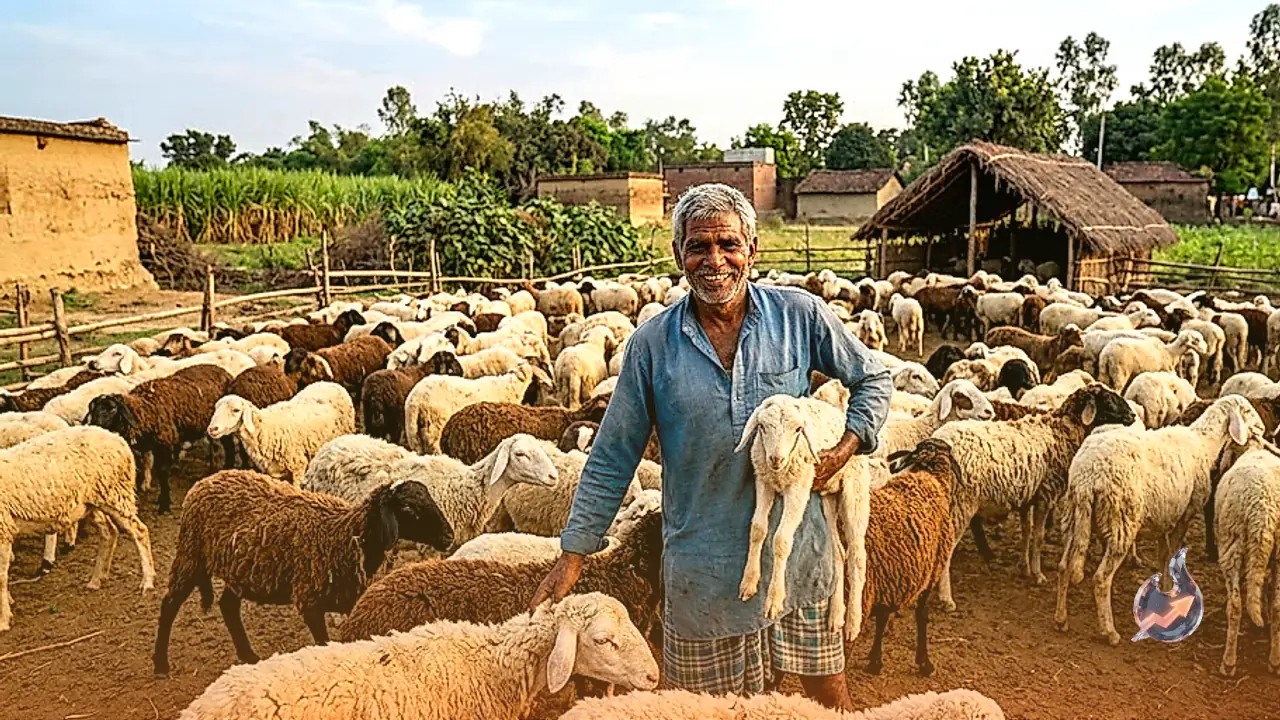

In Uttar Pradesh's Lakhimpur Kheri district, farming communities are increasingly looking toward livestock management alongside regular agriculture to strengthen household earnings. While dairy cows, buffaloes, and goats have conventionally dominated rural homesteads, sheep farming has emerged as another dependable pillar of livelihood. Families from the Pal community in particular have sustained this trade across generations, finding that an occupation with low entry costs can consistently yield substantial supplementary income for rural households.
The Inspiring Endeavour of Saheb Lal in Padariya Tula
Living in Padariya Tula village within Lakhimpur Kheri, 65-year-old Saheb Lal stands out as a dedicated practitioner of this rural craft. Despite reaching a senior stage of life, he tends to his flock with complete dedication, personally overseeing the day-to-day welfare of his animals. Reflecting on his beginnings, Saheb Lal recounts that his venture started with an initial group of just five sheep. With careful management over the years, that modest foundation gradually expanded, culminating in his present flock of approximately 150 sheep.
Saheb Lal observes that maintaining a herd requires steady labour and disciplined supervision, but the financial returns make the physical effort thoroughly worthwhile. Grazing needs are managed by taking the sheep out to open grounds, fields, and common lands situated around the village perimeter. Daily nutrition is adjusted according to the seasons and the availability of local pasture, which keeps maintenance expenses minimal while generating consistent funds to support family expenses.
Valuation Governed by Weight and Size
The pricing mechanism in the local livestock trade remains straightforward. Saheb Lal explains that sheep are usually evaluated and sold based on their physical frame and overall body weight. Livestock traders regularly travel directly into the villages to inspect and buy the animals, saving the keepers transportation hassles. For an animal that has attained healthy weight and maturity, traders typically offer between 5,000 and 7,000 rupees per head.
Agricultural Savings Through Organic Manure
Beyond animal sales, sheep farming offers an invaluable agricultural side-benefit through organic manure production. Substantial amounts of manure accumulate in the enclosures where the sheep stay. Local farmers collect this nutrient-rich waste and apply it across their crop fields, dramatically lowering their recurring expenses on commercial chemical fertilizers. Some livestock owners even sell the surplus manure to nearby agriculturalists, creating a secondary revenue stream. As a result, the enterprise produces dual benefits: upfront earnings from the sale of healthy livestock and natural soil enrichment that trims cultivation costs.
Traditional Roots and Sustainable Rural Potential
Across the rural belt of the district, numerous families belonging to the Pal community have sustained sheep farming as a traditional craft inherited across multiple generations. While contemporary veterinary and trading practices have evolved, the underlying economic viability has remained robust. Saheb Lal emphasizes that his own expansion from five animals to roughly 150 head proves that large scale is achievable through patience. His practical experience demonstrates that with disciplined animal healthcare and fair market access, sheep farming can serve as an exceptionally viable avenue of rural livelihood.