





















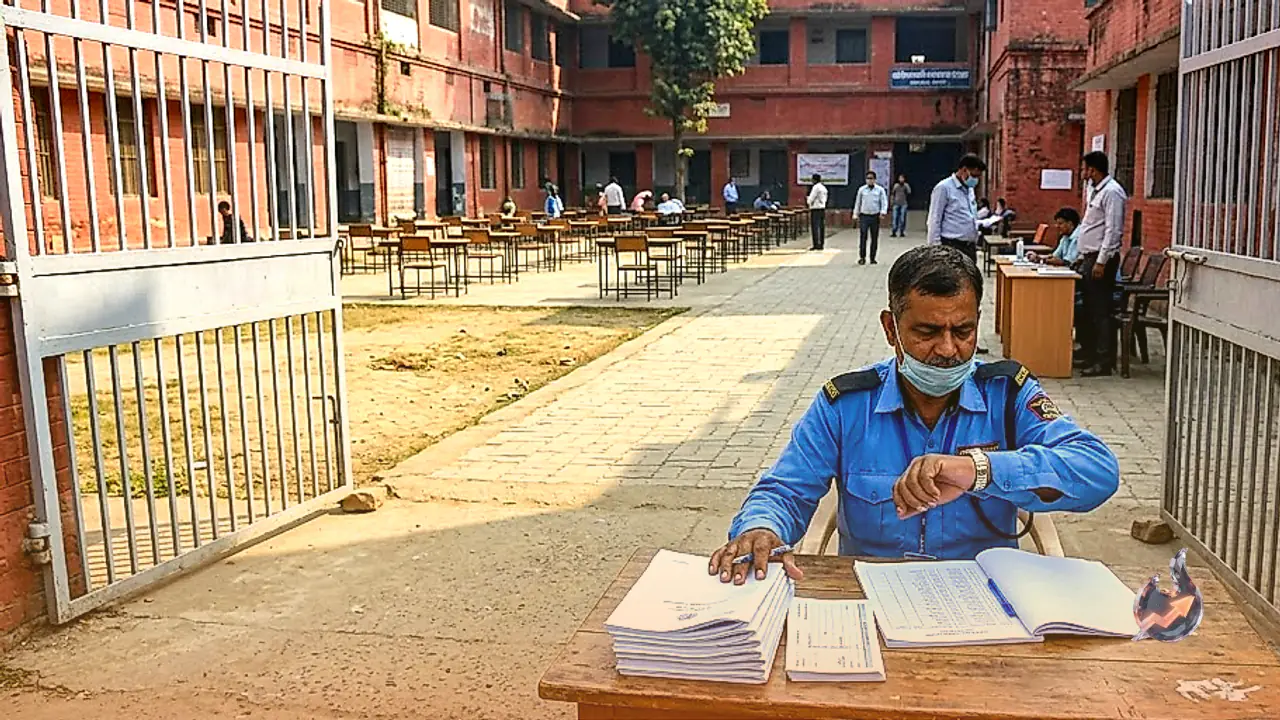

The opening day of the Staff Selection Commission Combined Graduate Level Tier-1 examination witnessed an unprecedented level of candidate absenteeism across key northern examination centres. Despite the central government announcing vacancies for over 10,000 Group B and Group C posts in premier ministries and departments, a vast majority of applicants chose not to appear for the test. The turnout figures from prominent centres in Uttar Pradesh and Bihar indicate that applicant enthusiasm visible during registration sharp declines when the actual test day arrives, leaving thousands of computer terminals unoccupied.
Over 61 Percent Applicants Skip Exam in UP and Bihar Centres
Data compiled from the 36 designated examination venues under the SSC Central Region revealed a stark gap between application counts and actual attendance on day one. Out of a total of 29,609 registered candidates scheduled to sit for the paper, only 11,593 candidates actually reported to their examination halls. This placed the overall attendance rate at approximately 39.15 percent, meaning that nearly 61 percent of registered applicants did not take the test.
State-level records show that examination centres across Uttar Pradesh logged an attendance turnout of just 37.98 percent. In neighbouring Bihar, candidate presence was slightly higher at 41.60 percent. Even in major educational hubs such as Prayagraj, widely considered a primary training ground for government job aspirants, almost half of the scheduled examinees failed to show up at their respective testing facilities. The figures highlight a widening divide between superficial application counts and serious test participation.
Category Breakdown for 10,731 Central Government Vacancies
The scale of candidate withdrawal comes as a major paradox given the sheer size of the recruitment drive. The Staff Selection Commission is conducting the drive to fill 10,731 vacancies across central ministries, with designated quotas for different applicant categories. The unreserved general category accounts for 4,412 posts, while 2,772 positions are earmarked for Other Backward Classes (OBC). In addition, the commission has allocated 1,028 seats for Economically Weaker Sections (EWS), 1,715 for Scheduled Castes (SC), and 804 for Scheduled Tribes (ST).
A massive share of applicant interest typically targets roles under the Central Board of Indirect Taxes and Customs (CBIC) and the Central Board of Direct Taxes (CBDT). These boards offer thousands of high-demand appointments, ranging from Central Excise Inspectors to Tax Assistants. Given the prestige and job security associated with these permanent central posts, such high rates of candidate non-appearance highlight shifting trends among competitive job seekers.
Psychological Pressure and Underpreparation Behind the Drop
Examiners and preparation experts point to several behavioural and academic factors behind the low turnout. A primary contributor is the absence of targeted academic preparation. A substantial proportion of candidates submit online application forms driven solely by peer influence or parental pressure. As the examination schedule draws near without adequate syllabus completion, realization of poor preparedness often leads candidates to abandon the test altogether.
The second major deterrent lies in the strict timing constraints and high operational pressure of the testing format. The Tier-1 computer-based test requires aspirants to attempt 100 questions within a tight window of just 60 minutes. The paper spans four distinct sections comprising Reasoning, Mathematics, English, and General Knowledge, alongside a penalty for wrong answers via negative marking. For unpracticed candidates, tackling complex questions under such severe time limits induces hesitation. Concurrently, the availability of broader private sector careers and alternative vocational routes has encouraged candidates to filter their efforts more selectively rather than pursuing every registered examination.
Lower Turnout Offers Edge to Serious Tier-1 Aspirants
While the widespread absence reflects low commitment among casual applicants, it provides a distinct numerical advantage to dedicated candidates who have invested extensive effort in syllabus revision. The withdrawal of more than 60 percent of scheduled participants effectively filters out nominal competition at the initial screening stage. This contraction in the pool of test-takers is expected to moderate Tier-1 cut-off pressure and improve selection odds. For focused aspirants seeking qualification for the subsequent Tier-2 examination scheduled for December, the reduced competition offers a smoother path forward.