






















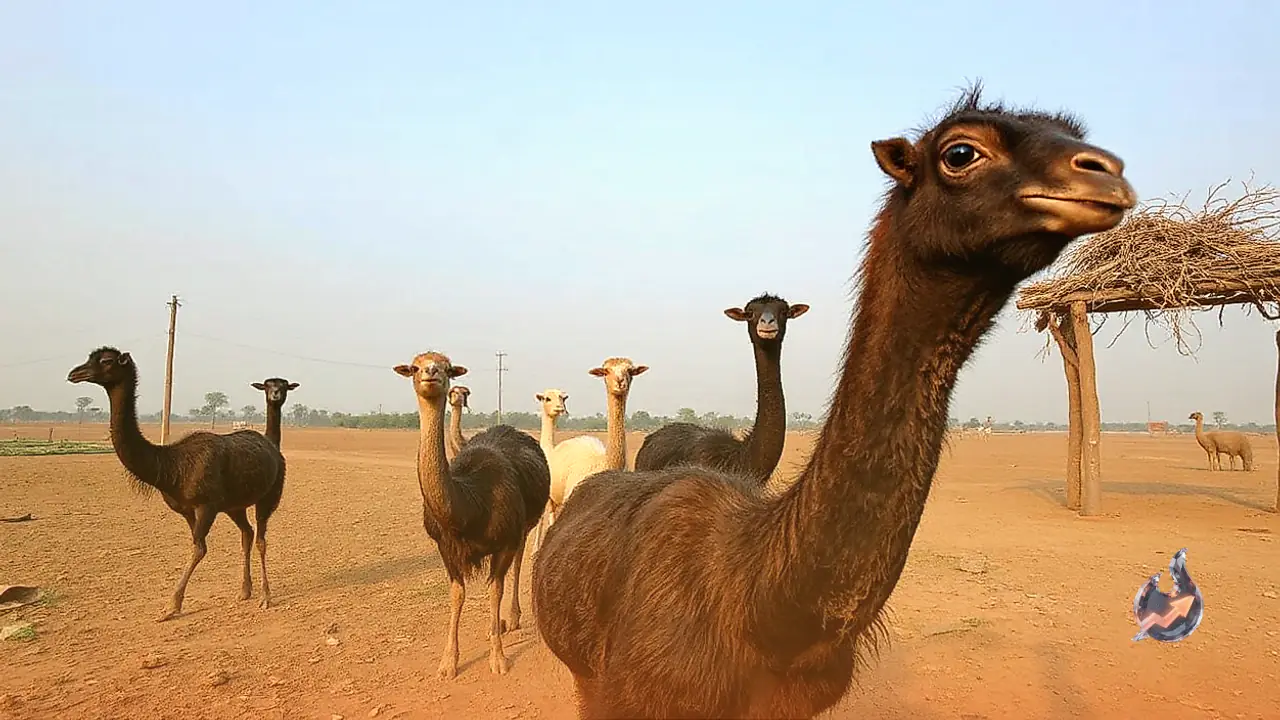

Farmers seeking alternatives beyond regular agriculture and conventional livestock are finding fresh economic opportunities in unconventional poultry. In the Balod district of Chhattisgarh, the emu, a giant flightless bird native to Australia, is gradually emerging as a dependable source of supplementary revenue. Thanks to modest space needs, stronger natural resilience against infections, and high-value outputs ranging from meat to eggs and fat, local growers are paying closer attention to this venture. Balod-based farmer Sunny Jaiswal has already set up an emu unit, creating a practical demonstration for other agricultural producers in the area.
High Natural Immunity and Cost-Effective Feeding Habits
Veterinary Assistant Surgeon Dr. Abhishek Mishra from the Animal Husbandry Department in Balod explains that emu farming can serve as a genuinely profitable venture in the alternative livestock sector. A major operational advantage lies in the bird's robust immune system, which performs noticeably better against disease than that of regular domestic poultry. Feeding management is straightforward and economical. When allowed to roam outdoors, emus forage naturally on field insects, significantly reducing feed bills. Farmers only need to supplement this diet with standard feed according to nutritional requirements. The birds do not demand massive buildings, requiring simply a sufficiently large and fenced open enclosure where they can move freely.
Meat Sales Yielding Up to Rs 30,000 per Bird
The core financial engine behind commercial emu farming remains the sale of meat. Depending on maturity and overall body mass, an individual emu can generate between Rs 20,000 and Rs 30,000 in market sales. Within Chhattisgarh, emu meat commands prices around Rs 800 per kilogram. Unlike common avian species that yield white poultry meat, emu meat falls under the red meat classification, setting it apart in the culinary market. Because overall output in the state remains small, supply has not caught up with niche retail appetite, leaving room for solid returns.
Valuable Eggs and Therapeutic Oil Create Secondary Revenue Streams
Earnings from emu farming extend well beyond dressed carcass sales. A single emu egg weighs around 500 grams, and an adult bird lays roughly 20 eggs each year. These oversized eggs fetch attractive rates in specialty consumer markets. Beyond eggs, the oil extracted from the bird's body holds high commercial and therapeutic utility. Formulators traditionally incorporate emu oil into pain-relief liniments for joint aches and into multiple skincare goods, turning byproduct extraction into an effective parallel revenue generator.
Importance of Structured Marketing and Processing Setups
Agricultural experts consider the prevailing climatic conditions across Chhattisgarh suitable for rearing this Australian species. However, realizing full financial returns from secondary items such as raw eggs and refined oil demands processing infrastructure and consistent market connections. By matching on-farm hygiene and husbandry with reliable buyer linkages, rural producers can turn emu rearing into a sustainable source of diversified agricultural income.