





















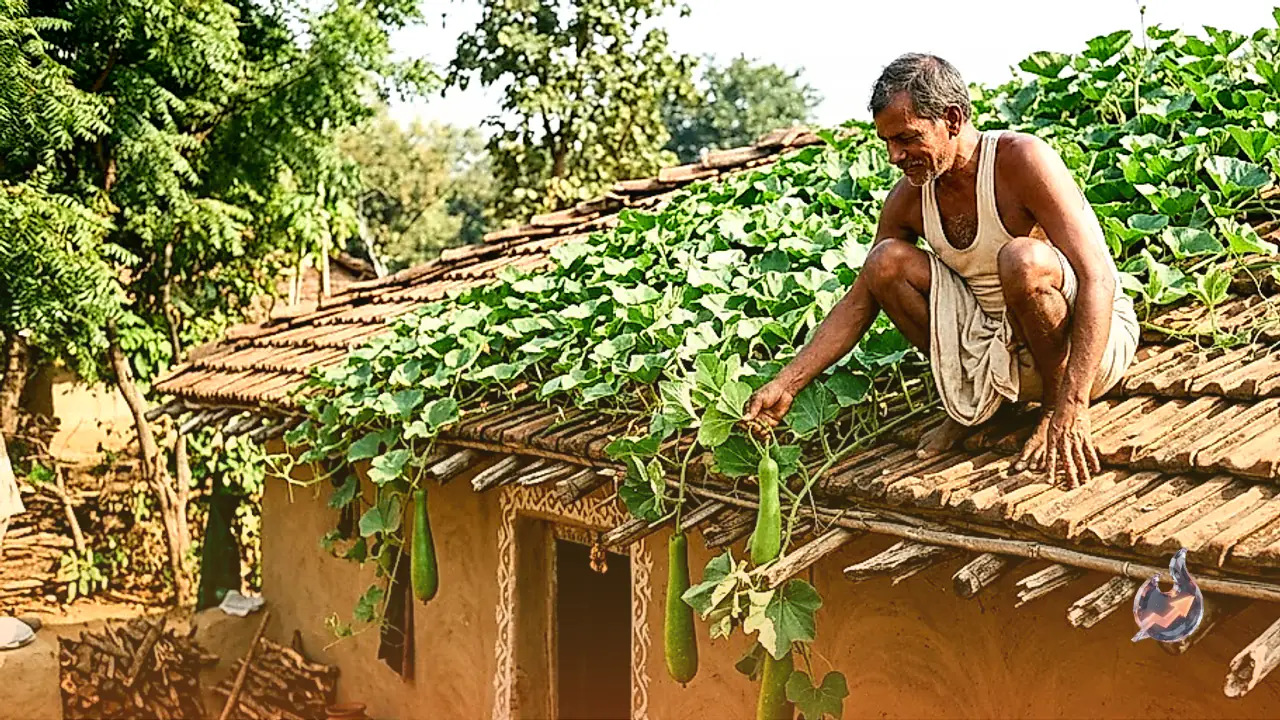

Centuries of living in close harmony with nature have yielded traditional architectural practices that remain remarkably efficient and environmentally resilient even today. In the rural landscapes of Chhattisgarh's Surguja district, where modern concrete construction is gradually expanding, a young man from the Manjhi community named Bandhan Manjhi has chosen to preserve his ancestral wisdom. Using locally sourced clay, sturdy timber, and clay tiles, he built a sustainable home that provides natural thermal insulation across harsh seasons. Beyond crafting a self-cooling shelter, he has transformed his sloping tiled roof into a productive farm bed for growing indigenous squash, known locally as kohda or sitaphal.
Rooftop Agriculture to Tackle Moisture and Crop Rot
Cultivating creeper crops during the monsoon presents persistent hurdles in rural farmlands. In Surguja, heavy seasonal downpours saturate the topsoil with excess moisture. Bandhan Manjhi points out that when squash vines spread out across wet open soil, the emerging fruits remain in constant touch with damp ground and accumulated water. This persistent sogginess frequently triggers rot, destroying the harvest before the vegetables reach maturity.
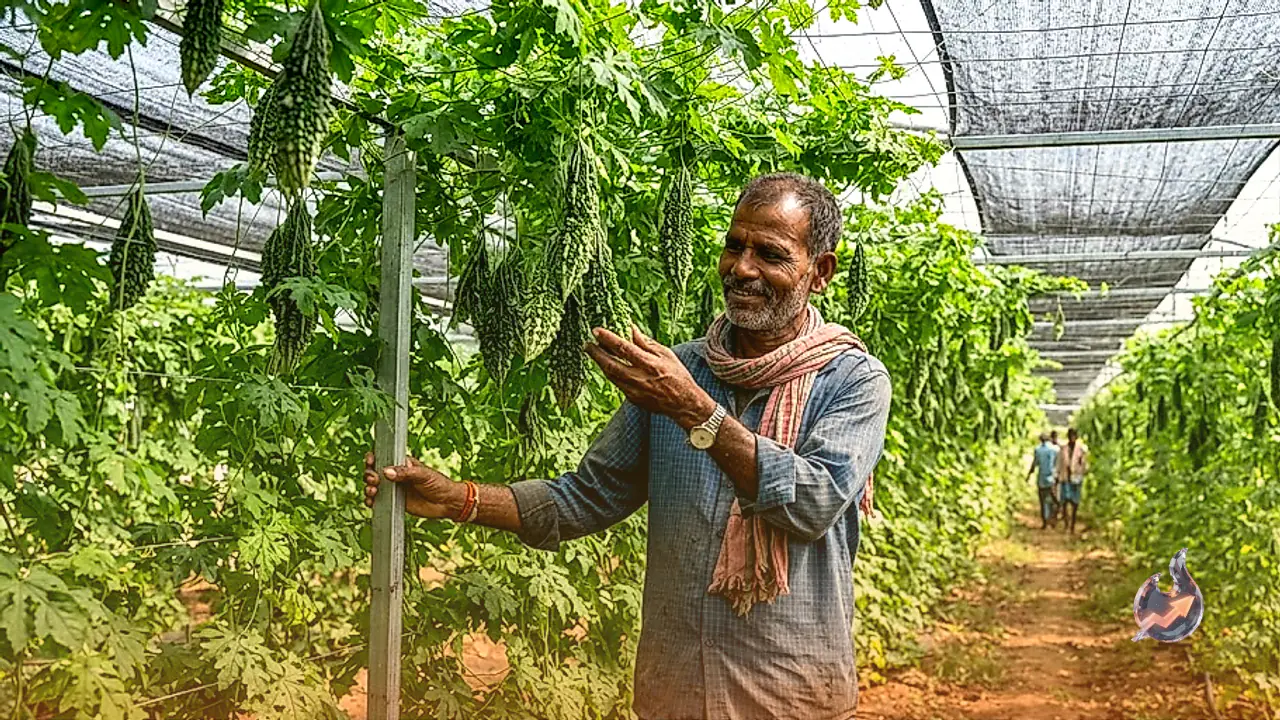
To overcome this seasonal hazard, Bandhan drew directly upon farming techniques handed down across generations. As soon as the rainy season commenced and regular rainfall supplied the required hydration, he initiated the planting cycle. Rather than leaving the vines on the ground, he trained them upward toward the roof, allowing the extensive foliage to spread entirely across the sloped tiled surface. The crop has now reached the critical fruiting stage. Resting securely on the dry tiles, the pumpkins receive ample sunshine while staying safely elevated away from ground-level moisture, decay, and soil-borne pests.
Heritage Construction Using Mud, Timber, and Clay Tiles
The home stands out not only for its thriving rooftop vegetation but also for the vernacular building techniques applied throughout its construction. Bandhan built the dwelling using natural, locally gathered raw materials, primarily unbaked earth, raw wood, and sun-baked earthen tiles known as khapra. The heavy mud walls serve as the building's main load-bearing envelope, offering massive thermal mass.
To support the weight of the roofing system and the growing vegetable canopy, Bandhan assembled an interconnected frame of wooden beams and rafters, over which overlapping tiles were laid by hand. Bandhan explains that his ancestors lived in identical structures for generations, and several households across rural villages continue to uphold this construction method. Compared to modern cement and brick structures, this indigenous format requires little capital expenditure and relies entirely on biodegradable materials that blend seamlessly into the surrounding ecology.
Natural Air Conditioning and Seasonal Thermal Comfort
One of the primary benefits of earthen architecture is its passive climate control capability. During peak summer, when outside temperatures in Surguja rise significantly, the thick earthen walls and layered clay tiles absorb heat slowly, keeping indoor spaces significantly cooler than the open atmosphere. This passive shielding produces an indoor cooling sensation comparable to artificial air conditioning without consuming electrical power.
When winter arrives and nighttime temperatures drop across the forested region, the same mud walls prevent the interior heat from escaping too quickly, maintaining a cozy, comfortable living environment inside. Bandhan observes that achieving ideal indoor climate comfort relies on several complementary factors, including the precise architectural layout, cross-ventilation through doors and openings, and changing external atmospheric patterns. With adequate airflow, the home maintains steady humidity and temperature year-round.
Upholding Indigenous Knowledge in the Modern Era
In an era marked by rapid urbanization and the widespread adoption of artificial building products, the choice to embrace ancestral lifestyles stands out as an inspiring model of sustainable living. Bandhan Manjhi's home demonstrates that rural knowledge systems are far from obsolete relics of the past. Instead, they represent well-honed adaptations developed over generations to thrive within local geographic and climatic constraints.
By harvesting fresh food on his roof while living comfortably in a low-cost, self-regulating structure, Bandhan highlights how indigenous methods address contemporary environmental challenges. His daily routine proves that preserving traditional practices can provide food security, lower carbon footprints, and offer a comfortable quality of life without relying heavily on high-energy appliances or non-renewable resources.