





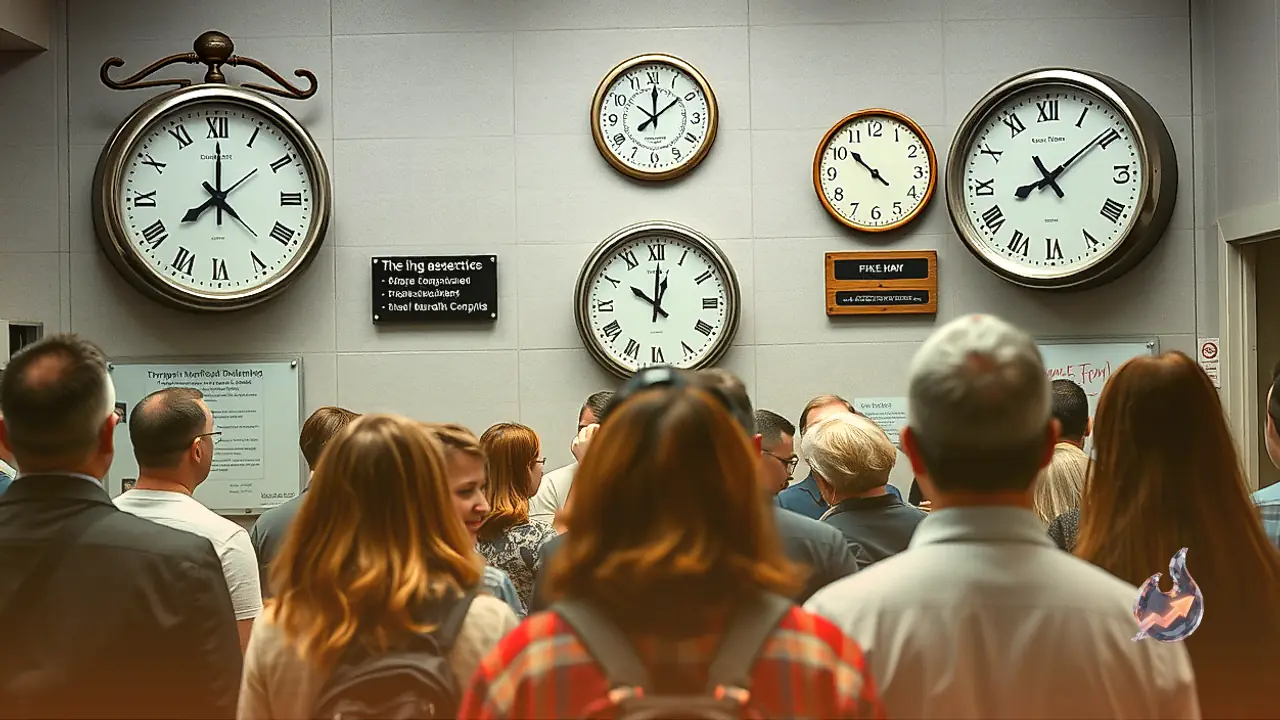

















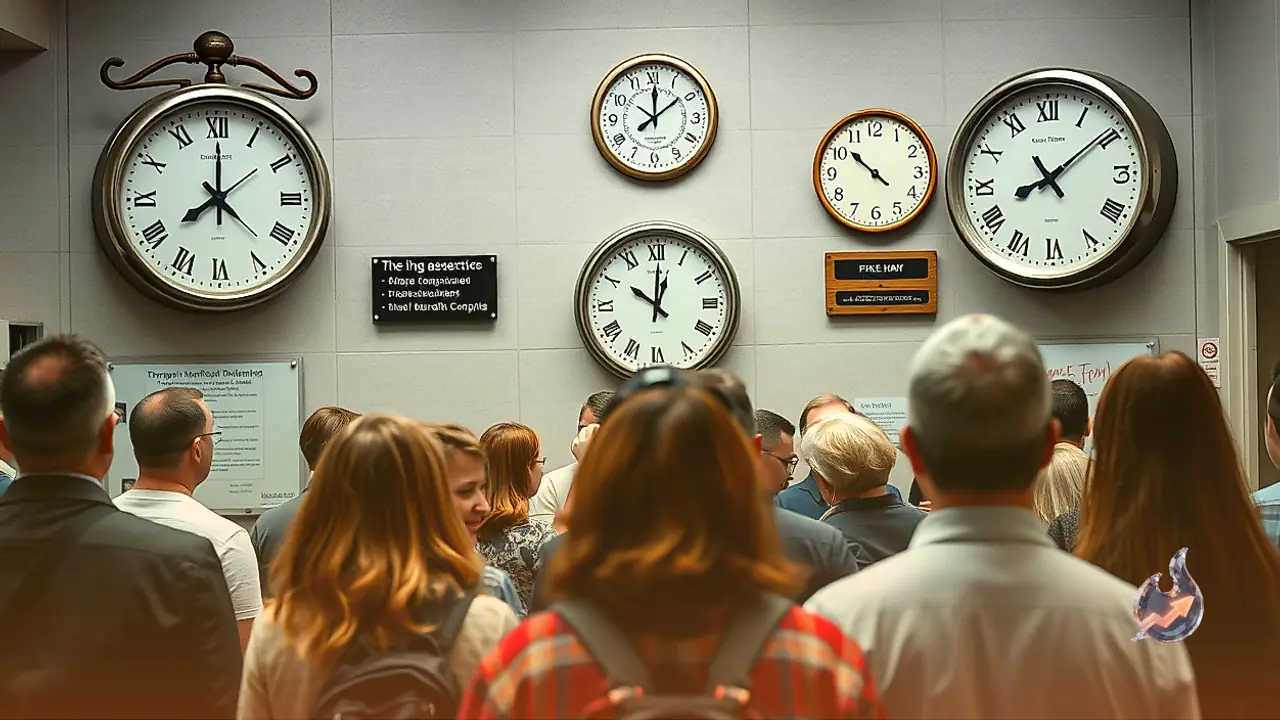

Residents across the United States are preparing once again for the familiar ritual of adjusting their timepieces, as the annual date to fall back approaches on the calendar. On Nov. 1, most communities across the country will formally leave behind daylight saving time for 2026 and return to standard time for the winter months. Millions of citizens find themselves trapped on this continuous cycle of shifting schedules twice a year, despite widespread public frustration, serious medical warnings, and a string of federal legislative efforts intended to scrap the practice entirely.
Health Hazards and Disrupted Biological Rhythms
The habit of altering the clock every few months is not just an inconvenience for daily planners, it takes a measurable physical toll on human physiology. Medical researchers have repeatedly warned that artificially manipulating schedules conflicts directly with human biology. An in-depth study conducted by the Stanford School of Medicine determined that constantly shifting time forward and backward each year likely plays a role in elevated rates of obesity and stroke across the population.
From a purely physiological standpoint, medical professionals argue that adopting a single, uninterrupted system year-round would offer major benefits. Shifting permanently to daylight saving time would represent a noticeable improvement over the volatile bi-annual change. However, health specialists point out that maintaining permanent standard time would be far superior for overall human wellness. The American Academy of Sleep Medicine addressed this debate directly in a position paper published several years ago. The organization concluded that robust scientific research strongly supports ending seasonal shifts in favor of permanent standard time, pointing out that natural winter time aligns most harmoniously with human circadian biology.
Legislative Gridlock on Capitol Hill
Despite strong arguments from the scientific community, national efforts to dismantle the clock-changing system have repeatedly stumbled in Washington. The most prominent federal measure was the Sunshine Protection Act, an ambitious piece of legislation crafted to make daylight saving time the permanent standard nationwide. Under its provisions, had the measure become official law, it would have taken effect on Nov. 5, 2023, the precise date when Americans were otherwise scheduled to turn their clocks back. Adopting permanent daylight saving time would have resulted in darker winter mornings for an extra hour, compensated by an extra hour of daylight during winter evenings.
The Sunshine Protection Act gained momentum when it successfully passed the Senate in March 2022. However, the proposal stalled immediately afterward because leaders in the House of Representatives chose not to bring it to the floor for consideration. Legislative interest resurfaced in July 2026, when a similar measure cleared the House of Representatives. Adding political pressure to the debate, President Trump weighed in on Truth Social this month, stating, "Republicans in the Senate have to get moving on what I call the 'No More Changing of Clocks Act.'"
Despite this high-profile push, the initiative faces stubborn roadblocks in the upper chamber. The Senate Majority Leader stated that the bill simply lacks the necessary floor support to pass. The core objection among opponents centers on public safety and practicality: permanent daylight saving time would force millions of morning commuters to travel in pitch darkness, while children would be left waiting along roadways for school buses well before dawn.
Standard Time Versus Daylight Saving Time
The yearly calendar in the United States currently juggles two competing timekeeping frameworks: standard time and daylight saving time. These periods are so formally separated that they carry distinct regional timezone labels. For instance, when a schedule indicates EST, it denotes Eastern Standard Time, which operates on an offset different from Eastern Daylight Time, or EDT.
Standard time governs the winter season, while daylight saving time takes over during the spring and summer months to maximize evening daylight. The federal proposals seeking to halt the clock changes aimed to eliminate winter standard time altogether and maintain daylight saving time continuously throughout the entire twelve-month cycle. Conversely, the American Academy of Sleep Medicine advocates for the exact opposite approach. Sleep experts maintain that the nation should freeze the clocks on standard time all year, arguing that destabilizing human circadian rhythms twice annually compromises public safety and physical health. If sleep researchers had their way, Americans would set their clocks back one final autumn and never spring forward again.
State Initiatives and Federal Restrictions
Frustrated by national paralysis, individual states have taken matters into their own hands, though federal law severely restricts their freedom of action. Under the landmark federal statute enacted in 1966, states possess the legal authority to opt out of daylight saving time and remain on year-round standard time. Hawaii and Arizona currently take advantage of this exemption, keeping their clocks untouched year-round, although the Navajo Nation territory located within Arizona continues to observe seasonal daylight saving changes.
Crucially, the 1966 federal law strictly forbids any state from independently adopting permanent daylight saving time or setting customized dates for switching the clocks. Consequently, nineteen states have passed proactive laws or formal resolutions declaring that they will switch to permanent daylight saving time the moment Congress amends the federal statute. According to documentation compiled by the National Conference of State Legislatures, those nineteen states include
- Alabama, Colorado, and Delaware
- Florida, Georgia, and Idaho
- Louisiana, Maine, and Minnesota
- Mississippi, Montana, and Oklahoma
- Oregon, South Carolina, and Tennessee
- Texas, Utah, Washington, and Wyoming
Three additional states have pursued similar changes with varying degrees of progress. Legislative measures advanced partway through state assemblies in Kentucky and Ohio but failed to receive final signatures into law. In California, voters approved a ballot initiative authorizing permanent time changes, yet the measure has not been officially codified into state law books. Until federal lawmakers resolve their impasse, residents across the country must continue adjusting their clocks, unless they reside in non-participating American territories such as Puerto Rico or the U.S. Virgin Islands.