




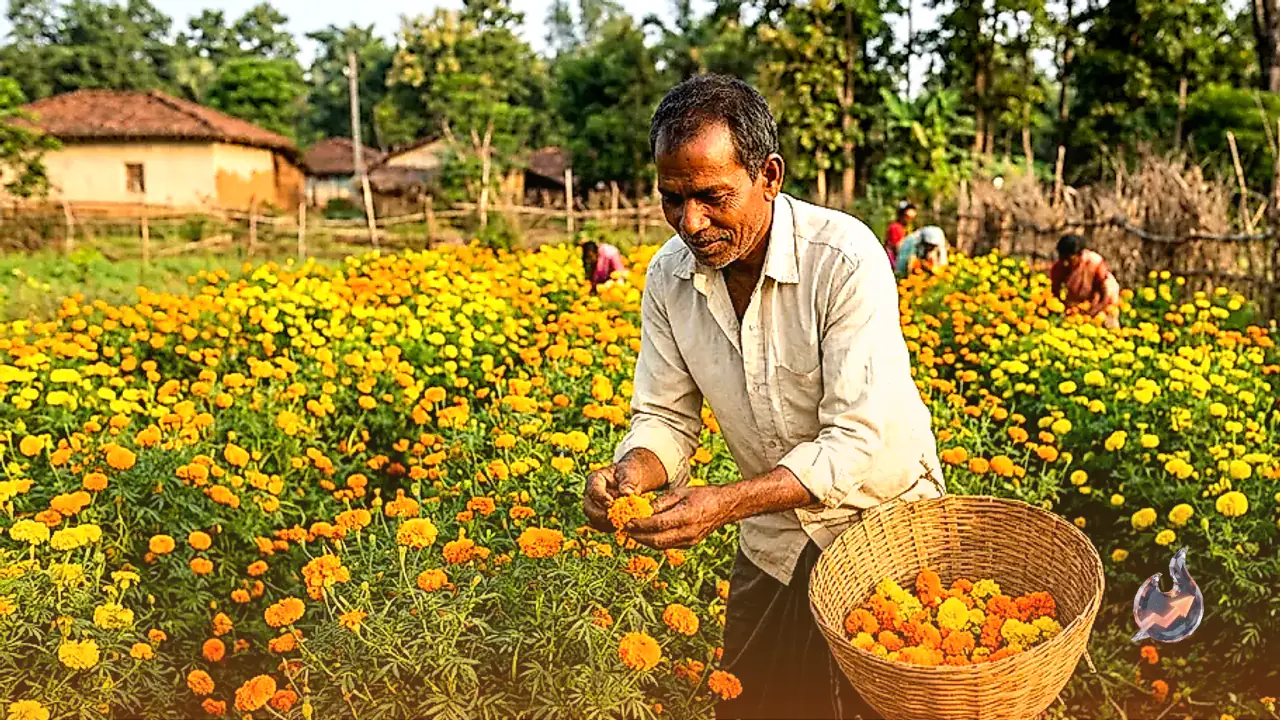















Embracing diversified agriculture on small landholdings is creating dependable income sources for rural cultivators. In the Bastar region of Chhattisgarh, farmer Farshu Kashyap has established a profitable floriculture practice by dedicating a compact piece of land to marigolds. His initiative demonstrates how low expenditure can yield attractive returns when cultivation aligns with festive seasons when the demand for fresh flowers surges sharply across local markets.
Planting across ten decimals of cultivable land
Farshu Kashyap allocated a total area of ten decimals for his flower farming project, dividing the plot equally between two popular varieties. Five decimals carry red marigolds, while the remaining five decimals are dedicated to yellow marigolds. To ensure healthy vegetative growth and heavy flowering, he procured high quality saplings directly from Kolkata. Alongside this dedicated flower plot, he regularly grows seasonal vegetables to sustain steady revenue throughout the year.
Field preparation techniques and nutrient management
Proper agronomic practices were followed to create an optimal root environment for the flower beds. The soil was ploughed twice before being refined with a rotavator to achieve a loose texture. Raised beds were structured with a uniform spacing of four feet between adjacent beds, while individual plants were placed one foot apart within each row. Soil enrichment involved a mix of well decomposed cow dung manure alongside recommended chemical nutrients including DAP, urea, and potash. The entire input outlay for land preparation, plants, and fertilizers ranged between 5,000 and 7,000 rupees.
Festive sales driving substantial income gains
Market demand peaked notably during the celebrations of Durga Puja and Diwali, allowing the harvest to fetch remunerative rates. Farshu Kashyap projects a gross income between 30,000 and 40,000 rupees from the current crop cycle. He has already realized approximately 25,000 rupees from initial harvests and anticipates collecting another 15,000 rupees as remaining flowers reach maturity, despite prices softening somewhat in current spot sales.
Crop protection and seasonal weather challenges
The health of marigold plants varies notably across changing seasonal cycles. Fungal infections and plant disorders show up periodically during the rainy months, whereas cooler winter conditions naturally reduce disease pressure across the field. During the previous season, some plant afflictions emerged toward the terminal phase of the crop. To counteract threats such as the stem borer insect, he applies targeted protective sprays whenever symptoms appear, keeping the plants resilient and productive.